Sci-Fi Science and Complex Systems - Exploring Alien Civilizations
Explore the intersection of sci-fi and science as researchers model a three-parent alien civilization, discussing societal implications, speculative research, and the impact of small changes on complex systems.
Economics in Nouns and Verbs - Process-Based Approaches to Economic Theory - Part 1
Exploring how traditional economic theory fails to capture the dynamic nature of economies, and how a process-based approach can provide a more comprehensive understanding of economic phenomena.
Complexities in Repair for Harm: Modeling Multi-Dimensional Reparations for Mass Human Rights Violations
Explore the multi-dimensional challenges of designing effective reparations for mass human rights violations, focusing on global and domestic mapping strategies to improve identification and evaluation.
Time Scales and Tradeoffs in Crisis Management - SFI Flash Workshop
Exploring complex tradeoffs in COVID-19 response: balancing health, economics, and long-term impacts. Experts discuss managing conflicting timescales and applying insights from climate science and sustainability to navigate the crisis.
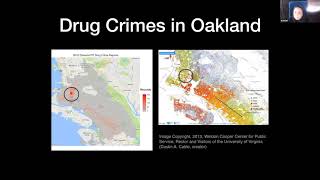
Fairness, Accountability, and Transparency in Predictive Models for Criminal Justice
Explore fairness, accountability, and transparency in predictive modeling for criminal justice, with examples highlighting their importance in real-world applications.

Statistical Workflow and the Fractal Nature of Scientific Revolutions
Explore AI's role in statistical workflow, focusing on model building, checking, and revision. Discover how automated inference and best practices can enhance quantitative data analysis across various fields.
Artificial Intelligence: What We Still Don't Know - Melanie Mitchell
Explore AI's challenges, limitations, and future potential with computer scientist Melanie Mitchell. Delve into fundamental questions about intelligence, cognition, and the intersection of technology and human understanding.
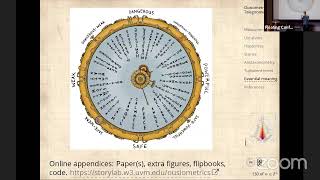
Ousiometrics and Telegnomics - Measuring Essential Meaning and Remote Knowledge
Explore the study of essential meaning and remotely sensed knowledge through innovative frameworks, examining language patterns, storytelling, and temporal dynamics in various contexts.
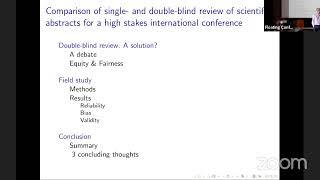
Equity and Fairness of Single- versus Double-Blind Review
Explore the impact of single- and double-blind review processes on equity and fairness in academic publishing, examining potential biases and their implications for scientific advancement.
InterPlanetary Governance Structures for Humanity - Episode 18
Explore interplanetary governance structures and space law with Dr. Timiebi Aganaba, discussing current regulations, future challenges, and ensuring inclusive representation in extraterrestrial exploration and protection.

How Do Artifacts Inform Cultural Evolution? - Alien Crash Site Episode 16
Explore cultural evolution and alien artifacts with cognitive scientist Vanessa Ferdinand. Discover how cultural objects shape our understanding of ourselves, others, and the universe in this thought-provoking discussion.
Archaeological Synthesis and Settlement Scaling Theory
Exploring how settlement scaling theory reveals consistent patterns in human civilizations across time and space, challenging our understanding of societal development and progress.
Art and Science in Paradigm Shifts - Natalie Elliot Interview
Explore the intersection of art and science through paradigm shifts, Shakespeare's works, and the emergence of life. Delve into storytelling, alien artifacts, and interdisciplinary perspectives on literature and scientific discovery.
Calling Bullshit: The Art of Skepticism in a Data-Driven World
Learn to navigate the tidal wave of misinformation in our data-driven world. Discover techniques for skepticism, identifying fake news, and understanding the role of networks in spreading disinformation.
Fighting Hate Speech with AI and Social Science
Exploring AI and social science approaches to combat hate speech online, discussing research on classifying hate and counter speech patterns to promote civility in digital spaces.

Alien Crash Site - Speculative Science of Three-Parent Alien Civilizations - Episode 8
Explore speculative "sci-fi science" with SFI researchers, discussing extraterrestrial civilizations, three-parent families, and the interplay between individuals and society. Delve into counterfactuals and their role in scientific research and sci-fi.
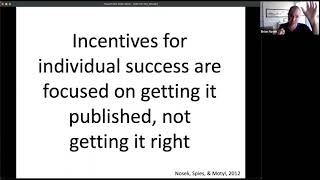
Shifting Incentives From Getting It Published to Getting It Right
Explore how academic publishing incentives impact scientific integrity and learn strategies for promoting transparency and openness in research methodologies.

Andromeda Strain and the Meaning of Life - Part 8: Searching for Extraterrestrial Life
Explore astrobiology, life detection, and the origins of life with experts Jeremy England and David Krakauer in this thought-provoking discussion on extraterrestrial life and its implications for our understanding of existence.
Time Scales and Tradeoffs in Crisis Management - An Excerpt
Exploring tradeoffs in pandemic response: balancing health, economics, and long-term impacts. Insights on managing complex challenges across different time scales, drawing from climate science, network dynamics, and global policy.
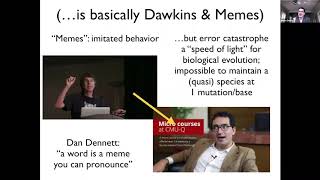
Explosive Proofs of Mathematical Truths
Explore how mathematical proofs achieve certainty through network structure, enabling explosive emergence of belief even under skepticism. Data science analysis reveals insights into proof validity and mathematical reasoning.
Crime and Punishment: Stereotypes and Uncertainty in the Justice System
Explore how stereotypes influence criminal justice decisions, from offenders to jurors, and their impact on controversial issues, aiming for a more equitable society.