
Introduction to the Old Testament
This course examines the Old Testament (Hebrew Bible) as an expression of the religious life and thought of ancient Israel, and a foundational document of Western civilization.
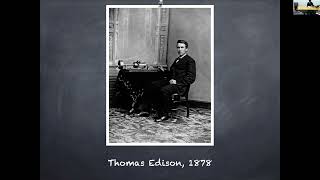
The Talking Machine - The Phonograph and the Making of Modern American Religion
Explore how the phonograph and record companies in the 1920s shaped modern faith and technology, examining their impact on religious practices and cultural dynamics.

Light in August by William Faulkner - Analysis of Characters and Themes - Lecture 23
Análisis profundo de "Light in August" de Faulkner, explorando temas de hospitalidad sureña, teología política, resentimiento histórico y la pasividad de los personajes principales en el contexto del sur de EE.UU.
Constantine and the Early Church - The Rise of Christianity in the Roman Empire
Explore Constantine's conversion, its impact on the Roman Empire and early Church, and the founding of Constantinople in this Yale lecture on early Christian history.
The Christian Roman Empire - Constantine's Conversion and Religious Conflicts
Explore the transformation of the Roman Empire as Christianity becomes dominant, examining key figures, heresies, and philosophical influences that shaped early medieval religious dynamics.
The Early Middle Ages, 284-1000 - The Crucial Seventh Century
Explore the pivotal 7th century in medieval history, examining the Abbasid decline, rise of Islam, changes in Europe and Byzantium, and the Pirenne thesis on Mediterranean disruption.
Mohammed and the Arab Conquests - Early Middle Ages
Explore the origins of Islam, Mohammed's life, and early Islamic development in the context of 7th century Arabia, including key beliefs and its differentiation from other religions.
Clovis and the Franks - Gregory of Tours' Account of Early Medieval History
Explore Gregory of Tours' account of Merovingian kings, focusing on Clovis' rise to power, the Franks' Catholic conversion, and the supernatural's role in early medieval history.
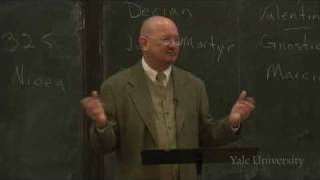
The Rise of Christianity - From Apocalyptic Movement to World Religion
Explore Christianity's evolution from a small apocalyptic movement to a major religion, examining key developments in theology, practices, and historical events from the 2nd to 4th centuries.
The Gospel of Matthew - Introduction to New Testament
Explore Matthew's Gospel: Jesus as teacher, Torah observance, church foundation, and apostolic model. Understand its paradoxical approach to Christianity and mission to gentiles.

The Waning of Religious Authority in France Since 1871 - Lecture 5
Explores de-Christianization in France post-Revolution, examining political separation of church and state, decline in religious practice, and Catholicism's enduring cultural influence despite statistical drops.
The Nature of Death and Believing in One's Mortality - Lecture 15
Explores the concept of death, challenging beliefs about mortality through philosophical analysis and literary examples like Tolstoy's Ivan Ilych. Examines the definition of death and our psychological resistance to accepting it.

Dante in Translation - General Review and Q&A - Lecture 24
Comprehensive review of Dante's Divine Comedy, exploring theological themes, language, and literary aspects through lecture and Q&A session. Ideal for deepening understanding of this classic work.

Biology and History of Abortion - Global Problems of Population Growth
Explores biological, historical, and cultural perspectives on when life begins, examining scientific evidence, religious views, and legal considerations surrounding abortion and the concept of life's origin.
Wild and Domesticated Religions - How the Machinery of Religion Evolved
Explore the evolution of religions as cultural survivors, examining their design, adaptations, and challenges in a rapidly changing world.
The Accidental Universe: The World You Thought You Knew
Explore the intersection of science, philosophy, and spirituality as Alan Lightman delves into profound questions about our universe, existence, and the nature of reality.
Caught in the Pulpit: From Religion to Reason - A Play and Discussion
Exploring clergy's journey from belief to atheism through a play based on interviews, followed by a discussion on brain-mind mechanisms in religious belief and societal implications.
Intro to Anthropology 2022
Explore human diversity, evolution, and global challenges through anthropology. Gain insights into sustainable living, healthcare, justice, and cultural understanding to address contemporary issues.
History
Explore diverse historical topics from ancient civilizations to modern times, covering religion, cartography, science, war, culture, and education through expert lectures and discussions.

Complete Culture for UPSC - IAS
Comprehensive exploration of Indian culture, covering Buddhism, temple architecture, cave art, religious philosophies, and ancient civilizations for UPSC exam preparation.
Anthropology - Lectures & Discussions
Comprehensive anthropology lectures covering diverse topics from religion to evolution, with a focus on UPSC exam preparation and key anthropological concepts.