CPU and GPU Performance of the Batched Code - QMCPACK Workshop 2023
Explore CPU and GPU performance optimization techniques for batched code in quantum Monte Carlo simulations with QMCPACK.
MemComputing: When Memory Becomes a Computing Tool - Lecture 37
Explore MemComputing, a revolutionary approach where memory acts as a computing tool, presented by Prof. Massimiliano Di Ventra from UC San Diego.
Why Do We Need a Compiler Architecture for Heterogeneous Computing
Explore compiler architecture for heterogeneous computing, addressing complex tasks and large data volumes. Learn about seamless integration between diverse computing units and platforms.
Case Study: Concurrent Counting - Kernel Recipes 2024
Explore fundamental concurrency issues through scalable counting on multicore systems, covering design, coding, and validation challenges.
Heterogeneous Accelerator Toolkit (HAT) Update - Project Babylon and GPU Acceleration in Java
Explore updates on Java's Heterogeneous Accelerator Toolkit (HAT) project, focusing on GPU acceleration, programming models, and integration with Babylon and Panama FFM. Includes demos and future plans.
TaskJob: Manage .NET Tasks as PowerShell Jobs - PowerShell Summit 2023
Discover how to manage .NET Tasks as PowerShell Jobs with TaskJob, enhancing your scripting capabilities and workflow efficiency.

Kokkos: Getting Lucky By Design - Performance Portability and API Design Principles
Explore Kokkos programming model's design principles for performance portability across diverse HPC platforms. Learn how API design and community development contribute to widespread adoption.
Driving Performance for the Tools of Utility
Explore utility-scale quantum computing tools, focusing on performance, reliability, and advanced error mitigation for long-running jobs and system parallelism.
Accelerate AI Training Workloads with Google Cloud TPUs and GPUs
Explore key considerations for choosing TPUs and GPUs, optimize AI training workflows, and discover best practices for performance and cost-effectiveness on Google Cloud.
Two Sigma: Push Computing Research Boundaries with Google Cloud
Explore TwoSigma's AI/ML platform integrating Ray, Spark, and Dask on Google Kubernetes Engine. Learn about architecture, capabilities, and on-demand GPU access for investment strategy testing.
Power and Energy Consumption of HPC Systems
Explore power and energy consumption in HPC systems, learn about tuning for energy efficiency, and understand computing center restrictions for energy-saving measures.
QEMU Live Migration Device State Transfer Parallelization via Multifd Channels
Parallelize QEMU live migration device state transfer using multifd channels to improve performance and reduce downtime for VMs with large device states.
Innovative Gen AI Applications: Beyond Text - MLOps Mini Summit 5
Explore innovative Gen AI applications beyond text, focusing on molecule discovery and call center optimization. Learn about chemical language models, RAG use cases, and efficient pipeline architectures.

Handling Multi-Terabyte LLM Checkpoints - MLOps Podcast #228
Explore techniques for handling multi-terabyte LLM checkpoints, including storage options, saving and loading strategies, and infrastructure considerations for large-scale AI model training.
Rapids Machine Learning Training and Feature Engineering in GPU with CuML and CuDF
Accelerate ML training and feature engineering using GPU-powered CuML and CuDF libraries for enhanced performance and efficiency.
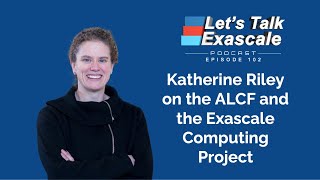
Delivering Impactful Science, Deploying Aurora, and Partnering with ECP at the ALCF
Explore Argonne's role in advancing high-performance computing, deploying Aurora, and collaborating with ECP to drive scientific breakthroughs and exascale computing.
Lessons Learned Developing Performance-Portable QMCPACK
Explore strategies for developing performance-portable scientific applications, focusing on QMCPACK's redesign for GPU and CPU compatibility in materials property prediction.
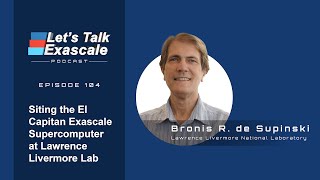
Siting the El Capitan Exascale Supercomputer at Lawrence Livermore National Laboratory
Explore the impact of El Capitan, LLNL's exascale supercomputer, on nuclear stockpile stewardship, fusion research, and AI. Learn about its software, partnerships, and facility upgrades.
Simplifying Scientific Python Package Installation and Usage in HPC Environments
Simplify scientific Python package installation in HPC environments with a new tool that reduces errors and enables sharing among users.
Taking HACC into the Exascale Era - New Code Capabilities and Challenges
Explore HACC's evolution for exascale systems, new capabilities, and performance optimization in cosmology simulations.
Exascale Computing Project Successes and Lessons Learned
Explore ECP successes and lessons learned, focusing on integration, as presented by Lori Diachin, project director, to the Industry and Agency Council upon completion of technical work.