
Um Bug Mudou A Minha Vida - Como um Erro de Computador Transformou uma Carreira
Jovem hacker inspira adolescentes a perseguir sonhos, compartilhando sua jornada desde invadir a NASA até criar empresas de tecnologia, abordando riscos e oportunidades no mundo digital.
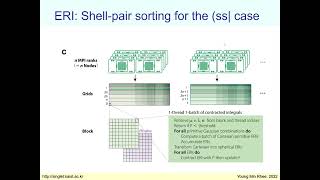
DFT on Expensive GPU-based Supercomputer
Explore advanced density functional theory computations using high-performance GPU supercomputers for cutting-edge quantum chemistry research.
MFEM: High-Performance Finite Element Methods Tutorial - 2024
Explore MFEM, a parallel C++ library for finite element methods. Learn to develop scalable algorithms for various platforms, from laptops to supercomputers.

Modern Numerical Methods in Computational Relativity - Lecture 1
Explore modern numerical methods for solving Einstein's equations in computational relativity, essential for modeling gravitational waves from black hole and neutron star mergers.
Introduction to Numerical Relativistic Hydrodynamics - Lecture 5
Explore advanced concepts in numerical relativistic hydrodynamics, focusing on computational techniques for modeling high-energy astrophysical phenomena and gravitational wave sources.
Introduction to Numerical Relativistic Hydrodynamics - Lecture 2
Explore advanced concepts in numerical relativistic hydrodynamics, focusing on mathematical formulations and computational techniques for modeling high-energy astrophysical phenomena.
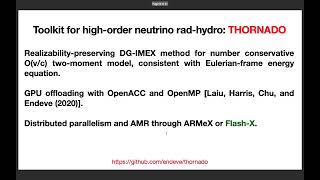
ExaStar: Multi-Physics Stellar Astrophysics Simulations at the Exascale
Explore cutting-edge multi-physics simulations for stellar astrophysics at exascale computing levels, focusing on the ExaStar project and its applications in computational relativity.

Microsoft AI Innovations - Architecture and Infrastructure
Explore Microsoft's AI architecture with Azure CTO Mark Russinovich: supercomputers, efficient infrastructure, sustainable datacenters, AI-aware resource management, GPU optimization, and confidential computing advancements.

Self-Driving from Vision Only - Tesla's Self-Driving Progress by Andrej Karpathy - Talk Analysis
Analysis of Tesla's vision-only self-driving progress, discussing data labeling, edge-case sampling, neural network training, and the advantages of camera-only systems over multi-sensor approaches.
Hot Chips, AI Exploitation, and Supercomputers - Weekly AI News Roundup
Explore global chip wars, AI labor exploitation concerns, and supercomputer advancements. Discuss deepfakes in Diwali celebrations and enjoy AI-inspired music remix. Stay informed on key AI developments and their potential impacts.
Fast and Accurate Deep Neural Networks Training
Exploring LARS and LAMB optimizers for scaling deep learning on supercomputers, enabling faster training and higher accuracy in AI applications across various industries.
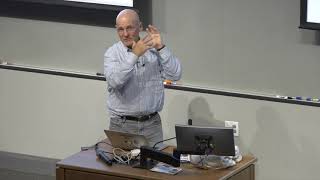
Domain Specific Architectures for Deep Neural Networks: Three Generations of Tensor Processing Units
Exploring three generations of Tensor Processing Units (TPUs) for deep neural networks, highlighting performance improvements and the rise of domain-specific architectures in the post-Moore's Law era.
Resiliency at Scale: Managing Google's TPUv4 Machine Learning Supercomputer
Explore Google's TPUv4 supercomputer infrastructure, focusing on fault resiliency, dynamic reconfiguration, and high system availability for machine learning training at massive scale.
Building a 5-Exaflop Supercomputer for Meta-AI Research and Large-Scale Model Training
Explore the architecture, construction, and operation of Meta's 5-exaflop AI Research SuperCluster, supporting large-scale model training with insights on monitoring and observability for cutting-edge AI development.

Machine Learning News: Gemma, Gemini, Groq, Sora, and AI Developments
Explore latest ML developments: Gemma, Groq, Sora, Gemini updates. Dive into hardware advancements, AI ethics, and amusing incidents. Stay informed on cutting-edge AI progress and industry news.
Pods Everywhere - InterLink: Virtual Kubelet Abstraction for HPC Resource Exploitation
Explore InterLink, an open-source Virtual-Kubelet extension enabling seamless access to external hardware-accelerated machines through Kubernetes APIs, revolutionizing scientific computing workflows.
The Future of Computing: AI Technologies in the Exascale Era
Explore AI technologies in the exascale era, examining their impact on computing's future and potential advancements in computational power and capabilities.
Caliper, Hatchet, and Thicket - HPC Software Tutorials 2024
Explore Caliper, Hatchet, and Thicket: powerful open-source tools for profiling, analyzing, and optimizing HPC application performance on supercomputers.
Axom: Building Blocks for High Performance Scientific Computing Applications - Tutorial 2024
Explore Axom's robust software components for building high-performance scientific computing applications, fostering collaboration and shared infrastructure across projects.

How Do I Compute the Body Electric?
Explore computational physics and supercomputing to revolutionize personalized medicine through advanced simulations of the human body.
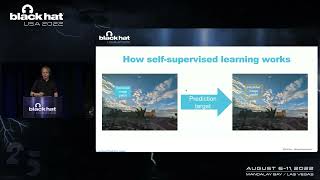
How Supercomputer-Scale Neural Network Models Apply to Defensive Cybersecurity Problems
Explore how large-scale neural networks revolutionize cybersecurity, enabling custom explanations of attacker behavior and improved threat detection with limited data. Learn to leverage public models like GPT-3 for security applications.