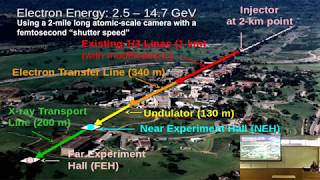
Data Analytics at the Exascale for Free Electron Lasers Project
Innovative data system architecture for LCLS-II upgrade, addressing high-throughput challenges with real-time analysis, fast feedback, and data reduction while preserving scientific content.
Multiscale Dataflow Computing - Competitive Advantage at the Exascale Frontier
Explore multiscale dataflow computing for high-performance, energy-efficient systems. Learn about Maxeler's innovative approach, ecosystem, and applications in various industries.
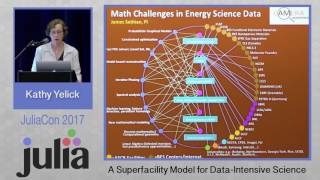
A Superfacility Model for Data-Intensive Science
Explore data-intensive science challenges, high-performance computing, and the role of programming languages like Julia in addressing big data and computational demands in scientific research.
Accelerating Fusion through Integrated Whole Device Model of Magnetically Confined Fusion Plasma
Explore integrated simulation of fusion plasma using Whole Device Modeling. Learn about multi-physics models, code coupling, and exascale computing for advancing fusion research.
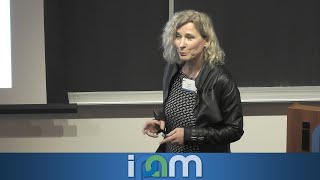
High-Throughput Spectroscopy and Material Discovery by Beyond-DFT Work and Data-Analysis
Explore high-throughput spectroscopy and materials discovery using advanced computational methods, workflows, and data analysis frameworks for accelerated insights in materials science.
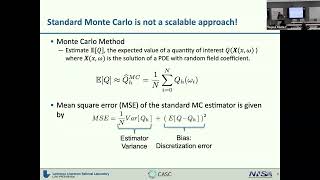
Uncertainty Quantification, Software Ecosystems, and Infrastructure Resilience - Technical Talk
Explore uncertainty quantification, exascale software ecosystems, and infrastructure resilience in this technical talk by Sarah Osborn at WiDS Livermore 2024.
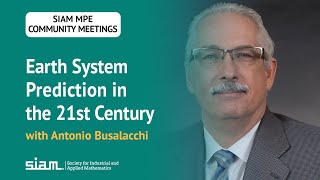
Navigating the Era of Environmental Prediction with Antonio Busalacchi
Explore Earth System Prediction's evolution, from post-WWII insights to modern numerical forecasting. Learn about the critical gap in sub-seasonal to decadal decisions and the challenges of integrating diverse Earth System components.
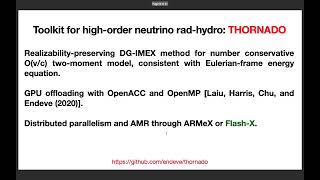
ExaStar: Multi-Physics Stellar Astrophysics Simulations at the Exascale
Explore cutting-edge multi-physics simulations for stellar astrophysics at exascale computing levels, focusing on the ExaStar project and its applications in computational relativity.
Future Exascale Architectures - IPAM at UCLA
Explore future exascale computing architectures and their applications in materials science, presented by Lawrence Livermore National Laboratory expert Erik Draeger at UCLA's IPAM.
Accomplishments of the Exascale Computing Project
Explore the Exascale Computing Project's legacy, including key outcomes in algorithm design, performance portability, and multidisciplinary collaboration for advanced computational science.
The Future of Computing: AI Technologies in the Exascale Era
Explore AI technologies in the exascale era, examining their impact on computing's future and potential advancements in computational power and capabilities.
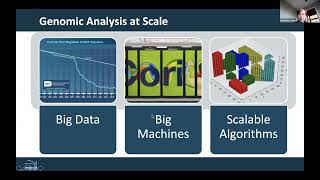
Genomic Analysis at Scale - Mapping Irregular Computations to Advanced Architectures
Explore genomic data analysis at scale, covering parallel algorithms, architectures, and programming models for efficient processing of large-scale genomic datasets on advanced computing systems.
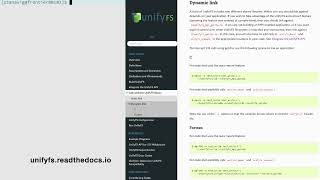
UnifyFS: Installation and Integration Tutorial for HPC Applications
Discover how to install, integrate, and utilize UnifyFS for efficient node-local storage access in high-performance computing environments.
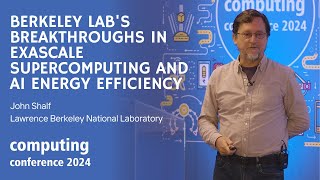
Berkeley Lab's Breakthroughs in Exascale Supercomputing and AI Energy Efficiency
Explore Berkeley Lab's journey from atomic age to supercomputing forefront. Discover exascale computing challenges, energy efficiency innovations, and future HPC directions with specialized hardware and chiplets.

Oracle Exadata Exascale: Intelligent Data Architecture for Cloud
Discover Oracle's next-gen Exadata Exascale cloud architecture, designed to meet AI, analytics, and mission-critical workload needs. Learn about its intelligent features, performance, and benefits for enterprises facing data challenges.
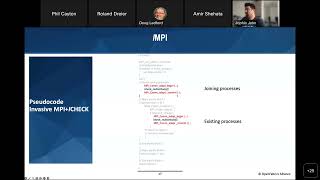
iCheck - Leveraging RDMA and Malleability for Application-Level Checkpointing in HPC Systems
Discover how RDMA and malleable multilevel checkpointing can enhance HPC system reliability through iCheck framework, offering improved performance and efficient data transfer mechanisms for supercomputing applications.
Lessons Learned Developing Performance-Portable QMCPACK
Explore strategies for developing performance-portable scientific applications, focusing on QMCPACK's redesign for GPU and CPU compatibility in materials property prediction.
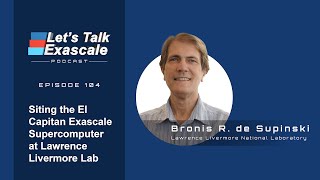
Siting the El Capitan Exascale Supercomputer at Lawrence Livermore National Laboratory
Explore the impact of El Capitan, LLNL's exascale supercomputer, on nuclear stockpile stewardship, fusion research, and AI. Learn about its software, partnerships, and facility upgrades.
Simplifying Scientific Python Package Installation and Usage in HPC Environments
Simplify scientific Python package installation in HPC environments with a new tool that reduces errors and enables sharing among users.
Taking HACC into the Exascale Era - New Code Capabilities and Challenges
Explore HACC's evolution for exascale systems, new capabilities, and performance optimization in cosmology simulations.
Exascale Computing Project Applications: Lessons Learned
Explore key insights and lessons learned from Exascale Computing Project applications development with Erik Draeger, deputy director of Application Development.