Architecture Analysis for ETL Processing - CPU vs GPU
Explore GPU acceleration for ETL operations, comparing CPU and GPU architectures. Learn about performance gains in database operations and SQL query acceleration using GPUs.
Recent Advances in Optimization Solvers within JuliaSmoothOptimizers
Explore cutting-edge nonlinear optimization solvers in JuliaSmoothOptimizers. Learn about new packages, performance enhancements, and flexible implementations for large-scale problems using high-level linear algebra and automatic differentiation.

Oracle Exadata Exascale: Intelligent Data Architecture for Cloud
Discover Oracle's next-gen Exadata Exascale cloud architecture, designed to meet AI, analytics, and mission-critical workload needs. Learn about its intelligent features, performance, and benefits for enterprises facing data challenges.
Data Analysis with Vector Functional Programming - A Tour of the Q Programming Language
Explore vector functional programming for data analysis using Q language. Learn key concepts, syntax, and practical applications for efficient data manipulation and analysis.

Goodbye Controllers, Hello Minimal APIs
Explore Minimal APIs in .NET 6: build high-performance, scalable APIs with minimal code. Learn implementation, comparison with traditional approaches, and real-world application strategies.
News from the Embedded Graphics Space
Explore the evolving embedded GPU landscape, including new standards, hardware changes, and software ecosystem demands, with insights on Linux support and driver comparisons.
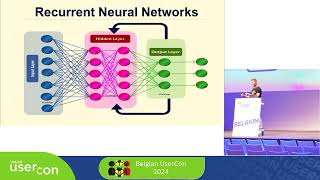
Building Cost-Effective Homelabs for AI Workloads - A Practical Guide
Discover practical insights for building budget-friendly AI homelabs, from hardware choices to workflow optimization. Learn from 7 years of hands-on experience in running AI workloads efficiently at home.
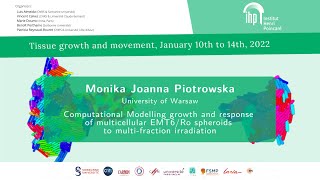
Computational Modelling of Growth and Response of Multicellular EMT6/Ro Spheroids to Multi-Fraction Irradiation
Explore computational modeling of EMT6/Ro spheroid growth and response to multi-fraction irradiation, enhancing understanding of cancer dynamics and potential therapeutic improvements.
Workload-Optimized and AI-Powered Infrastructure for Google Cloud
Optimize AI workloads and enterprise applications with purpose-built infrastructure. Learn about supercomputing innovations, TPUs, GPUs, and AI-powered assistance for efficient operations.
High Performance Computing Workloads on Google Cloud
Explore Google Cloud's HPC solutions for critical workloads, infrastructure advancements, and customer deployments in computational sciences and AI/ML.

Digital Infrastructure and Digital Utilities
Explore the Internet of Things' impact on daily infrastructure, discussing opportunities, challenges, and architectural patterns for digital systems in various sectors.
Choreography vs Orchestration in Serverless Microservices
Explore microservice interaction patterns: choreography vs orchestration. Learn pros, cons, and tools for each approach, with demos and a case study on combining both methods.
Introduction to gRPC - A General RPC Framework That Puts Mobile and HTTP/2 First
Explore gRPC, a high-performance RPC framework. Learn its benefits, including bidirectional streaming and multiplexing, and how to implement it in Java applications through code samples and demos.
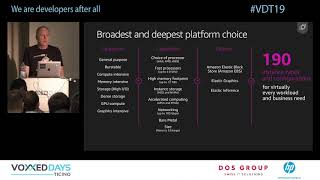
What Would You Do With 10^6 Cores? High Performance Computing in the AWS Cloud
Explore high-performance computing in AWS cloud, covering custom processors, advanced networking, and open-source software for large-scale HPC clusters, including a real million-core deployment.
From High-Level to Systems Programming - A Practical Guide to Rust
Explore Rust's syntax, memory management, and concurrency for high-performance systems programming. Hands-on examples bridge the gap from high-level to systems development.
Code Reflection in Action - Translating Java to SPIR-V
Explore Java-to-SPIR-V translation using Babylon's code reflection API for GPU execution. Learn about parallel compute workloads and graphics libraries implementation.
Project Babylon - Code Reflection Update
Project Babylon extends Java's capabilities with code reflection, enabling analysis and transformation of Java code into foreign programming models like GPU programs.
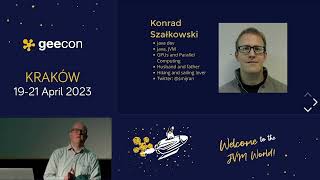
How to Make Your Electrons Do More in Java - Vector API and TornadoVM
Explore Vector API in Java and TornadoVM for GPU/FPGA computing. Enhance processing power and performance through advanced JVM techniques and native-code tooling.
QMCPACK Workshop 2023 Introduction
Explore quantum Monte Carlo simulations with QMCPACK: Learn about recent developments, upcoming features, and workshop agenda for advancing computational materials science.
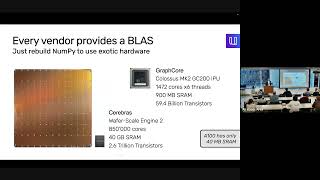
Fantastic Data Science Libraries and Where to Use Them
Discover high-performance alternatives to popular data science libraries, exploring GPU acceleration, distributed computing, and optimization techniques for faster data processing in Python.

Goodbye Controllers, Hello Minimal APIs
Explore the world of Minimal APIs in .NET 6, learning how to build high-performance, scalable APIs with minimal code. Discover the advantages over traditional approaches and their impact on the .NET ecosystem.