Deploying LLM Workloads on Kubernetes with WasmEdge and Kuasar
探索使用WasmEdge和Kuasar在Kubernetes上部署LLM工作负载,提高效率、可扩展性和稳定性。了解如何克服传统方法的挑战,实现快速、灵活、资源高效和安全的LLM应用程序开发。

Addressing Challenges of Cross-Architecture Dynamic Migration Over Heterogeneous Acceleration Systems
Explore cross-architecture dynamic migration for AI applications on diverse accelerators. Learn unified abstraction, middle-compiler techniques, and runtime support for seamless transitions between hardware.
Introduction to Lock/Wait Free Algorithms - Defining and Understanding the Terms
Explore lock/wait-free algorithms: understand definitions, motivations, and applications in concurrent programming. Gain insights into hardware design and synchronization challenges.

Addressing Challenges of Cross-Architecture Dynamic Migration Over Heterogeneous Acceleration Systems
解决AI应用在不同加速硬件间平滑迁移的挑战。介绍统一抽象、跨架构编译和动态链接运行时等技术,实现无需改变开发习惯的跨系统应用迁移。
Revolutionizing Scientific Simulations with Argo Workflows
Explore how Argo Workflows revolutionizes scientific simulations, enhancing productivity and scalability. Learn best practices for managing complex workflows, optimizing performance, and integrating with HPC systems.
Unlocking Heterogeneous AI Infrastructure in Kubernetes Clusters - Leveraging HAMi
Explore HAMi for managing diverse AI devices in Kubernetes clusters. Learn about unified scheduling, GPU sharing, QoS, flexible strategies, and real-world applications for optimized resource utilization.
Leveraging Wasm for Portable AI Inference Across GPUs, CPUs, OS and Cloud-Native Environments
Explore WebAssembly's advantages for AI inference in cloud-native ecosystems, enabling uniform performance across diverse hardware and seamless integration into frameworks for enhanced deployment and scalability.
Julia's Use in Nuclear Physics Data Analysis: A Case Study
Explore Julia's potential in nuclear physics data analysis, combining high performance with dynamic capabilities for efficient processing and visualization of large datasets.
Julia Community Reshapes Computation in Geosciences
Explore Julia's impact on geosciences: ecosystem tools, hardware acceleration, and collaborative initiatives revolutionizing Earth observation and software development in the field.

Portable Communications Interface for Earth System Model - JuliaCon 2024
Explore ClimaComms.jl's high-level interface for Earth System Model components, enabling efficient communication patterns and distributed simulations across various architectures.

Oceananigans - An Ocean-Flavoured Fluid Dynamics Library
Explore Oceananigans, a Julia-based fluid dynamics library for oceanic modeling, featuring flexibility, GPU performance, and easy integration of custom components like sea-ice and biogeochemistry.
SpeedyWeather.jl - Reinventing Atmospheric Models
Innovative Julia-based atmospheric modeling tool offering interactive, user-friendly simulations for climate research, overcoming traditional Fortran constraints with flexible, extensible components.
Developing Supercomputing Geoscience Applications Using Julia
Explore modular Julia packages for accelerating geocomputing, enabling high-performance stencil codes that scale from laptops to GPU-accelerated supercomputers for geoscience applications.
DRust - Language-Guided Distributed Shared Memory with Fine Granularity and Full Transparency
Explores DRust, a Rust-based distributed shared memory system that leverages language ownership semantics for improved efficiency and scalability in distributed computing environments.
nnScaler: Constraint-Guided Parallelization Plan Generation for Deep Learning Training
Innovative framework for efficient deep learning training parallelization, using primitives and constraints to generate optimized execution plans, outperforming existing solutions for popular DNN models.
Metis - Fast Automatic Distributed Training on Heterogeneous GPUs
Efficient distributed training system for heterogeneous GPUs. Optimizes parallelism plans, improves resource utilization, and achieves significant speed-ups for large deep learning models.
PUZZLE: Efficiently Aligning Large Language Models through Light-Weight Context Switching
Efficient system for aligning large language models, optimizing model orchestration and workload switching to minimize overhead and improve performance in AI alignment tasks.
Fast Inference for Probabilistic Graphical Models
Innovative system for efficient probabilistic graphical model inference, offering significant speedup through optimized memory management, parallelization, and flexible integration with sampling algorithms.
Full Lifecycle Data Analysis on a Large-scale Leadership Supercomputer
Comprehensive analysis of Sunway TaihuLight supercomputer data reveals insights into HPC operational management and I/O workload characteristics, offering valuable lessons for system optimization.
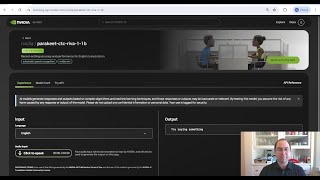
Enabling Voice Interaction with RAG Pipeline Using NVIDIA Riva NIM Microservices
Explore NVIDIA Riva's speech AI capabilities, including automatic speech recognition and text-to-speech, with step-by-step guidance on API usage, model selection, and GPU deployment for various applications.
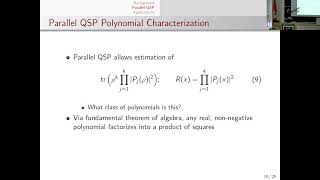
Parallel Quantum Signal Processing via Polynomial Factorization
Explore advanced quantum computing techniques, focusing on parallel signal processing and polynomial factorization for enhanced quantum algorithm efficiency.