
The nanoPU - A Nanosecond Network Stack for Datacenters
Innovative NIC-CPU co-design accelerating datacenter applications with μs-scale RPCs. Features fast network-to-CPU path, hardware-supported transport and load balancing, achieving 69ns wire-to-wire response time and improved performance.
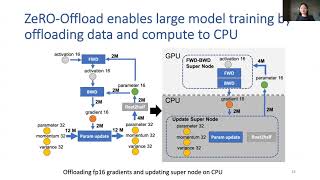
ZeRO-Offload - Democratizing Billion-Scale Model Training
ZeRO-Offload: Enabling billion-scale model training on a single GPU by offloading data and compute to CPU, minimizing data movement, and optimizing efficiency. Scales to multiple GPUs and works with model parallelism.
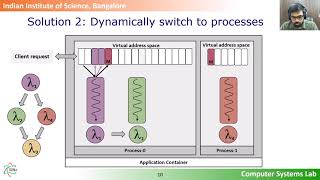
Faastlane - Accelerating Function-as-a-Service Workflows
Accelerating FaaS workflows by executing functions as threads, providing lightweight isolation, and dynamically identifying parallelism opportunities to enhance performance and reduce latency.
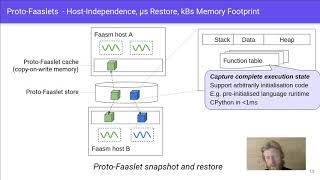
Faasm - Lightweight Isolation for Efficient Stateful Serverless Computing
Lightweight isolation technique for serverless computing, enabling efficient stateful processing and memory sharing between functions, resulting in improved performance and reduced resource usage.
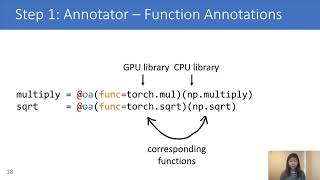
Offload Annotations - Bringing Heterogeneous Computing to Existing Libraries and Workloads
Explore offload annotations for efficient GPU computing in existing libraries, enabling seamless integration and performance gains without extensive code modifications.
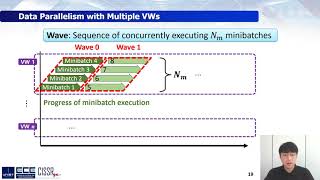
HetPipe - Enabling Large DNN Training on Heterogeneous GPU Clusters through Integration of Pipelined Model Parallelism and Data Parallelism
Explores HetPipe, a system integrating pipelined model parallelism and data parallelism for training large DNNs on heterogeneous GPU clusters, improving performance and enabling use of less powerful GPUs.
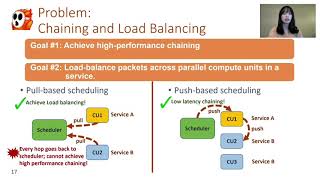
PANIC - A High-Performance Programmable NIC for Multi-tenant Networks
Explores Frenzy, a novel programmable NIC design with high-performance switching interconnect and hybrid push/pull packet scheduler, addressing limitations in multi-tenant networks and diverse offloads.

Systems That Run Forever - Self-Heal and Scale
Explore architectural principles for building scalable, fault-tolerant systems using isolated parallel components, error detection, and live code upgrades, with insights from Erlang's design.
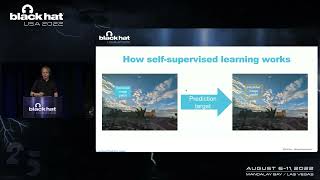
How Supercomputer-Scale Neural Network Models Apply to Defensive Cybersecurity Problems
Explore how large-scale neural networks revolutionize cybersecurity, enabling custom explanations of attacker behavior and improved threat detection with limited data. Learn to leverage public models like GPT-3 for security applications.

Dynamic Process Isolation
Explore cloud computing security with in-process isolation techniques, addressing vulnerabilities in shared hardware resources while maintaining high performance.

Practical New Developments in The Breach Attack
Explore advanced techniques for exploiting SSL vulnerabilities, including new methods to bypass encryption, optimize attacks, and implement persistent command-and-control strategies. Novel mitigation approaches are also discussed.
GPU Programming with Modern C++
Explore GPU programming with modern C++, covering parallelism fundamentals, heterogeneous computing, and SYCL for GPU dispatch. Learn to optimize performance and leverage multi-core architectures effectively.

Scala Goes Native
Explore Scala's expansion beyond JVM with a new ahead-of-time compiler and lightweight managed runtime, opening doors to native development and enhanced performance.

OpenMP for Better High-Level Parallelism, Not Just for High Performance Computing
Explore OpenMP for efficient shared memory parallelism in C++, C, and FORTRAN. Learn its versatile applications beyond high-performance computing, from graphics to finance and data analysis.
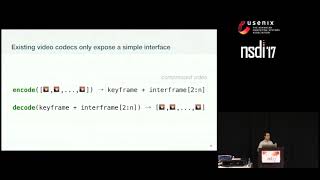
Encoding, Fast and Slow - Low-Latency Video Processing Using Thousands of Tiny Threads
Innovative video processing system using cloud functions and parallel computing for low-latency editing and encoding of high-resolution videos, including 4K and VR content.
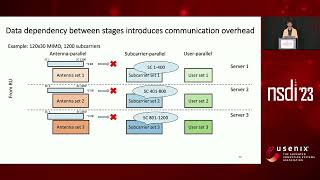
Scalable Distributed Massive MIMO Baseband Processing
Innovative system for scaling massive MIMO baseband processing in software-defined radio networks. Reduces inter-server communication to support larger MIMO configurations, enhancing 5G network capacity.
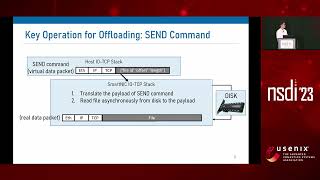
Rearchitecting the TCP Stack for I-O-Offloaded Content Delivery
Explores IO-TCP, a split TCP stack design offloading disk I/O and packet transfer to SmartNIC, enhancing online content delivery performance by reducing CPU burden and improving scalability.
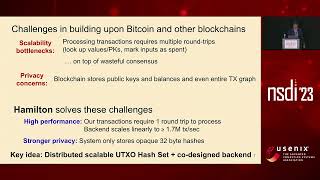
Hamilton - A High-Performance Transaction Processor for Central Bank Digital Currencies
Explores Hamilton, a high-performance transaction processor for central bank digital currencies, offering high throughput, low latency, and fault tolerance while minimizing data storage and providing flexibility.
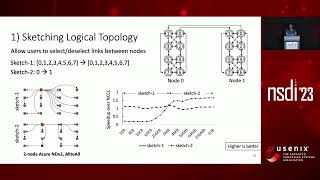
TACCL - Guiding Collective Algorithm Synthesis Using Communication Sketches
Innovative tool for synthesizing efficient communication algorithms in multi-GPU machine learning, outperforming NCCL and accelerating model training across various hardware configurations.
Improving Android Build Performance
Optimize Android build performance with Gradle: identify bottlenecks, fix common issues, and leverage incremental processing for faster, more efficient development workflows.
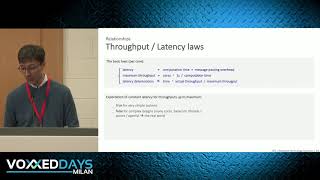
HPC Green Computing - Relationships Among Throughput and Latency
Explore modern C++ meta-programming techniques to reduce hardware requirements and power consumption in high-throughput, low-latency data processing, with a focus on message processing tasks.