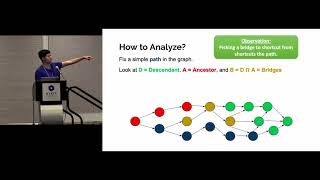
Parallel Reachability in Almost Linear Work and Square Root Depth
Explore efficient parallel algorithms for graph reachability, focusing on distributed computing and improved runtime complexity in large-scale networks.

Achieve New Levels of Cloud Performance and Security with Azure
Explore AMD-powered Azure solutions for enhanced enterprise workloads, remote work performance, and cloud-based high-performance computing. Learn about new virtual machines and confidential computing options.

Multi-core Application Development with Zephyr RTOS
Explore multi-core application development using Zephyr RTOS, covering AMP and SMP models, current support status, implementation challenges, and performance benefits for embedded systems.
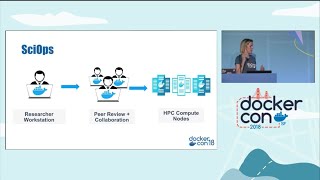
Accessible High Performance Computing for Everyone with Docker and Containers
Learn to leverage Docker and containers for accessible high-performance computing, exploring use cases, challenges, and solutions in weather forecasting, disaster response, and scientific environments.

Game Server Performance on Tom Clancy's The Division 2
Explore technical challenges and solutions for game server performance in Tom Clancy's The Division 2, focusing on parallelization and multithreading techniques for improved efficiency.
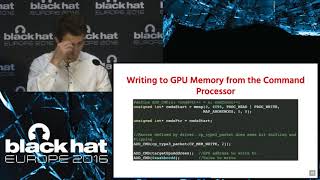
GPU Security Exposed
Explore GPU security vulnerabilities, including shared memory risks and privilege escalation issues, with insights on protecting popular devices from potential exploits.

Intrinsics - Low-Level Engine Development with Burst - Unite Copenhagen
Explore low-level engine development using Burst Compiler's expanded capabilities, including CPU intrinsics, SIMD optimization, and performance comparisons with C++.
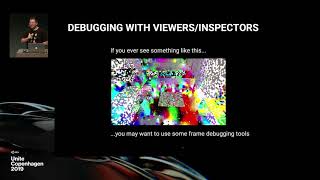
Optimizing HDRP with NVIDIA Nsight Graphics
Learn to optimize HDRP applications using NVIDIA Nsight Graphics for peak performance. Explore profiling tools, debugging techniques, and real-time ray tracing optimization strategies.
NPK - High-Powered, Open Source Hash Cracking Tool
Explore NPK, an open-source tool for high-powered hash cracking using AWS GPU instances. Learn its features, benefits, and how it enables cost-effective password security assessment.

Concurrency and Parallel Computing in JavaScript
Explore concurrency and parallel computing in JavaScript, covering actors, futures, and throughput computing in browsers. Learn techniques for leveraging modern parallel hardware in web development.
Thinking DSLs for Massive Visualization
Explore domain-specific languages for parallel computing and program synthesis in massive interactive visualizations, focusing on Superconductor's innovative approach to browser-based data visualization.
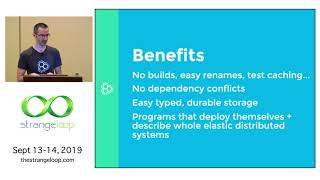
Unison - A New Distributed Programming Language
Explore Unison, a functional language for distributed systems. Learn its unique features, including self-deployment, elastic scaling, and simplified code management for building complex distributed applications.

So You Wanna Go Fast
Explore Go's performance optimization techniques for latency-sensitive systems, including channels, interfaces, and mechanical sympathy, with insights on trade-offs and lessons learned.
PyTorch - Fast Differentiable Dynamic Graphs in Python
Explore PyTorch's dynamic deep learning framework, its high-performance design, and tensor compiler for faster AI research and development using GPUs and CPUs.

Haxl - A Big Hammer for Concurrency
Explore Haxl, Facebook's framework that flips the default from sequential to concurrent programming, enhancing I/O, concurrency, testing, and debugging in software development.
Turbocharged - Writing High-Performance C# and .NET Code
Learn to write faster, more efficient C# code using high-performance APIs and language features. Practical examples cover Span, Memory, System.IO.Pipelines, ArrayPool, and new JSON APIs in .NET Core 3.0.
C++ Parallel Programming Models
Explore C++'s parallel programming models: unstructured, task-based, and data parallel. Learn key facilities, use cases, and recent features for efficient parallel programming in modern C++.
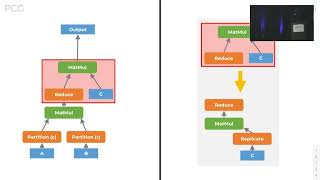
Unity - Accelerating DNN Training Through Joint Optimization of Algebraic Transformations and Parallelization
Explore Unity, a system optimizing distributed DNN training through joint algebraic transformations and parallelization. Learn about its unified parallel computation graph and hierarchical search algorithm for improved performance.
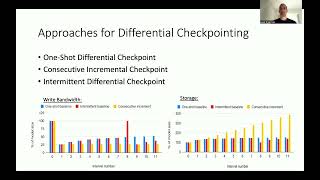
Check-N-Run - A Checkpointing System for Training Deep Learning Recommendation Models
Innovative checkpointing system for large ML models, reducing bandwidth and storage needs through differential checkpointing and quantization techniques without compromising training accuracy.
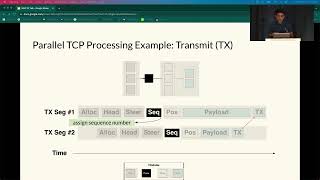
FlexTOE - Flexible TCP Offload with Fine-Grained Parallelism
Explore FlexTOE, a high-performance TCP offload engine for SmartNICs. Learn about its flexible design, fine-grained parallelism, and performance benefits in various network scenarios and hardware architectures.
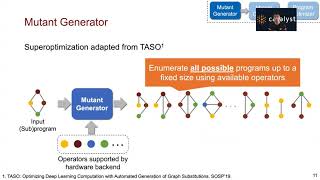
PET - Optimizing Tensor Programs with Partially Equivalent Transformations and Automated Corrections
Optimizing tensor programs with partially equivalent transformations, improving DNN efficiency by up to 2.5×. Introduces PET framework for automated corrections and theoretical foundations for equivalence examination.