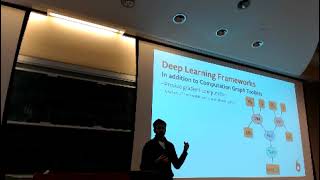
An Overview of Deep Learning Frameworks and Introduction to PyTorch
Explore deep learning frameworks, focusing on PyTorch. Learn about research workflows, data processing, and model building from Facebook AI researcher Soumith Chintala.
Scalable Multi-Node AI Workloads in Multi-Tenant AI Clouds Using SDN K8s Networking
Optimize AI workload performance in multi-tenant clouds using SDN K8s networking. Learn techniques for network isolation, efficient bandwidth, and QoS with Open Source solutions like OVS, OVN, and OVN-Kubernetes CNI.
How to Build a Sovereign European AI Compute Infrastructure
Explore the development of a sovereign European AI compute infrastructure, focusing on key strategies, challenges, and potential impacts on the tech landscape.
The Future of Computing: AI Technologies in the Exascale Era
Explore AI technologies in the exascale era, examining their impact on computing's future and potential advancements in computational power and capabilities.

Breaking Boundaries - TACC as a Unified Cloud-Native Infrastructure for AI and HPC
Explore TACC, a unified cloud-native infrastructure for AI and HPC, bridging K8S and Slurm advantages. Learn about seamless UI, multi-tenant resource management, and robust distributed infrastructure.
Deploying LLM Workloads on Kubernetes Using WasmEdge and Kuasar
Deploy LLM workloads efficiently on Kubernetes using WasmEdge and Kuasar. Explore solutions for faster container startup, reduced management overhead, and enhanced scalability in LLM operations.
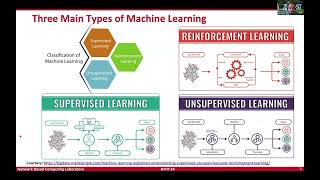
Principles and Practice of Scalable and Distributed Deep Neural Networks Training and Inference
Dive into scalable and distributed deep neural networks, exploring advanced training and inference techniques for enhanced performance and efficiency in modern AI systems.
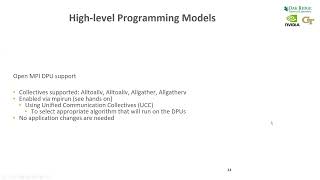
Leveraging SmartNICs for HPC and Data Center Applications - Part 2
Dive into advanced SmartNIC implementation strategies for optimizing high-performance computing and data center operations, covering deployment techniques and performance optimization.
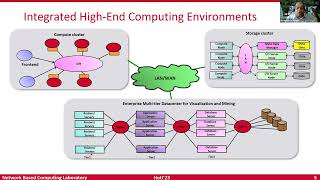
Networking Technologies for High-Performance Computing - Principles and Solutions
Explore advanced networking principles and solutions for high-performance computing systems, focusing on interconnect technologies, design strategies, and optimization techniques.
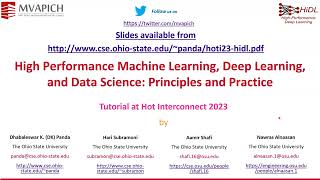
High Performance Machine Learning, Deep Learning, and Data Science - Principles and Practice
Master high-performance computing principles for machine learning and deep learning, focusing on practical implementation strategies and advanced techniques for optimizing data science workflows.
Caliper, Hatchet, and Thicket - HPC Software Tutorials 2024
Explore Caliper, Hatchet, and Thicket: powerful open-source tools for profiling, analyzing, and optimizing HPC application performance on supercomputers.
Axom: Building Blocks for High Performance Scientific Computing Applications - Tutorial 2024
Explore Axom's robust software components for building high-performance scientific computing applications, fostering collaboration and shared infrastructure across projects.
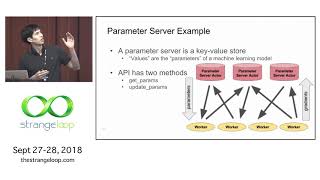
Ray - A Distributed System for Emerging AI Applications
Explore Ray, a scalable distributed system designed for AI workloads, featuring task-parallel and actor abstractions, in-memory storage, and a distributed scheduler for emerging AI applications.

Servo - Designing and Implementing a Parallel Browser
Explore Servo, an experimental browser engine designed for multi-core hardware, focusing on parallelization and security through Rust. Learn about its goals, design, and potential impact on web browsing.

Easy Abstract Interpretation with SPARTA
Streamline static analyzer development with SPARTA, a C++ library providing efficient, scalable components. Learn algorithms, benefits, and implementation for language-independent program analysis.
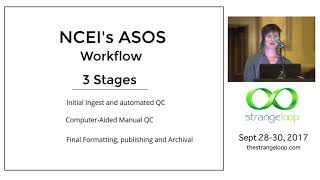
Onyx-Native, Information Flow Models and Scientific Computing
Explore Onyx-Native library for modernizing legacy scientific computing systems, focusing on information flow models and their application to complex, long-lived codebases like NOAA's ASOS Ingest System.

Ludicrous Speed - Designing For Performance on the JVM
Explore JVM performance optimization, memory models, and concurrency for high-speed software. Learn from real-world experiences in scaling and tuning massive real-time analytics systems.
SuperMUC-NG
Einblick in den SuperMUC-NG Supercomputer: Architektur, Anwendungen und globaler Vergleich. Diskussion über Bedeutung und Grenzen von Höchstleistungsrechnern in der Wissenschaft.
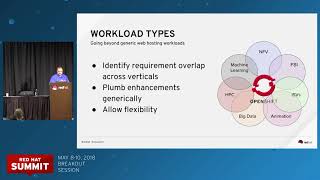
New High-Performance Features in Red Hat OpenShift
Explore advanced features in OpenShift for high-performance workloads, including hugepages, device plugins, extended resources, GPU acceleration, and CPU tuning. Gain insights into resource management and future developments.

How Do I Compute the Body Electric?
Explore computational physics and supercomputing to revolutionize personalized medicine through advanced simulations of the human body.
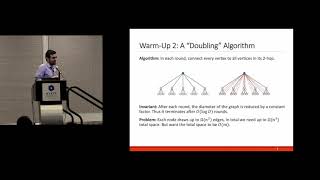
Near Optimal Massively Parallel Graph Connectivity
Explore efficient parallel algorithms for graph connectivity, focusing on near-optimal solutions and innovative techniques for large-scale graph processing.