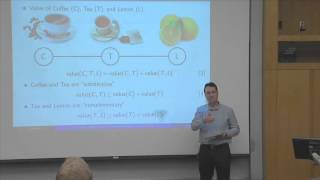
Concrete Applications of Submodular Theory in ML and NLP
Explore submodularity's applications in machine learning and NLP, including dynamic graphical models, clustering, summarization, and more. Learn how it enables efficient algorithms with quality guarantees.
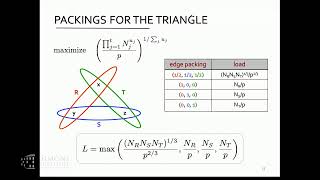
Massively Parallel Evaluation of Relational Queries I
Explore advanced techniques for parallel processing of relational database queries, focusing on fine-grained complexity and efficient evaluation strategies.
Reduce Time to Market and Capital Spend Using Software Operators in HPC
Explore how software operators in High Performance Computing can reduce time-to-market and capital spend, with a focus on the Omnivector Slurm Distribution and its practical applications.
PyKubeSlurm - A Python Operator for Efficient Job Scheduling in Slurm Using Kubernetes
Explore PyKubeSlurm, a Python package simplifying job scheduling in Kubernetes using Slurm. Learn how this operator streamlines workflow management for engineers and improves efficiency.

Hot Chips, AI Exploitation, and Supercomputers - Weekly AI News Roundup
Explore global chip wars, AI labor exploitation concerns, and supercomputer advancements. Discuss deepfakes in Diwali celebrations and enjoy AI-inspired music remix. Stay informed on key AI developments and their potential impacts.
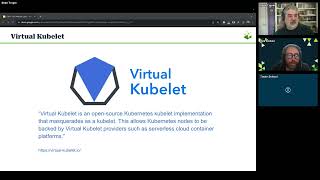
Overcoming GPU Shortages with Virtual Kubelets and Distributed Cloud
Explore innovative solutions to GPU shortages using virtual Kubelets and distributed cloud technology, with practical demonstrations and expert insights.
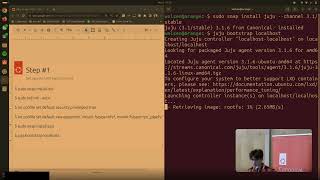
From Zero to Hero - Deploying and Using HPC Clusters
Learn to rapidly deploy and utilize a high-performance computing cluster for urgent data analysis using open-source tools, enabling efficient problem-solving without specialized DevOps knowledge or proprietary software.
Running Distributed TensorFlow on DC/OS
Learn to run distributed TensorFlow on DC/OS, addressing challenges in large-scale machine learning. Explore framework design, live demo, and practical implementation for efficient model training on your infrastructure.
Persistent Memory Usage within Linux Environment
Explore persistent memory usage in Linux, covering hardware, software, programming models, and applications. Learn about NVML library and its impact on system performance and data handling.
ActiveMQ Artemis 2.0 - High Performance Messaging and New Features
Explore the evolution of Apache ActiveMQ Artemis 2.0, its high performance capabilities, and new features for handling massive workloads in messaging systems.
Energy Aware Scheduler (EAS) for big.LITTLE ARM SoCs - An Unbiased Analysis
Explore the Energy Aware Scheduler for big.LITTLE ARM SoCs, its essentials, alternatives, and vendor variations. Gain insights into its strengths and weaknesses for efficient heterogeneous computing.
Adapting Kubernetes for Machine Learning Workflows
Explore how Bloomberg adapted Kubernetes for machine learning, addressing multi-tenancy, data security, and hardware acceleration in their AI-driven financial services platform.
Distributed Deep Learning on Apache Mesos with GPUs and Gang Scheduling
Explore distributed deep learning on Apache Mesos, leveraging GPU clusters for efficient model training in self-driving cars, trip forecasting, and fraud detection at UBER.
Perspective in 3D - Vector Math and Ray Tracing for Financial Data Analysis
Explore vector math, ray tracing, and creative engineering as Perspective's expression language is repurposed for 3D graphics, blending financial analysis with game engine concepts.
Automatic Operator Generation for Open AI Frameworks - MindSpore and AKG
Explore AKG, an automatic AI/DL operator generation solution for MindSpore. Learn about its architecture, capabilities, and role in optimizing performance for various hardware platforms.
Co-Location of CPU and GPU Workloads for High Resource Efficiency in Kubernetes
Explore efficient co-location of CPU and GPU workloads in Kubernetes, including QoS class creation, cgroup management, gang scheduling, and utilization evaluation for improved resource efficiency.
Multi-Cloud Machine Learning Data and Workflow with Kubernetes
Explore building a multi-cloud ML platform using Kubernetes for autonomous vehicles, addressing data management, scheduling, and hardware support across diverse environments.
Chameleon: Expanding Open-Source Ambari for HPC
Explore HPC-based big data platform management with Chameleon, an extension of Apache Ambari. Learn about Lustre filesystem integration, advanced YARN monitoring, and dynamic dashboards for streamlined operations.
Fast and Accurate Deep Neural Networks Training
Exploring LARS and LAMB optimizers for scaling deep learning on supercomputers, enabling faster training and higher accuracy in AI applications across various industries.

Domain Specific Architectures for Deep Neural Networks: Three Generations of Tensor Processing Units
Exploring three generations of Tensor Processing Units (TPUs) for deep neural networks, highlighting performance improvements and the rise of domain-specific architectures in the post-Moore's Law era.

Shading Languages and the Emergence of Programmable Graphics Systems
Explore the evolution of shading languages and GPUs, from movie rendering to data-parallel computing, with insights on their impact on graphics, games, and high-performance applications.