GPU Ray Tracing Techniques and Optimization - SIGGRAPH 2011
Explore cutting-edge GPU ray tracing techniques, including OptiX engine, iray, and custom renderers. Learn optimal hardware configurations and programming approaches for fastest results.
Lessons and Outlook for ML Parameterization of Sub Grid Atmospheric Physics From the Vantage of Emulating Cloud Superparameterization - Mike Pritchard
Exploring machine learning for atmospheric physics parameterization, focusing on cloud superparameterization emulation. Discusses challenges, strategies, and lessons learned in applying ML to climate modeling.
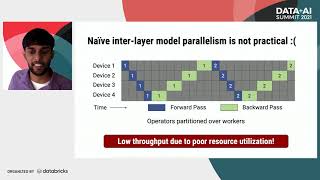
Efficient Large-Scale Language Model Training on GPU Clusters
Explores advanced techniques for efficient large-scale language model training on GPU clusters, discussing parallelism methods, novel scheduling, and performance optimization to achieve unprecedented model sizes and training speeds.
Kubernetes as a Substrate for ATLAS Compute
Exploring Kubernetes' potential for ATLAS experiment computing, including batch processing, GPU resource management, and interactive analysis clusters for high-energy physics research.
Introduction to Kubernetes Working Group Batch - Goals and Roadmap
Explore the Kubernetes WG Batch: goals, roadmap, and early efforts to enhance support for batch workloads, improve portability, and simplify deployment in core Kubernetes.
Managed Kubernetes - Next Gen Academic Infrastructure
Explore managed Kubernetes for academic infrastructure, covering implementation, sensitive data handling, HPC jobs, research applications, resource allocation, and green computing considerations.
Propagating Programming Paradigms - Lifting High Performance Compute Into Kubernetes
Explore how to optimize Kubernetes clusters for high-performance computing workloads, bridging the gap between traditional HPC and cloud-native environments to improve performance and sustainability.
Hybrid Cloud Bursting for Electronic Design Analysis and Optical Proximity Correction
Explore scaling OPC workloads in semiconductor design using managed Kubernetes services for hybrid cloud bursting, enabling efficient compute resource utilization and cost control.
Make Kubernetes Networking Ready for World-Class AI and HPC Workloads
Explore advanced Kubernetes networking for AI and HPC workloads, focusing on multi-interface support, Multus CNI, and the new Multi-NIC CNI project for improved performance and scalability in large-scale GPU clusters.
Machine Learning Using Various GPU Technologies with Kubeflow
Explore efficient distributed learning in Kubeflow using Multi-Instance GPU and GPUDirect RDMA technologies to maximize GPU utilization and improve performance in machine learning workflows.
Introduction to Volcano: Cloud Native Batch System
Explore Volcano, a cloud-native batch system for high-performance workloads on Kubernetes. Learn about its architecture, features, use cases, and recent developments in this comprehensive introduction.
Building a Batch System for the Cloud with Kueue
Learn about Kueue, a cloud-native job scheduler for Kubernetes that optimizes resource allocation, implements fair sharing, and enhances batch processing efficiency in multi-team environments.
Kubernetes Batch Processing at Scale - A Scheduling Perspective
Explore Kubernetes batch processing challenges and solutions, including custom scheduling for large-scale operations, Gang Scheduling, DRF, and workload colocation for improved resource utilization.
Enabling HPC and ML Workloads with Latest Kubernetes Job Features
Explore new Kubernetes Job API features for distributed Batch/AI/HPC workloads, including Indexed Jobs and Pod Failure Policy, with real-world examples from DeepMind and Lawrence Livermore National Laboratory.
Kubernetes for GPU-Powered Machine Learning Workloads in Academia - Lecture
Optimizing Kubernetes for GPU-powered machine learning in academia: architecture, challenges, and successes with NVIDIA DGX A100 machines, open-source integration, and research applications.
Kubernetes WG Batch: Recent Improvements and Future Roadmap
Explore recent improvements and future plans for batch workload support in Kubernetes, including Job API enhancements, Kueue developments, and hardware resource management advancements.
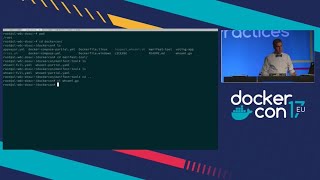
Docker Multi-arch: Extending to Windows, ARM, and IBM Platforms
Explore Docker's extension to Windows, ARM, and IBM platforms, covering multi-architecture images, heterogeneous swarms, and cross-platform deployment strategies.
Introducing Chapel: A Programming Language for Productive Parallel Computing from Laptops to Supercomputers
Explore Chapel, a programming language for efficient parallel computing across devices. Learn key features and applications in aerodynamics, data science, and atmospheric research.
Revisit Multi-Reader Synchronizations for Scalable Applications
Explore multi-reader synchronization techniques for building scalable applications, focusing on performance optimization and efficient resource management in concurrent systems.
Shared Virtual Addressing for High Performance Arm Infrastructure Platforms
Explore shared virtual addressing for Arm platforms, covering advantages, hardware requirements, virtualization, and current design proposals.
State of Art for Enabling Performance Sensitive Workloads and Future Needs
Experts discuss cutting-edge techniques for optimizing performance-sensitive workloads, exploring current challenges and future directions in system optimization and resource management.