Grass Rendering in OpenGL - Code Review
Explore advanced OpenGL techniques for efficient grass rendering, covering shader optimization, buffer management, and performance improvements in C++.
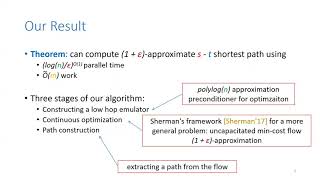
Parallel Approximate Undirected Shortest Paths Via Low Hop Emulators
Explore efficient parallel algorithms for approximating undirected shortest paths using low hop emulators, with applications and open problems in graph theory and network analysis.
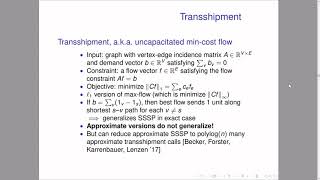
Faster Parallel Algorithm for Approximate Shortest Path
Explore advanced techniques for optimizing parallel algorithms to compute approximate shortest paths, focusing on transshipment, Sherman's framework, and oblivious routing.
RAPIDS - The Platform Inside and Outside - Joshua Patterson - ODSC East 2019
Accelerating data science with GPUs using RAPIDS: open-source libraries for GPU-powered data manipulation, machine learning, and graph analytics, scaling across multiple GPUs and integrating with existing Python ecosystems.
Boston Data Mining - A High-Performance Implementation of Bayesian Clustering
Explore Bayesian nonparametric methods and probabilistic machine learning, focusing on the Chinese Restaurant Process for clustering. Learn optimization strategies for applying these models to big data.
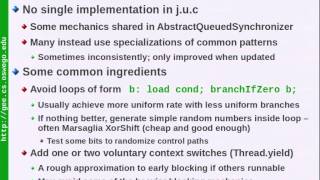
Engineering Concurrent Library Components
Explore concurrent algorithms, hardware trends, and Java Memory Model intricacies for engineering robust library components in multi-threaded environments.
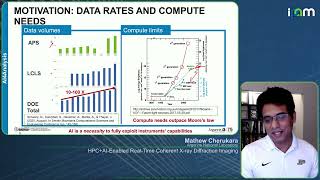
HPC+AI-Enabled Real-Time Coherent X-ray Diffraction Imaging - IPAM at UCLA
Explore HPC and AI-enabled real-time coherent X-ray diffraction imaging, revolutionizing materials characterization with advanced light sources, multi-modal techniques, and innovative data processing methodologies.
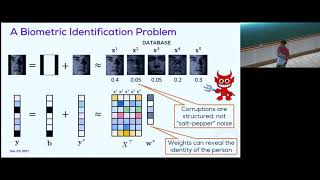
Robust Regression by Purushottam Kar
Explore robust regression techniques for learning and estimation in algorithms and optimization, focusing on practical applications and theoretical foundations.
Future Exascale Architectures - IPAM at UCLA
Explore future exascale computing architectures and their applications in materials science, presented by Lawrence Livermore National Laboratory expert Erik Draeger at UCLA's IPAM.

Data-Driven Design for Energy Materials - IPAM at UCLA
Explore data-driven materials design for energy applications using supercomputing and quantum mechanics. Learn about The Materials Project's vast database and its impact on advancing materials research and innovation.
Flux - A Next Generation Resource Manager for HPC and Beyond - IPAM at UCLA
Explore Flux, a next-gen resource manager for HPC, offering advanced scheduling, standardized interfaces, and nested instance capabilities for improved scientific workflows.
ExaFEL - Achieving Real-Time XFEL Data Analysis Using Exascale Hardware
Explore real-time data analysis for X-ray Free Electron Laser experiments using high-performance computing, focusing on challenges, workflow design, and performance insights for future scientific applications.
Taking Deep Learning to Production with MLflow and RedisAI
Explore MLflow and RedisAI integration for efficient deep learning model deployment, featuring multi-framework support, auto-batching, and DAGing capabilities in a reliable runtime environment.
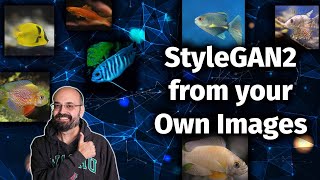
Training a GAN from Your Own Images - StyleGAN2 ADA
Learn to create custom GANs using your own images, from setup to training. Covers image collection, Docker setup, TFRecord conversion, and understanding GAN outputs for various projects like FishGAN and MinecraftGAN.
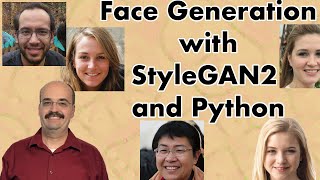
Face Generation with NVIDIA StyleGAN2 and Python 3
Generate realistic faces using nVidia StyleGAN2 and Python. Learn to utilize pretrained weights, TensorFlow wrapper, and Google CoLab GPU for efficient face generation without extensive training.
TensorFlow 2.0 GPU, Keras, and Python 3.7 Installation Guide for Windows 10 - 2020 Update
Comprehensive guide for setting up TensorFlow 2.0 with GPU support on Windows 10, covering installation of necessary drivers, CUDA, cuDNN, and Anaconda environment configuration.
Parallel Approximate Undirected Shortest Paths Via Low Hop Emulators
Explore parallel algorithms for approximating undirected shortest paths using low hop emulators. Learn about innovative techniques and their applications in graph theory.
Profiling Deep Learning Applications with NVIDIA Tools Extension (NVTX)
Enhance deep learning application performance using NVIDIA Tools Extension Library (NVTX) for code profiling and optimization techniques.
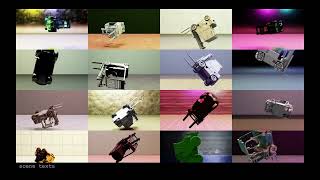
Supercharge Your Vision AI Business with NVIDIA Metropolis
Discover how NVIDIA Metropolis can enhance your Vision AI business through improved performance, streamlined deployments, enterprise readiness, and access to GPU infrastructure and business support.
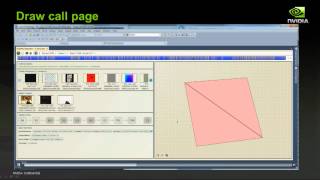
DirectX 11 Debugging with Parallel Nsight 2.1
Learn advanced DirectX 11 debugging techniques using Parallel Nsight 2.1, covering pipeline setup, shader authoring, and new features for efficient game and engine development.

OpenGL and CUDA-Based Tessellation
Explore advanced tessellation techniques using CUDA to overcome OpenGL limitations, enabling higher-order surfaces, custom UV coordinates, and trimming curves for improved visual quality in graphics rendering.