Clinical Interpretation of Genes and Variants for Disease Causality - MPG Primer 2022
Dive into clinical interpretation of genes and variants for disease causality with expert Heidi Rehm. Explore standardized approaches, open science, and data sharing in genomic medicine and rare disease gene discovery.
Biomedical Science and Machine Learning - A Two-Way Street (2023)
Explore the convergence of biomedical science and machine learning, discovering how these fields synergize to address modern biological questions and drive innovations in data analysis.
The Limits of Virus Discovery and How to Overcome Them - Primer on Sequence Bioinformatics
Explore cutting-edge methods for RNA virus discovery, including ultra-high throughput cloud computing and advanced sequence homology algorithms, to uncover millions of novel viruses by 2030.
Decoding the Epigenomic Landscape of Trauma across the Lifespan
Explore the epigenomic landscape of trauma across the lifespan with Dr. Janitza Montalvo-Ortiz. Gain insights into computational approaches for studying genomics and epigenomics of neuropsychiatric disorders, focusing on trauma and substance use.
Haplotype Assembly Using Short and Long Reads - 2022
Dive into haplotype assembly techniques using short and long reads. Explore advanced bioinformatics methods for genetic analysis with insights from Ramin Shirali's research at TU Delft.

Statistical Genetics: Importance of Using Globally Representative Data Sets and Inclusive Analytical Methods
Dive into statistical genetics with Hailiang Huang, exploring the crucial role of globally representative data sets and inclusive analytical methods in research.
Targeting Inflammation in Heart Failure and Myocarditis - Grand Rounds
Explore the immune landscape of the heart, next-gen sequencing in cardiac pathology, and potential immunomodulatory therapies for heart failure and myocarditis.
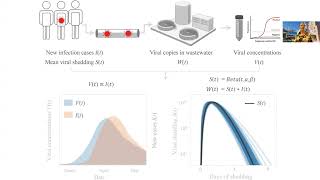
DNA Language Models and Convolution - Lecture 12
Dive into DNA language models and convolution techniques, exploring advanced computational approaches for analyzing genetic sequences and structures.
Evaluation and Interpretation of Human Genomic Variation
Dive into human genomic variation evaluation and interpretation with Professor Douglas Fowler's presentation on cutting-edge genome sciences research and its implications.
Ancient Genetic Clues into Modern Human Disease - Part 2
Explore ancient and historical DNA's role in understanding modern human diseases. Gain insights into ethical frameworks, research gaps, and future opportunities in this evolving field of genomic research.
Ancient Genetic Clues into Modern Human Disease - Part 1
Explore ancient and historical DNA's role in understanding modern human diseases. Gain insights into ethical frameworks, research gaps, and future opportunities in this field.

Foundation Models in Drug Discovery - Ray Summit 2024
Explore how foundation models are revolutionizing drug discovery across multiple biological domains. Gain insights into Recursion's large-scale approach using GPUs, robotics, and petabytes of data to transform pharmaceutical innovation.

Population Structure and Admixture - MPG Primer 2024
Dive into population genetics, exploring structure and admixture. Gain insights into complex trait genetics, human variation, and analytical methods for understanding genetic diversity in populations.
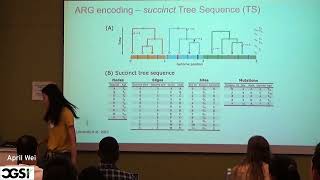
Genotype Representation Graph: Enabling Efficient Analysis of Biobank-Scale Data
Dive into efficient analysis of biobank-scale data using Genotype Representation Graphs. Explore innovative methods for estimating coalescence times and inferring whole-genome histories in large population datasets.

Cracking the Code on Zombie Cicadas
Uncover the fascinating world of Massospora fungi and their zombifying effects on cicadas. Explore groundbreaking research, including amphetamine production in fungi and the largest fungal genome discovered to date.
PBWT-based Algorithms for Large Cohort Genetics - CGSI 2024
Explore PBWT-based algorithms for large cohort genetics, covering efficient haplotype matching, IBD detection, and innovative approaches like d-PBWT and Syllable-PBWT for genomic data analysis.
Using Pooled CRISPR Screens to Study Biology
Explore the application of pooled CRISPR screens in biological research. Gain insights into cutting-edge techniques for studying gene function and cellular processes at a genome-wide scale.
Uni-alignment: A Parameter-free Framework for Fast and Accurate Sequence Alignment
Explore a parameter-free framework for fast and accurate sequence alignment, focusing on UniAligner's innovative approach to genomic data analysis and its implications for computational biology.
Inference of Selective Effects and Demographic Histories of Human Gut Commensals - CGSI 2024
Explore the evolutionary dynamics of human gut microbiomes through selective sweeps, rapid evolution, and strain turnover. Gain insights into bacterial adaptation within and across hosts.
Reconstructing Every Haplotype with De Novo Assembly
Dive into advanced techniques for reconstructing haplotypes using de novo assembly, exploring cutting-edge methods in computational genomics and bioinformatics.
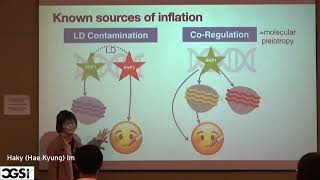
On the Problem of Inflation in TWAS and Other xWAS - CGSI 2024
Dive into the challenges of inflation in transcriptome-wide association studies and explore potential solutions in this insightful genomics lecture.