Exon - A Built for Purpose Bioinformatics Database
Discover how purpose-built bioinformatics databases work through Exon's architecture, design principles, and practical applications in genomic data management and analysis.
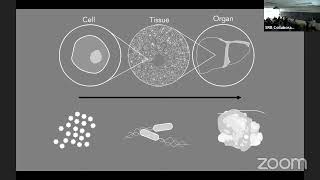
Bi-directional Lessons Between Traditional Evolutionary Biology and Cancer
Explore evolutionary biology's impact on cancer research and vice versa, uncovering insights that bridge these interconnected fields.
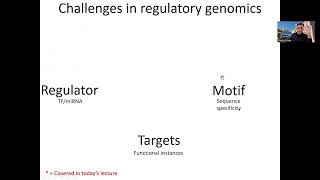
Regulatory Circuitry and Networks - Lecture 7
Explore regulatory circuitry and networks in biological systems, focusing on gene regulation mechanisms and their interconnected pathways.
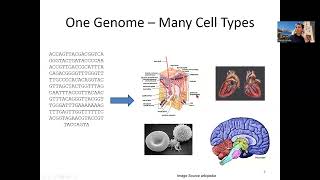
Epigenomics and Hidden Markov Models in Computational Biology - Lecture 5
Explore epigenomics, histone modifications, and DNA profiling techniques. Learn about read mapping, quality control, and Hidden Markov Models for analyzing chromatin states in computational biology.
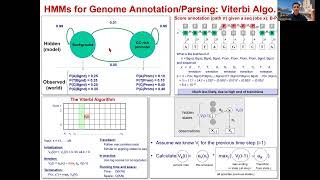
Regulatory Circuitry - Lecture 6
Explore regulatory circuitry in genomics, uncovering mechanisms of gene expression control and cellular regulation through advanced computational analysis techniques.
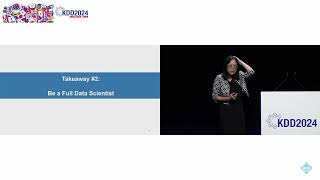
Empower an End-to-End Scalable and Interpretable Data Science Ecosystem Using Statistics, AI and Domain Science
Explore scalable, interpretable data science using statistics, AI, and domain expertise. Gain insights from Harvard professor Xihong Lin on analyzing complex genomic and health data.

Machine Learning in Medical Diagnostics and Drug Discovery
Explore machine learning applications in genomics and proteomics for medical diagnostics and drug discovery. Learn how advanced analytics improve sequencing projects and translate technologies into practice.
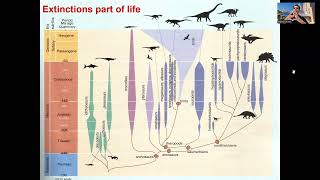
Sequence Alignment and Dynamic Programming in Computational Biology - Lecture 4
Comprehensive exploration of sequence alignment techniques, from comparative genomics to dynamic programming, covering local alignment, hashing, and BLAST for efficient genomic analysis and evolutionary insights.
Leveraging Machine Learning and Clinico-Genomic Data for Cancer Care and Drug Discovery
Discover how machine learning and genomic data from 500,000 cancer cases drive innovations in cancer treatment and pharmaceutical development through advanced computational approaches.
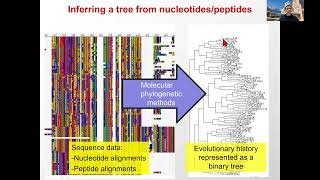
Evolution in Machine Learning and Computational Biology - Lecture 21
Dive into computational approaches for studying evolutionary biology, exploring genomic patterns, molecular evolution, and machine learning applications in evolutionary analysis.

Investigating Rapid Nuclear Mechanotransduction by Mapping Genome-wide Changes in Transcription
Explore groundbreaking research on nuclear mechanotransduction, examining how mechanical forces trigger rapid genomic changes and gene activation through advanced sequencing techniques and cellular observations.

Scientists in Action: Mighty Mutations and Dazzling DNA - Understanding Human Genetic Variation
Explore the fascinating world of genetics with a genomics scientist, discovering how DNA mutations shape human uniqueness and our surprising genetic connections to other species.
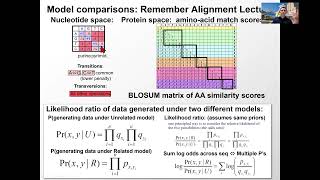
Comparative Genomics - Lecture 20
Explore comparative genomics principles and methodologies for analyzing DNA sequences across species to understand evolutionary patterns and functional elements.
Identifying Clinically Relevant Mutations in Somatic NGS Testing
Discover how to effectively identify and interpret clinically significant mutations in NGS cancer testing, focusing on practical approaches to overcome data interpretation challenges in precision medicine.
Unraveling the Roles of Copy Number Variants in Tumorigenesis
Explore genomic analysis of cancer cells, focusing on Copy Number Variants (CNVs) as biomarkers and their detection through OncoScan CNV assays for understanding tumor development and progression.
Comprehensive Profiling of Cancer Neoantigens From Aberrant RNA Splicing
Discover how computational methods identify and analyze cancer neoantigens from aberrant RNA splicing, focusing on DNA mutations and de novo RNA aberrations for advancing immuno-oncology treatments.
Cancer Immunotherapy Data Science Challenge: Data Overview - Lecture 3B
Dive into single-cell sequencing data analysis and machine learning applications for enhancing T-cell effectiveness in cancer immunotherapy through genetic modification strategies.
Measuring Gene Expression in T Cells for Cancer Immunotherapy - Lecture 2
Discover how gene expression measurement techniques in cells contribute to understanding and enhancing T-cell based cancer immunotherapy approaches through advanced sequencing technologies.
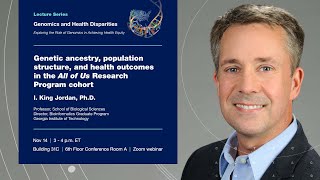
Genetic Ancestry, Population Structure, and Health Outcomes in the All of Us Research Program Cohort
Explore genetic ancestry research and population genomics in the All of Us Research Program, focusing on health equity, bioinformatics advances, and their impact on addressing health disparities.
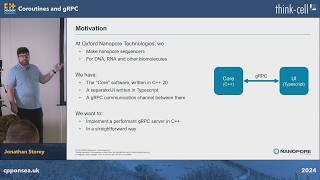
Introduction to C++ Coroutines and gRPC - Writing Coroutine Support Code
Dive into high-performance C++ coroutines and gRPC implementation, learning to write support code for production-ready applications with practical examples and composable library integration techniques.
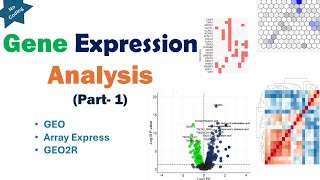
Beginner's Guide to Gene Expression Analysis - Bioinformatics Simplified
Master the fundamentals of gene expression analysis through hands-on practice with GEO2R and key bioinformatics tools. Learn data retrieval, differential analysis, and results interpretation for practical research applications.