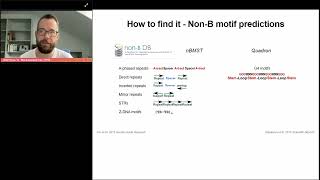
Sequencing Errors and Alternative DNA Structures
Explore how non-B DNA structures affect sequencing errors across Illumina, PacBio HiFi, and Oxford Nanopore technologies, and learn their implications for genomic studies.
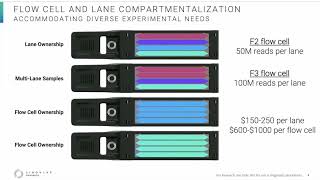
Accelerating Research with Fast, Flexible, and Cost-Efficient Next-Generation Sequencing on the G4 Platform
Explore fast, flexible, and cost-efficient next-generation sequencing on the G4 platform. Learn about core NGS applications and their data from an expert in computational biology and immunology.
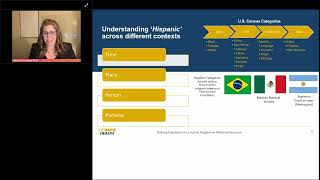
How Population-based Metrics for Diversity Shape Human Genomics Research and Reference Resources
Explore how population-based diversity metrics influence human genomics research and reference resources. Gain insights into the complexities of racial and ethnic classification in biomedical studies.
Hanging by a Thread: Using High Fidelity Long-Read Sequencing to Uncover the Genomic Basis of Insect Silk
Explore genomic advances in silk research using high fidelity long-read sequencing. Uncover hidden variations in silk genes across insects and spiders, revolutionizing our understanding of this remarkable biomaterial.
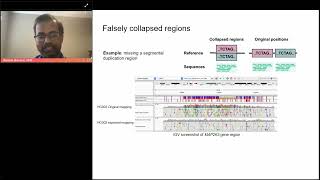
Improving Genomic Analysis by Fixing Reference Errors
Discover how to enhance genomic analysis by correcting GRCh38 reference errors, impacting variant calling in 33 protein-coding genes. Learn about FixItFelix for efficient re-analysis while maintaining existing annotations.
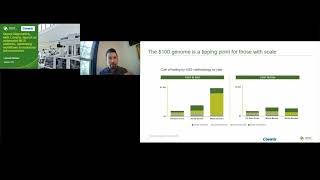
Quest Diagnostics with Covaris Launches Automated NGS Platform - Optimizing Workflows to Maximize Lab Economics
Explore advancements in automated NGS platforms and optimized workflows for improved lab economics in genomics and oncology, featuring insights from industry experts.
Expanding the Frontiers of Gene Editing: The Role of Genotypic Confirmation
Explore gene editing frontiers and genotypic confirmation's role in cellular physiology research, disease understanding, and treatment development. Gain insights into precision genome engineering techniques.
Multifaceted Community Analyses Uncover Novel Bacterial Species in the Colorectal Tumor Niche
Explore novel bacterial species in colorectal tumors through cutting-edge genomic techniques. Gain insights into microbial diversity and potential impacts on cancer progression and treatment.
Racial Disparities in Genomic Data Quality in Cancer - Impact and Potential Mitigation
Explore racial disparities in cancer genomic data quality, their impact, and potential mitigation strategies. Gain insights into sequencing depth differences and their implications for cancer research and treatment.
Comparative Genomics of Two Common Skin Microbiome Members: CoNS Staphylococcus and Corynebacterium Tuberculostearicum
Explore comparative genomics of skin microbiome, focusing on Staphylococcus and Corynebacterium. Gain insights into bacterial diversity, prevalence, and implications for health and disease.
Multifaceted Community Analyses Uncover Novel Bacterial Species in the Colorectal Tumor Niche
Explore novel bacterial species in colorectal tumors through cutting-edge culturing and sequencing techniques. Gain insights into microbial diversity and potential roles in cancer progression.
High-sensitivity, Targeted NGS Variant Detection of Viral and Bacterial Pathogens - A Novel Solution for Healthcare and Environmental Surveillance and Research
Explore targeted NGS variant detection for viral and bacterial pathogens, enhancing healthcare and environmental surveillance with high-sensitivity solutions.
Advances in Targeted Sequencing - Accelerate Your NGS Workflows with New QIAseq Chemistry
Discover how new QIAseq chemistry accelerates NGS workflows for targeted sequencing, enhancing efficiency and productivity in genomic research.
Ultra-Rapid Nanopore Whole Genome Sequencing in a Critical Care Setting
Explore ultra-rapid nanopore whole genome sequencing in critical care settings. Learn about cutting-edge technology's potential to revolutionize patient diagnosis and treatment in emergency situations.
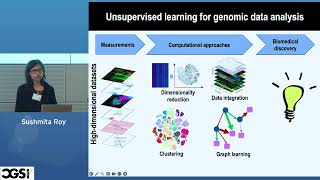
Matrix Factorization and Applications to Bulk and Single Cell Omic Datasets
Explore matrix factorization techniques for analyzing bulk and single-cell omic datasets, with applications in computational genomics and bioinformatics.
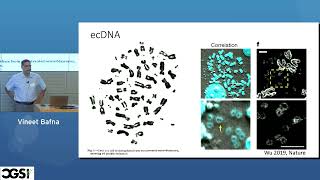
ecDNA and Breakage Fusion Bridge: Two Facets of Oncogene Amplification in Cancer
Explore oncogene amplification in cancer through ecDNA and Breakage Fusion Bridge mechanisms. Gain insights into cutting-edge research on extrachromosomal DNA and its role in cancerous transformations.
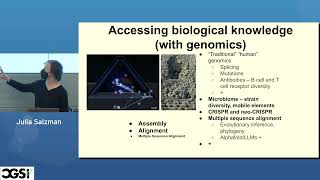
SPLASH: Statistical Signal Extraction for Unified Genomic Discovery
Explore SPLASH, a statistical algorithm for efficient genomic discovery. Learn about its applications in microbial sequencing, transcriptomics, and scientific research.
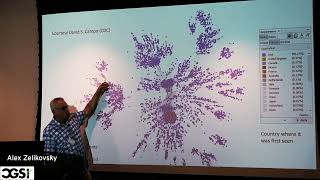
SARS-CoV-2 Saltations and Punctuational Evolution - CGSI 2024
Explore SARS-CoV-2 evolution through saltations and punctuated equilibrium, analyzing community structure of coordinated substitution networks for early variant detection.
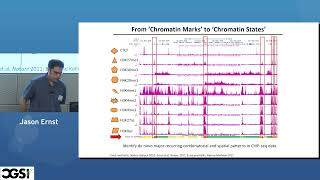
Computational Methods for Modeling and Analyzing Epigenomic Data
Explore computational methods for modeling and analyzing epigenomic data, focusing on chromatin state annotation, gene-based modeling, and cross-species conservation in functional genomics.
Dissecting the Gene Regulatory Grammar at a Single Cell Resolution
Explore gene regulatory mechanisms at single-cell resolution. Discover cutting-edge techniques for analyzing multimodal data and constructing regulatory networks in genomics research.
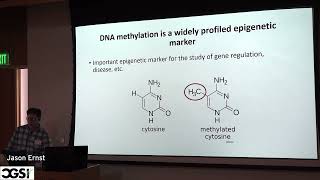
Computational Methods for Cross-Species Epigenomic Analyses - CGSI 2024
Explore computational methods for cross-species epigenomic analyses, focusing on DNA methylation imputation and conservation scoring across mammalian species.