Predicting the Epigenome from DNA Sequence - Are We There Yet?
Explore predicting epigenomes from DNA sequences using deep learning methods. Discover limitations, data analysis techniques, and latest research in computational genomics.
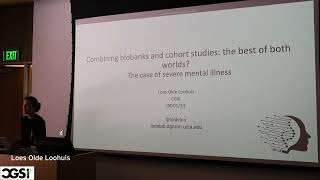
Combining Biobanks and Cohort Studies - The Best of Both Worlds
Explore the integration of biobanks and cohort studies to enhance genetic research and improve understanding of complex diseases.
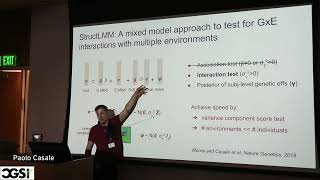
Mixed Models in Genomic Analyses and Imaging Studies
Explore mixed models in genomics and imaging, focusing on efficient set tests, Gaussian process priors, gene-environment interactions, and neural networks for histologic feature quantification.
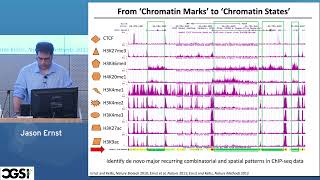
A Tutorial on Computational Methods for Modeling and Analyzing Epigenomic Data
Explore computational methods for modeling and analyzing epigenomic data, covering ChromHMM, multivariate Hidden Markov Models, and integrating multiple chromatin markers across cell types.
Lessons from the Largest Genome-Wide Association Study of Human Height
Explore insights from the largest genome-wide association study on human height, examining genetic variants, heritability, and the impact of rare variations on this complex trait.
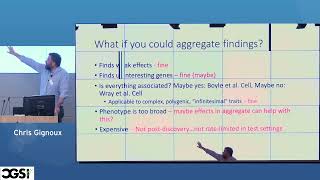
Applying Polygenic Scores at Biobank Scale - CGSI 2022
Explore applying polygenic scores at biobank scale, examining reporting standards, reproducibility, health disparities, and clinical applications in genomic risk prediction.

Overview of Rare Variant Analysis in Whole Genome Sequencing Association Studies
Explore rare variant analysis techniques for whole genome sequencing studies. Learn statistical methods, study designs, and powerful tools for uncovering genetic associations in large-scale genomic data.
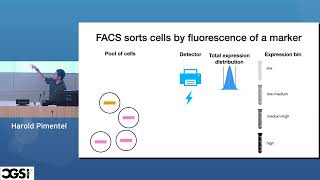
Inference Methods for High-Throughput CRISPR Screens - CGSI 2022
Explore inference methods for high-throughput CRISPR screens, focusing on regulatory gene discovery in human T cells and the architecture of immune networks.
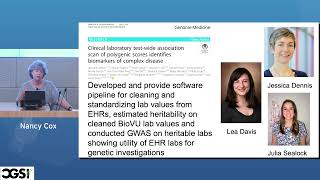
How Genetics Can Help Untangle Institutionalized Health Inequity
Explore how genetic research can address health inequities, focusing on case studies involving racial disparities in medical diagnoses and treatment decisions.
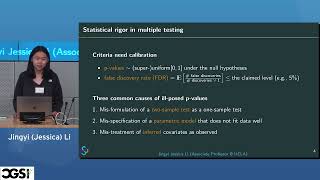
Statistical Rigor in Genomics Data Science
Explore statistical rigor in genomics data science, focusing on differential expression methods, p-value calibration, and high-throughput data analysis techniques for improved accuracy in genomic research.
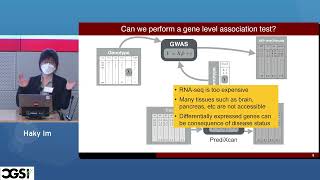
Integrating Multiple Omic Data to Improve Mechanistic Understanding and Prediction
Explore integrating multiple omic data to enhance mechanistic understanding and prediction in genomics. Learn techniques for improving data interpretation and predictive modeling in computational biology.
Designing DNA with Tunable Regulatory Activity Using Discrete Diffusion
Explore DNA Discrete Diffusion (D3) for engineering regulatory DNA sequences with targeted functional activity levels. Learn about its advantages, evaluation metrics, and applications in functional genomics.
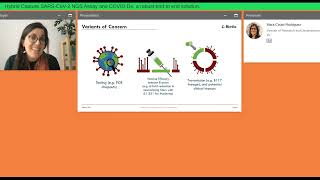
Hybrid Capture SARS-CoV-2 NGS Assay and COVID-Dx: A Robust End-to-End Solution for Viral Detection and Surveillance
Explore a robust solution for SARS-CoV-2 detection and genetic variant surveillance using hybrid capture NGS assay and COVID-Dx. Learn about cutting-edge genomics tools for viral monitoring.
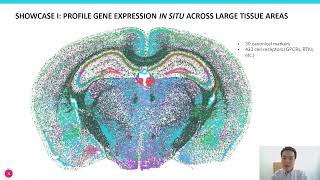
Illuminating Biology with Spatially Resolved, Single-cell Transcriptomics
Explore spatially resolved, single-cell transcriptomics to understand tissue organization and cellular heterogeneity in biological systems, presented by Vizgen co-founder Jiang He.
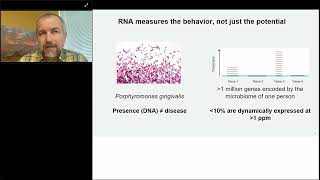
A Systems Medicine Platform Based on RNA Sequencing and Artificial Intelligence
Explore Viome Operating System (ViOS), an open-access platform integrating lab, computational, and logistics components for efficient clinical research and health improvement using big data and AI.
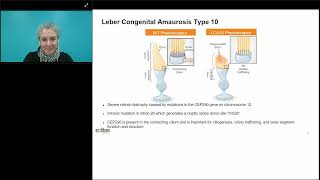
Assessing CRISPR On-Target Editing and Structural Changes with UDiTaS Using Tagify Reagents
Explore CRISPR editing assessment using UDiTaS™ and Tagify™ reagents. Learn about quantitative methods for measuring structural changes and small indels in genomic editing outcomes.

The Evolution of Precision Diagnostics in Advancing Treatment Strategies of Solid Tumors
Explore advancements in multi-omic approaches for comprehensive tumor analysis, accelerating precision medicine development while addressing challenges in diagnostic laboratory integration.
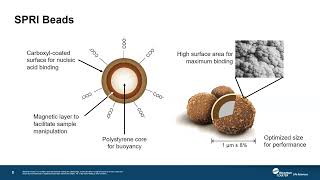
The Irresistible Pull of Paramagnetic Beads - Benefits and Applications in Molecular Biology
Explore the benefits of SPRI technology in molecular biology workflows. Learn about paramagnetic beads for efficient nucleic acid extraction, applications, and implementation strategies for drug discovery and development.
NextSeq 1000/2000 - Longer Reads and Extended Informatics
Explore key updates and features of NextSeq™ 1000/2000 sequencers and DRAGEN Bio-IT platform, focusing on longer reads and enhanced informatics capabilities.

qPCR Research Testing for Pharmacogenomics: Workflow, Validation and Content Selection
Explore key components of Pharmacogenomics testing, including workflow, validation, and content selection for qPCR research in laboratory settings.
Insights into Cancer Genomics via COSMIC v98
Explore cancer genomics through COSMIC v98, learning about new cancer genes, download files, IDs, and data improvements in this comprehensive overview.