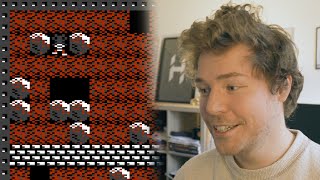
Testing Hazel's Performance - Game Engine Series
Explore performance optimization techniques for game engines through a Boulder Dash clone, focusing on debugging, GUI improvements, and release testing.

Hazel 2020 - Game Engine Series
Explore game engine development with Hazel in 2020, covering plans, scripting, rendering techniques, and Windows-specific features for aspiring developers.

Intro to Profiling - Game Engine Series
Learn essential techniques for profiling and optimizing game engine performance, focusing on lambda functions and result analysis.
2D Renderer Textures - Game Engine Series
Learn to implement textures in a 2D renderer, covering quad creation, texture setting, rendering, debugging, and testing for game engine development.

Resizing - Game Engine Series
Learn techniques for implementing resizable game windows, including viewport management, frame buffer handling, and adjusting projection matrices for seamless gameplay experiences.

Material Systems - Game Engine Series
Explore game engine material systems, covering shaders, uniforms, coding, instances, render sorting, and textures for efficient and visually appealing game development.
Transforms - Game Engine Series
Explore game engine transforms: implementation, submission, and practical examples for enhancing your game development skills.

Timesteps and Delta Time - Game Engine Series
Learn about timesteps and delta time in game engine development, exploring implementation, application, and testing for smooth gameplay and consistent performance.

Cameras and How They Work - Game Engine Series
Explore camera fundamentals in game engines, covering field of view, aspect ratio, transforms, and projection matrices for enhanced game development skills.

Vertex Buffer Layouts - Game Engine Series
Learn to implement vertex buffer layouts in game engine development, covering buffer offsets, shader enums, and OpenGL base types for efficient rendering.

Rendering Architecture - Game Engine Series
Explore game engine rendering architecture, focusing on Render APIs, command queues, and implementation strategies for efficient graphics processing.

Input Polling - Game Engine Series
Learn to implement input polling for mouse and keyboard in game engine development, focusing on efficient window access and button handling techniques.

GitHub and Hazel - Game Engine Series
Learn to integrate GitHub with game engine development, covering commits, collaboration, and cross-platform issues. Explore Premake, wikis, and runtime configurations for efficient project management.

ImGui - Game Engine Series
Learn to integrate ImGui into your game engine, enhancing UI development with immediate mode graphics and improving overall functionality and user experience.

Layers - Game Engine Series
Explore game engine architecture with a focus on layers, enhancing your understanding of application structure and development in game programming.

Premake - Game Engine Series
Learn to set up and configure Premake for efficient game engine development, covering project generation, workspace setup, and Windows-specific considerations.

Logging - Game Engine Series
Learn efficient game engine logging techniques using spdlog, covering implementation, wrapper creation, and API design for improved debugging and development.
How to Create Tilemaps in Unity - Tile Maps and Tile Palettes in Unity
Learn to create 2D environments efficiently using tilemaps and tile palettes in Unity. Master sprite sheet importing, slicing, and proper tile updating to avoid common errors and gaps between tiles.
Change Scene with Button in Unity - Scene Manager in Unity - Learn Unity
Learn to implement a scene manager in Unity for efficient scene transitions, enhancing game flow and organization through practical coding and setup techniques.

Ways to Create a Door Key System in Unity - 2D and 3D Key System Tutorial - Learn Unity
Learn to create door key systems in Unity using simple and inventory-based methods. Unlock doors in 2D and 3D games with this comprehensive tutorial on implementing key mechanics.

How to Make Door Open and Close in Unity - Open Doors 2D and 3D Tutorial
Learn to create interactive doors in Unity for 2D and 3D games. This tutorial covers script creation, door behavior, switch mechanics, and implementation testing.