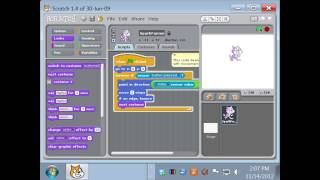
Scratch Programming and Pico Board Online Class
Learn Scratch programming and game development using the SparkFun Pico Board. Explore loops, motion, touch sensors, sliders, and code editing in this comprehensive tutorial.

2D Physics Engine Design and Code Review
Explore 2D physics engine design, API creation, and optimization techniques. Learn about pointers, spatial partitioning, and physics solvers for game development.

How to Create a Game Using JavaScript - Part 1 - Setup, HTML & JavaScript
Learn to create a JavaScript RPG game, covering setup, HTML structure, and basic game mechanics using objects and constructors for an interactive battle arena experience.
Hazel Game Engine Code Review
Explore the architecture and implementation of Hazel game engine, covering project structure, core systems, rendering, and editor functionality. Gain insights into game engine development.

Minecraft Clone in C++ - Code Review and Optimization
Explore a Minecraft clone in C++, covering project structure, code organization, math concepts, ray casting, and shader techniques. Gain insights into game development practices.
Space Invaders Clone in C# - Code Review and Optimization
Comprehensive code review of a Space Invaders clone in C#, covering optimization, abstraction, performance, and game programming concepts for aspiring developers.
C# Game Engine Code Review - Building a 3D Renderer at 16
Comprehensive code review of a C# game engine, offering insights on architecture, rendering techniques, and optimization strategies for aspiring game developers.

Making a Game in One Hour Using a Custom Engine
Develop a game in one hour using a custom engine, covering 3D modeling, scripting, environment design, particle effects, audio integration, and gameplay refinement.
Visualizing Physics Colliders - Game Engine Series
Learn to visualize physics colliders in game engines, covering rendering techniques, scene management, and transform handling for improved game development.

Instanced Rendering in My Game Engine
Learn to implement instanced rendering in game engines, improving performance by reducing draw calls and efficiently handling multiple object instances.

Rendering Circles in a Game Engine - Game Engine Series
Learn to render circles in a game engine, covering visualization, debugging, transparency, mouse picking, runtime rendering, and component serialization. Enhance your game development skills.

Chess Code Review and Performance Optimization
Comprehensive code review of a chess game implementation, offering insights on design, performance, and best practices for game development.
Learning C++ for Java, C#, and Python Developers - Code Review
Comprehensive C++ code review covering Git submodules, debugging, optimization, and best practices. Ideal for experienced programmers transitioning to C++ from Java, C#, or Python.

Universally Unique Identifiers - Game Engine Series
Learn about Universally Unique Identifiers (UUIDs/GUIDs), their implementation, hashing, and practical application in game engine development.

Hazel 2D - Game Engine Series
Learn to create a functional play button UI in a 2D game engine, covering texture bugs, transparency, and implementation details.

Making Game Engines Is Hard
Explore the challenges and complexities of game engine development, with insights into environment mapping and demos of the Hazel engine.
Basic 3D Game Engine Based on Hazel - Code Review
Learn to create a basic 3D game engine with cube rendering, normals, scaling, and matrix transformations. Explore the general structure and implementation details of a simple graphics engine.
Adding-Removing Entities and Components UI - Game Engine Series
Learn to implement entity and component management UI in game engines, covering addition, removal, and destruction of entities with practical demonstrations and code examples.

Scene Camera - Game Engine Series
Learn to implement a scene camera in game engine development, covering resizing, viewport, aspect ratio, and orthographic projection.

The Entity Class - Game Engine Series
Learn to create and implement an Entity class in game engine development, covering components, wrappers, and transform functionality.

Entity Component System - Game Engine Series
Explore Entity Component System architecture for game engines, covering implementation, benefits, and performance implications. Learn about scene management and entity rendering.