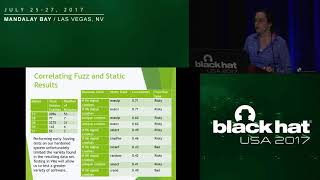
Quantifying Risk in Consumer Software at Scale - Consumer Reports' Digital Standard
Explore methodologies for quantifying software security risks, predicting vulnerabilities, and evaluating consumer products using the Digital Standard developed by Consumer Reports and CITL.
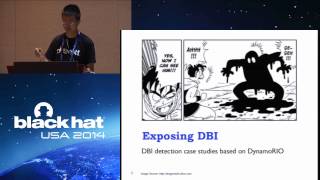
Defeating the Transparency Feature of DBI
Techniques to break transparency in dynamic binary instrumentation tools, exposing limitations and enabling detection of analysis environments for malware and binary applications.
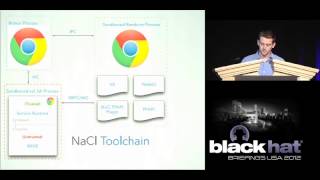
Google Native Client - Analysis of a Secure Browser Plugin Sandbox
Explore Google's Native Client sandbox for Chrome, its architecture, security features, and potential vulnerabilities. Learn about PPAPI and a tool for fuzzing PPAPI interfaces.
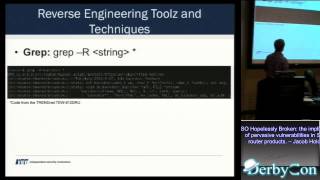
So Hopelessly Broken - The Implications of Pervasive Vulnerabilities in SOHO Routers
Explore vulnerabilities in SOHO routers, covering security risks, testing methods, and exploit development. Learn about command injection, directory traversal, and buffer overflows with live demonstrations.
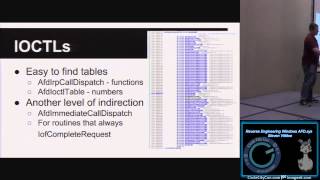
Reverse Engineering Windows AFD.sys
Explore Windows AFD.sys reverse engineering techniques, covering static analysis, fuzzing, and Project Zero's goals. Learn about registry inputs, dispatch calls, and bug hunting strategies.
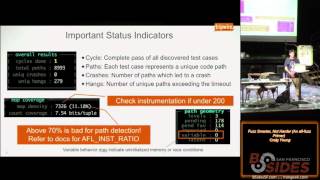
Fuzz Smarter Not Harder - An AFL Fuzz Primer
Explore advanced fuzzing techniques with AFL, including parallel and LLVM fuzzing, persistent mode, and crash assessment. Learn to optimize your fuzzing process for better vulnerability detection.
Metasploit Fuzzing and Exploit Development
Learn advanced Metasploit techniques for fuzzing and exploit development, covering overflows, stack manipulation, and shellcode creation. Gain practical skills inspired by Derbycon's founding.
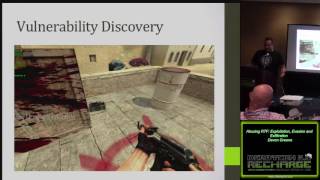
Abusing RTF - Exploitation, Evasion, and Exfiltration
Explore RTF file exploitation techniques, evasion methods, and exfiltration strategies. Learn about file tampering, magic files, and fuzzing to enhance your cybersecurity skills.
Fuzzing Basics - How to Break Software
Learn essential fuzzing techniques to identify software vulnerabilities, enhance security testing skills, and improve overall application robustness.
Finding a Weak Link - Attacking Windows OEM Kernel Drivers
Explore Windows OEM kernel driver vulnerabilities through fuzzing, analysis, and exploitation techniques. Learn to identify weak points and understand potential security risks in driver implementations.
Intro to Fuzzing for Fun and Profit
Explore fuzzing techniques for software security, covering tools like AFL and Python fuzzers, memory error detection, debugging strategies, and advanced fuzzing methods.
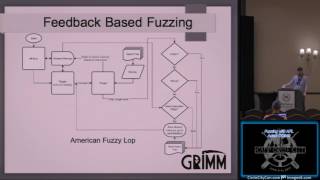
Fuzzing with AFL
Explore fuzzing with AFL, covering traditional methods, monitoring execution, and applications in Google and Windows. Learn about limitations, instrumented fuzzing, and open problems in this field.
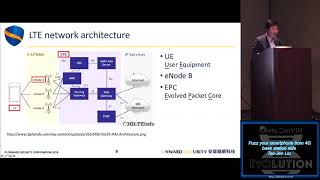
Fuzz Your Smartphone from 4G Base Station Side
Explore smartphone vulnerabilities through 4G base station fuzzing techniques, enhancing mobile security knowledge and practical skills.

How ClusterFuzz Found Over 16,000 Bugs - An Introduction to Fuzzing
Explore ClusterFuzz's success in bug detection through fuzzing techniques. Learn about this powerful tool's methodology and its impact on software security and reliability.

Navigating the Development and Evolution of a Library
Comprehensive guide on library development, covering code quality, testing, documentation, release management, and user engagement. Insights from Boost and libc++ experiences.

Make Your Programs More Reliable with Fuzzing
Explore fuzzing techniques to enhance program reliability when handling external data. Learn about its history, current tools, and real-world applications in libc++ and Boost.
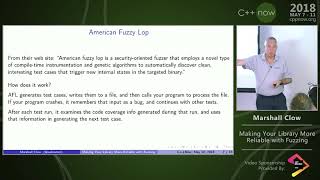
Making Your Library More Reliable with Fuzzing
Explore advanced fuzzing techniques to enhance library reliability, with insights on tools, guided fuzzing, and real-world examples from libc++ and Boost.Algorithm.
What's the Fuzz All About - Randomized Data Generation for Robust Unit Testing
Explore randomized data generation for robust unit testing using the Hypothesis library in Python, enhancing test coverage and detecting potential bugs through dynamic testing approaches.
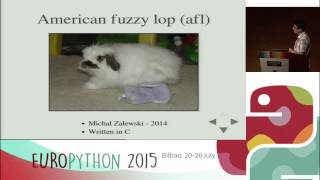
Testing with Two Failure Seeking Missiles - Fuzzing and Property Based Testing
Explore advanced testing techniques using Hypothesis for property-based testing and American fuzzy lop for fuzzing, enhancing code coverage and uncovering hidden bugs in Python applications.
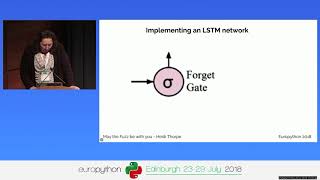
May the Fuzz Be with You
Explore how LSTM neural networks and Python can generate AI-driven test inputs for software testing and network security, improving upon traditional fuzzing techniques.

Testing and Fuzzing
Explore advanced Linux kernel testing techniques, including fuzzing, automated testing, and static analysis tools. Gain insights from leading developers to improve kernel reliability and security.