Testing & Fuzzing MC
Explore advanced techniques for testing and fuzzing in Linux systems, focusing on improving software reliability and security through systematic vulnerability detection.

Testing and Fuzzing MC
Explore advanced techniques for testing and fuzzing in Linux systems, focusing on enhancing security and reliability through innovative methodologies and tools.
Go Dynamic Tools
Explore dynamic tools for Go: data race detector, fuzzing system, and execution tracer. Learn how to find bugs and improve performance in Go programs.
Unlocking Secrets of Proprietary Software Using Frida
Explore binary application internals with Frida, a powerful instrumentation framework. Learn to hook functions, trace data, and analyze software across multiple platforms through hands-on demos.
Fuzzing with AFL
Explore fuzzing techniques with AFL, covering installation, workflow, optimization, and practical tips for effective application testing and vulnerability discovery.
Owi: An Interpreter and Toolkit for WebAssembly in OCaml
Explore Owi, an OCaml-based interpreter and toolkit for WebAssembly. Learn about its architecture, features, and advantages for experimentation and symbolic manipulations of Wasm code.

QEMU-Native Hooking Bridge for Binary Fuzzing
Explore advanced binary fuzzing techniques through QEMU-Native Hooking Bridge, offering improved instruction hooking and memory control for efficient vulnerability detection in compiled code without source access.
Fuzzing USB With Raw Gadget
Discover how to effectively fuzz USB drivers using Raw Gadget, exploring techniques for finding and exploiting vulnerabilities in USB device drivers through practical demonstrations.

UDSonCAN Attacks - Discovering Safety Critical Risks by Fuzzing
Explore critical vehicle security vulnerabilities through UDSonCAN fuzzing techniques, revealing potential safety risks in diagnostic systems and their essential countermeasures for modern electric vehicles.
The State of eBPF Fuzzing
Explore the current landscape of eBPF fuzzing techniques and their impact on Linux kernel security and performance optimization.
Installing and Using Jackalope Fuzzer on MacOS - Finding Vulnerabilities in Simple Programs
Install and use jackalope fuzzer on MacOS to find vulnerabilities in binary programs. Learn cloning, compilation, command options, and practical fuzzing techniques.
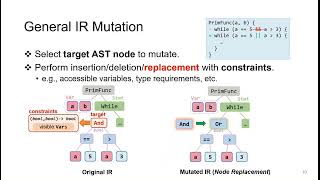
Coverage-Guided Tensor Compiler Fuzzing with Joint IR-Pass Mutation
Explore coverage-guided fuzzing for tensor compilers using joint IR-pass mutation, enhancing reliability and detecting bugs in deep learning systems.

Accelerating Fuzzing through Prefix-Guided Execution
Explore prefix-guided execution for accelerating coverage-guided fuzzing, improving bug detection and code coverage in software testing through early termination of unlikely tests.

Fuzzing Loop Optimizations in Compilers for C++ and Data-Parallel Languages
Explore advanced compiler testing techniques for loop optimizations in C++ and data-parallel languages. Learn about YARPGen's reimplementation, static undefined behavior avoidance, and loop code diversity mechanisms.

WasmRef-Isabelle: A Verified Monadic Interpreter and Industrial Fuzzing Oracle for WebAssembly
Explore a verified monadic interpreter for WebAssembly, its adoption as a fuzzing oracle, and its performance compared to other interpreters and oracles.

TCG Plugin System in QEMU: Current State and Future Directions
Explore QEMU's TCG plugin system evolution, recent enhancements, and potential future directions for advanced instrumentation and analysis capabilities in system emulation.
Fuzzing Rekor for Bugs and Vulnerabilities
Explore fuzzing techniques for Rekor, Sigstore's transparency log. Learn about challenges, artifact types, and results from months of testing. Gain insights on third-party security research approaches.
WingFuzz: Implementing Continuous Fuzzing for Database Management Systems
Continuous fuzzing technique for enterprise-level DBMSs, addressing challenges in SQL grammar, codebase evolution, and anomaly analysis. Discovered 236 bugs across 12 major DBMSs.
Monarch: A Fuzzing Framework for Distributed File Systems
Innovative fuzzing framework for distributed file systems, addressing complexity and scalability challenges through multi-node architecture, fault injection, and semantic checking.
Fuzzing Windows RDP Client for Vulnerabilities - A Research Journey
Explore Windows RDP client vulnerability research: from initial steps to uncovering remote code execution flaws. Learn about fuzzing tools, overcoming challenges, and recommendations for RDP security.
Prudent Evaluation Practices for Fuzzing - SoK
Explore best practices for evaluating fuzzing techniques in software security testing, focusing on methodologies and metrics for accurate assessment.