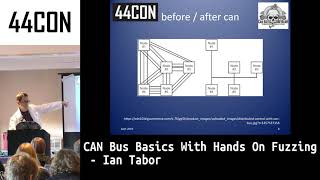
CAN Bus Basics With Hands On Fuzzing
Explore CAN bus fundamentals and hands-on fuzzing techniques for automotive systems, covering ECUs, attack surfaces, and practical demonstrations using various tools and setups.
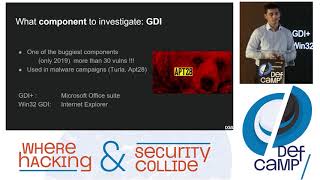
Investigating Windows Graphics Vulnerabilities - A Reverse Engineering & Fuzzing Story - DefCamp - 2019
Explore Windows graphics vulnerabilities through reverse engineering and fuzzing techniques, focusing on GDI components, patch analysis, EMF format, and effective fuzzing strategies.
Cyber Grand Shellphish - Shellphish and the DARPA Cyber Grand Challenge
Explore autonomous hacking with Mechanical Phish, a system for automatic bug detection, exploit creation, and binary patching. Learn about its design, challenges, and implementation in the DARPA Cyber Grand Challenge.
Implementing an USB Host Driver Fuzzer
Explore USB host driver fuzzing techniques, covering USB basics, security implications, and practical implementation steps for effective vulnerability discovery.

Adventures in SCADA
Explore SCADA systems' vulnerabilities and security challenges in industrial control environments, focusing on power companies, trust issues, and mitigation strategies.

The Forgotten Interface- Windows Named Pipes - Gil Cohen - Hack in Paris - 2017
Explores Windows named pipes as potential security vulnerabilities, covering enumeration, scanning, sniffing, fuzzing, and exploitation techniques, with insights on mitigation and defense strategies.
An Introduction to ZAP - The OWASP Zed Attack Proxy
Learn to use ZAP, an open-source web application security scanner. Explore features like active scanning, fuzzing, and brute force attacks to enhance your penetration testing skills.

The Aftermath of a Fuzz Run - What to Do About Those Crashes?
Explore tools and techniques for analyzing crashes from fuzz runs, focusing on reducing, triaging, and finding root causes to fix vulnerabilities in software applications.
Why Bother Assessing Popular Software
Explore assessing popular software like Adobe Reader, discussing fuzzing, sandboxes, and JavaScript APIs. Learn approaches for complex targets and making a security impact.

Assessing the Embedded Devices On Your Network
Explore embedded device security challenges, threat modeling, and assessment techniques through a VoIP phone case study. Learn hardware tricks, debugging methods, and potential mitigations for vulnerabilities.
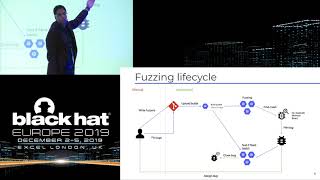
ClusterFuzz - Fuzzing at Google Scale
Explore Google's massive fuzzing infrastructure, ClusterFuzz, and learn how it finds thousands of security vulnerabilities across Google products and open-source projects.

A New Era of SSRF - Exploiting URL Parser in Trending Programming Languages
Explore a new SSRF exploit technique targeting URL parsers in popular programming languages. Learn about protocol smuggling, fuzzing tools, and discover vulnerabilities in widely-used libraries.
The Crash Course - A Non-Programmer's Guide to Fuzzing
Hands-on workshop for non-programmers to learn fuzzing techniques. Covers environment setup, tools like AFL and Honggfuzz, instrumentation, input selection, and crash analysis. Suitable for beginners to intermediate level.
Unleashing D* on Android Kernel Drivers
Explore techniques for detecting vulnerabilities in Android kernel drivers using static analysis and fuzzing, with focus on DR.CHECKER and DIFUZE tools.
Drone Hijacking and Other IoT Hacking with GNU Radio and SDR
Explore IoT security vulnerabilities using SDR and GNU Radio. Learn to intercept, sniff, and hijack wireless devices like drones and keyboards through practical demonstrations and attacks.
Fuzzing the Easy Way Using Zulu
Explore fuzzing binary protocols with Zulu, a GUI-based tool for easy capture, mutation, and replay. Learn its features and successful bug-finding applications.
SMS to Meterpreter - Fuzzing USB Modems
Explore innovative attacks on USB data modems, including fuzzing techniques and SMS payload execution. Learn about vulnerabilities, reverse engineering, and USB sniffing for offensive security research.
Open Source in Security-Critical Environments
Explore best practices for using open-source code securely in critical environments, focusing on DevOps and management strategies for edge, network, and cloud applications.
High Performance Fuzzing
Explore advanced fuzzing techniques for enhanced software security, covering target selection, input generation, execution monitoring, and failure detection.
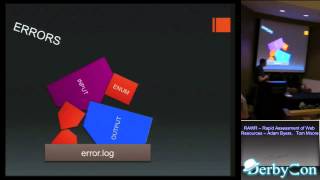
Rawr - Rapid Assessment of Web Resources
Explore rapid web resource assessment techniques, including crawling, scanning, and fuzzing, to enhance cybersecurity and identify potential vulnerabilities in web applications.
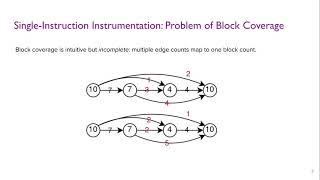
RIFF - Reduced Instruction Footprint for Coverage-Guided Fuzzing
Efficient coverage measurement technique for fuzzing, reducing overhead in runtime collection and post-execution processing. Improves fuzzer performance and coverage exploration.