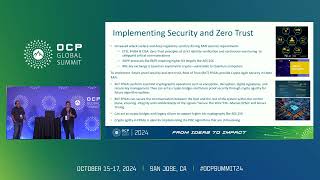
Future-Ready Green O-RAN: Leveraging FPGAs for Enhanced Security, Performance and Low Power
Discover how FPGAs enhance ORAN networks through robust security, precise synchronization, and power-efficient acceleration for optimal network performance and interoperability.
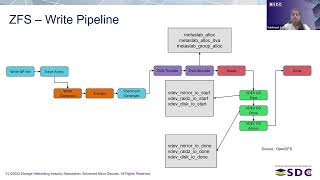
File System Acceleration Using Computational Storage for Efficient Data Storage
Explore file system acceleration techniques using computational storage, focusing on SmartSSD implementation for efficient compression and improved system performance through hardware offloading.
A2C Tangy Pack - Video Adapter for the Apple IIc/IIc+
Explore a refined FPGA video adapter for Apple IIc/IIc+, enabling HDMI and VGA output. Learn about its improved form factor and functionality.
Supporting Trusted Virtual Machines with Hardware-based Secure Remote Memory
Explore hardware-assisted secure memory disaggregation, combining trusted VMs with a dedicated engine for efficient isolation and protection of remote memory pages, ensuring confidentiality and integrity.
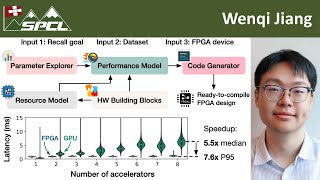
Co-design Hardware and Algorithm for Vector Search
Explore hardware-algorithm co-design for efficient vector search on FPGAs, enhancing performance in large-scale information retrieval and machine learning systems.

Addressing Challenges of Cross-Architecture Dynamic Migration Over Heterogeneous Acceleration Systems
Explore cross-architecture dynamic migration for AI applications on diverse accelerators. Learn unified abstraction, middle-compiler techniques, and runtime support for seamless transitions between hardware.

Addressing Challenges of Cross-Architecture Dynamic Migration Over Heterogeneous Acceleration Systems
解决AI应用在不同加速硬件间平滑迁移的挑战。介绍统一抽象、跨架构编译和动态链接运行时等技术,实现无需改变开发习惯的跨系统应用迁移。

How UXL Foundation Redefines the Landscape of Accelerated Computing
Explore UXL Foundation's initiative for unified software development across diverse accelerator architectures, emphasizing collaboration and open standards in AI/ML computing.

How to Make Your Electrons Do More in Java - Vector API and TornadoVM
Explore Vector API in Java and TornadoVM for GPU/FPGA computing. Enhance processing power and performance through advanced JVM techniques and native-code tooling.

Lessons Learnt from Reusing QDMA NIC to Base Band PMD
Discover key insights and practical lessons from converting AMD Xilinx FPGA NIC PMD to BBDEV PMD, exploring technical challenges and implementation strategies for efficient hardware adaptation.
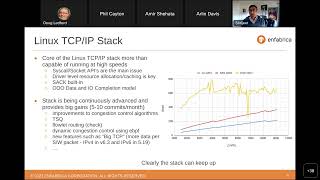
RDMA and Linux TCP - Zero-Copy Kernel Bypass for High-Performance Networking
Dive into high-performance networking with RDMA interfaces and Linux TCP stack optimization, exploring zero-copy techniques and kernel bypass for achieving 800Gbps throughput.
DNAssim: A Full System Simulator for DNA Data Storage
Explore DNA storage simulation through DNAssim, covering encoding/decoding strategies, error handling, and hardware acceleration for synthetic DNA data storage systems.
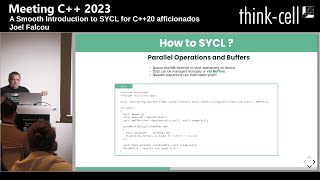
A Smooth Introduction to SYCL for C++20 Aficionados
Explore SYCL for cross-platform accelerator programming in C++20. Learn integration techniques, key features, and real-world applications in high-energy physics.
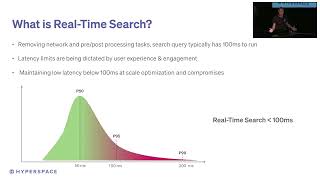
Breaking Search Performance Limits with Domain-Specific Computing
Explore advanced search techniques using domain-specific computing to achieve faster latencies and higher scalability at billion-scale, overcoming limitations of general-purpose CPUs.
Programming Novel AI Accelerators for Scientific Computing - Part 2 - Tutorial 5
Explore advanced techniques for programming AI accelerators in scientific computing, focusing on optimization and performance enhancement.
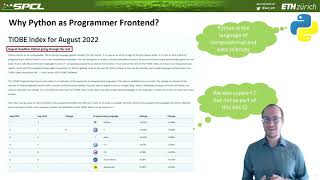
Portable High-Performance Python on CPUs, GPUs, and FPGAs
Optimize Python for high performance on CPUs, GPUs, and FPGAs. Learn HPC-oriented extensions, automatic optimizations, and portable performance techniques across architectures.
Empower WebAssembly ML Over Diverse AI Hardware Accelerators Outside the Browser
Explore WebAssembly's potential for accelerating ML/AI workloads on diverse hardware outside browsers, enabling transparent performance boosts without code changes.
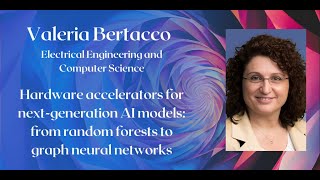
Hardware Accelerators for Next-Generation AI Models - From Random Forests to Graph Neural Networks
Explore hardware acceleration techniques for AI models, focusing on random forests and graph neural networks, with insights into advanced computational architectures and optimization.

Complementing TCP with Homa - Network Protocol Analysis and FPGA Acceleration
Explore how Homa protocol complements TCP in datacenter networks, focusing on improved tail latency, FPGA acceleration, and practical implementation for storage networking and GPU clusters.

FPGA Microservices - Ultra-Low Latency with Off-The-Shelf Hardware
Discover how to achieve ultra-low latency in microservices using FPGA technology with off-the-shelf hardware, exploring practical implementations and performance optimization techniques.
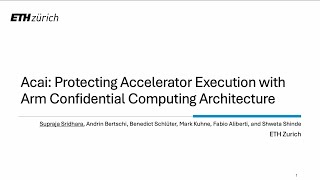
ACAI: Protecting Accelerator Execution with Arm Confidential Computing Architecture
Explore how ACAI extends Arm Confidential Computing Architecture to enable secure accelerator usage in trusted execution environments, focusing on GPU and FPGA implementations.