
Models on the Move: Towards Feasible Embedded AI for Intrusion Detection on Vehicular CAN Bus
Innovative AI model for efficient intrusion detection on vehicular CAN bus, enhancing automotive cybersecurity with high accuracy and low latency using FPGA hardware acceleration.
ACCL+: FPGA-Based Collective Engine for Distributed Applications
Explore ACCL+, an open-source FPGA-based collective communication library for distributed applications, offering portability, multiple protocol support, and user extensibility for enhanced performance.

Making of the A2FPGA - From Breadboard to Production
Explore the creation, features, and future of A2FPGA with its creators, from initial design to production, including demos and extension possibilities.
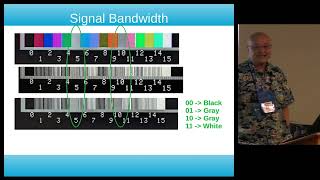
Yet Another Video Converter with Tang Nano 9K FPGA for Apple II to VGA and HDMI
Explore FPGA-based video conversion for Apple II computers using Tang Nano 9K, focusing on scan doubling and VGA/HDMI output.
High-Level Programming of FPGAs for Audio Real-Time Signal Processing Applications
Explore high-level FPGA programming for audio processing using SyFaLa toolchain and Faust language. Learn advantages, applications, and potential in spatial audio and room acoustics control.
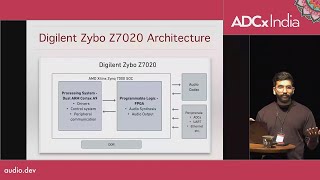
Modular Audio Synthesis on FPGAs With High Level Synthesis Development Flow
Explore modular audio synthesis on FPGAs using high-level synthesis tools. Learn about design approaches, optimization techniques, and interconnectable sound synthesis modules for enhanced audio processing capabilities.
Accelerating Packet Capture Using FPGA
Explore FPGA-based packet capture acceleration techniques for enhanced network monitoring and analysis performance.
Open Source FPGA Tooling: Current State and Future Prospects - Keynote
Explore open source FPGA tooling ecosystem, current state, future prospects, and key projects leveraging its flexibility, including potential ASIC applications.
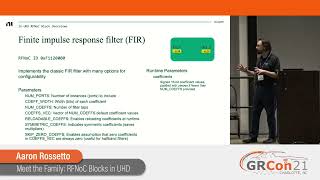
Meet the Family: RFNoC Blocks in UHD - Overview and Applications
Explore RFNoC blocks in UHD 4.0, their capabilities, and deployment techniques for high-throughput DSP on USRP devices. Learn to optimize RFNoC flowgraphs for maximum flexibility.
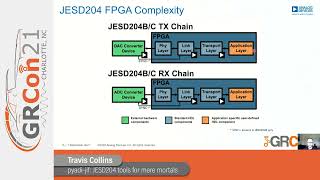
pyadi-jif: JESD204 Tools for Mere Mortals
Explore pyadi-jif, an open-source tool for configuring JESD204 systems in wideband software radios. Learn about JESD204, its impact on modern RF systems, and how JIF simplifies device configuration.
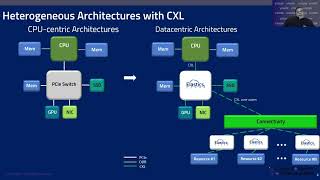
Server Fabrics and the Evolution to CXL 3.0 - Memory and Resource Management in Heterogeneous Computing
Explore the evolution of CXL technology and server fabrics, focusing on memory management, resource pooling, and system architecture improvements for enhanced computing performance.
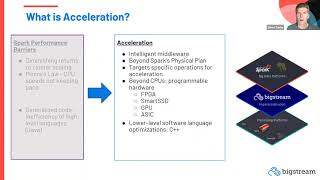
Turbocharging Spark with Samsung SmartSSD Computational Storage Devices
Discover how Samsung SmartSSD® with Xilinx FPGAs accelerates Spark, offering 2x-8x performance gains without code changes. Learn about the technology, benchmarks, and TCO savings.
Open Source Neuroimaging - Developing a State-of-the-Art Brain Scanner with Linux and FPGAs
Explore open-source neuroimaging systems, from hobbyist to professional, and their development using Linux and FPGAs. Learn about challenges, solutions, and future prospects in brain scanning technology.
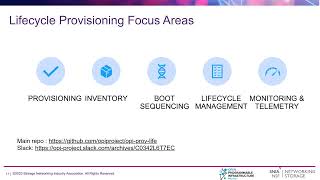
Introduction to Open Programmable Infrastructure (OPI) Project - Data Processing Units and Infrastructure
Discover the emerging world of DPU/IPU infrastructure and learn how the OPI project is shaping open-source ecosystems for cloud and datacenter technologies through standardized frameworks and collaborative development.
VGPU Management with OpenStack Nova and Cyborg Framework
Discover how Cyborg and Nova work together to manage acceleration resources like GPUs, FPGAs, and SmartNICs in OpenStack environments, enhancing cloud infrastructure capabilities.
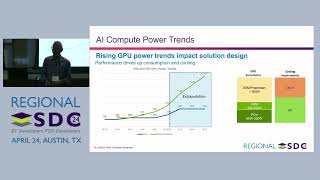
Technical Trends in AI Infrastructure for Developers - 2024
Explore the evolving landscape of AI infrastructure, from accelerators and storage to deployment models, focusing on technical trends and future solutions for developers working with AI workloads.
Cross-Architecture Dynamic Migration Solution for Heterogeneous AI Acceleration Systems
Discover a unified solution for seamless application migration across diverse AI accelerators, enabling cross-architecture compilation and dynamic runtime adaptation without code modifications.

Storage Virtualization and Hardware-agnostic Acceleration Using IPDK and xPU
Discover how IPDK enables vendor-agnostic storage virtualization and hardware acceleration, allowing standard drivers to access remote storage at scale while leveraging SmartNIC/DPU/IPU/xPU capabilities.
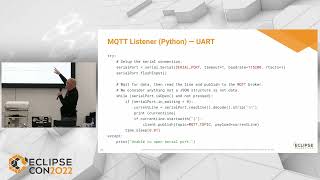
Free and Open Source Hardware for RISC-V IoT Applications
Discover how open-source hardware and RISC-V technology enable IoT applications through Eclipse Foundation and OpenHW's ecosystem, featuring CORE-V cores and practical MQTT protocol demonstrations.
Building Linux-Capable SoCs with Intel Pathfinder for RISC-V and OpenHW CORE-V CVA6
Discover how to build Linux-capable SoCs using Intel Pathfinder for RISC-V and OpenHW CORE-V CVA6, exploring pre-silicon development environments and open-source hardware integration for efficient system design.
The CFU: Custom Hardware with RISC-V and Zephyr
Explore custom hardware integration using RISC-V's Custom Function Unit and Zephyr RTOS on FPGAs, enhancing embedded system performance and flexibility.