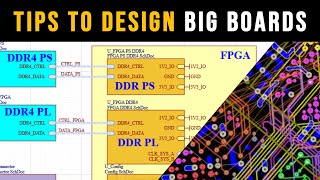
How Are Big FPGA and Other Boards Designed - Tips and Tricks
Discover expert tips and tricks for designing complex FPGA and other large boards, covering schematic symbols, power optimization, layout techniques, and prototyping strategies.
Microcontroller in FPGA - Step by Step Tutorial - Adam Taylor
Step-by-step tutorial on integrating a microcontroller into FPGA, covering project setup, hardware configuration, RTL coding, synthesis, pin assignment, software development, and debugging techniques.
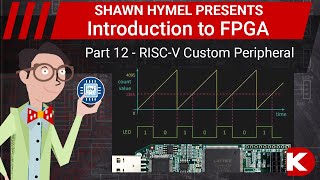
Introduction to FPGA - RISC-V Custom Peripheral | Digi-Key Electronics
Design and integrate a custom PWM peripheral into a RISC-V softcore processor on an FPGA, enabling LED dimming control through memory-mapped I/O and Verilog implementation.
Introduction to FPGA - RISC-V Softcore Processor
Implement a RISC-V softcore processor on FPGA, build a system-on-chip, and write a C program to control LEDs. Explore open-source processor design and FPGA programming for custom digital logic applications.
Introduction to FPGA - Getting Started with Verilog | Digi-Key Electronics
Learn Verilog for FPGA programming: create digital logic circuits, use continuous assignment statements, work with vectors, and implement a 1-bit full adder on the Lattice iCE40 FPGA.
How to Create Difficult FPGA Designs with CPU, MCU, PCIE
Comprehensive guide to advanced FPGA design techniques, covering processors, microcontrollers, PCIE interfaces, and practical examples with ZYNQ for image processing and Linux implementation.
Complete PCB Hand Assembly - FPGA in BGA Package + Reflow
Step-by-step guide to PCB hand assembly, including stencil alignment, component placement, and reflow soldering. Covers techniques for handling BGA and TQFP packages, using a vacuum tool, and operating a reflow oven.
PLIP- Partial Reconfiguration of Spartan 6 FPGA
Learn to implement partial reconfiguration on Spartan 6 FPGAs using practical examples and Python scripts. Covers setup, FPGA Editor, output blocks, and DCM configurations.
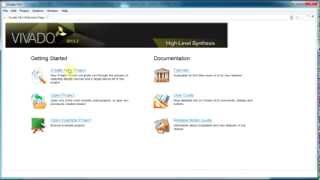
PLIP- ZedBoard-Zynq AES Peripheral in C - Vivado High Level Synthesis
Learn to create an AES peripheral for ZedBoard/Zynq using Vivado HLS. Covers project setup, AES implementation, and system integration for hardware acceleration.
MicroFPGA – The Coming Revolution in Small Electronics
Explore the potential of small FPGAs in electronics, their advantages, and applications using open-source tools and affordable development boards for high-performance, flexible projects.
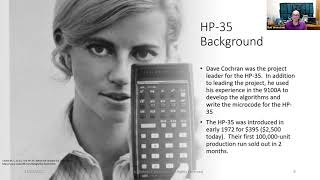
Remoticon 2021 - Rob Weinstein Builds an HP-35 from the Patent Up
Explore the reverse engineering of the revolutionary HP-35 calculator, from patent analysis to FPGA implementation. Gain insights into its groundbreaking design and inner workings.
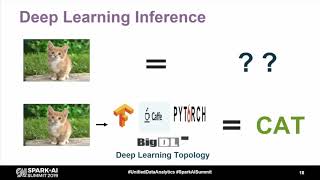
Accelerating Real-Time Video Analytics on a Heterogeneous CPU and FPGA Platform
Explore real-time video analytics acceleration using CPU+FPGA platforms. Learn about performance optimization, latency reduction, and cost-effective solutions for industrial applications like fraud detection and surveillance.
Introduction to SoC+FPGA Solutions - From IoT to Industrial Applications
Explore SoC+FPGA solutions, from IoT to industrial-grade chips. Learn about U-Boot and Linux support, FPGA loading, and leveraging FPGA manager with Device Tree Overlays for optimal performance.
Open-Source Tools for FPGA Development
Explore open-source tools for FPGA development, covering synthesis, simulation, and verification. Learn about alternatives to proprietary solutions and their benefits and limitations.
From UART to PCIe and DMA - Selecting Connectivity for FPGA-based Subsystems
Explore FPGA connectivity options from UART to PCIe and DMA, covering physical layers, hardware abstraction, and advanced techniques for efficient subsystem design and implementation.
Hack42 FPGA Workshop
Learn to program FPGAs, exploring hardware design principles and practical applications in this hands-on workshop. Gain skills in digital logic and reconfigurable computing.
Testing and Remote Access to Embedded System DPI/LVDS Display Output
Explore FPGA-based device for capturing and analyzing embedded system display output, enabling remote access and precise timing verification for LCD panels.

Building FPGA-based Machine Learning Accelerators in Python
Explore building ML accelerators on affordable FPGAs using Python-based tools. Learn about open-source and proprietary options for FPGA development and the broader silicon landscape.
Automated Simulation-Based Flow for Low-Cost FPGA-Accelerated Devices with Zephyr on BeagleV-Fire
Explore FPGA acceleration with Zephyr on BeagleV-Fire: Learn to design custom peripherals, integrate with firmware, and simulate using Renode for efficient low-power, high-performance systems.

How to Implement Ethernet in FPGA - Easy Tutorial
Comprehensive tutorial on implementing Ethernet in FPGA, covering block diagrams, project setup, schematic creation, IP blocks, pin assignments, code synthesis, firmware upload, testing, and Python script integration.
Building FPGA-based Machine Learning Accelerators in Python
Explore building affordable FPGA-based ML accelerators using Python tools like PyTorch, ONNX, Migen, and LiteX. Learn about open-source silicon and vendor tools for cost-effective hardware development.