Self-Organization at the Origin of Biological Construction - Corina E Tarnita
Explore self-organization in biological systems, focusing on ants and social complexity. Learn how evolutionary biology explains the emergence of intricate structures and behaviors in nature.
Ecological and Evolutionary Consequences of Ontogenetic Niche and Habitat Shifts
Explores ecological and evolutionary impacts of ontogenetic niche shifts, using structured population models to analyze complex life cycles, habitat changes, and their effects on population dynamics and community interactions.
Estimating Indirect Effects in a Wild and Anti-Social Mammal
Exploring indirect genetic effects in wild red squirrels, examining how spatial and temporal neighbors influence phenotypes and potential evolutionary impacts in varying population densities.
Modelling the Role of the Microbiome in Evolution
Explore how microorganisms influence multicellular evolution, adaptability, and biological functions. Learn about holobiont fitness, specialized diversity, and the emergence of complex organisms through coevolution.
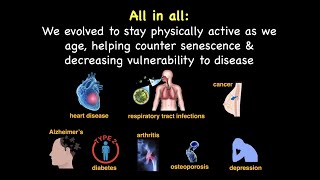
The Active Grandparents Hypothesis
Explore how lifelong physical activity promotes health and longevity from an evolutionary perspective, challenging myths and offering insights to encourage exercise without stress.
How on Earth Can Aliens Survive? Concept and Case Study
Explore evolutionary robustness, its breakdown, and implications for complex diseases. Delve into concepts like shifting balance theory and cultural evolution in this thought-provoking seminar.
C. Brandon Ogbunu on Epistasis and The Primacy of Context in Complex Systems
Exploring context-dependency in complex systems, from protein folding to neighborhood effects, using interdisciplinary approaches. Discusses evolutionary biology, epidemiology, and the intersection of science and culture.
The Evolution of Root Systems & Biogeochemical Cycling
Exploring root system evolution and its impact on biogeochemical cycles. Insights into plant adaptation, nutrient acquisition, and ecological interactions, with implications for understanding complex systems and future technologies.
The Evolution of Robustness and Integrating the Disciplines
Exploring robustness in evolution, cryptic variation, and interdisciplinary approaches to understanding complex systems. Discusses canalization, neurodiversity, and the interplay between biology, culture, and cognition.
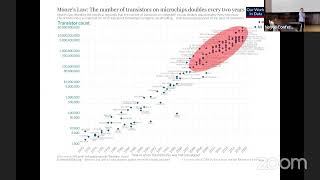
A Biologist's Perspective of Process and Pattern in Innovation
Explore innovation patterns across biology, culture, and technology, examining novel changes and emerging functions to uncover potential universal principles and future research directions.
Ontogenetic Asymmetry in Ecology - Origins and Implications for Population Dynamics
Explores how demographic differences between juveniles and adults, combined with energy requirements, challenge established ecological theories and impact population dynamics.
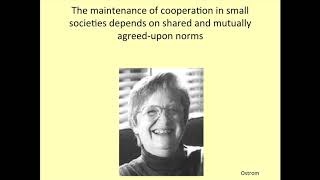
The Ecology of Society - Complex Adaptive Systems in Nature and Human Societies
Explore ecological and economic systems as complex adaptive systems, examining emergent behaviors, critical transitions, and evolutionary forces shaping resource allocation and cooperation.

A Cooperative Species - Altruism, Parochialism, and War
Explore how war and hostility may have shaped human morality through computer simulations of alternative historical trajectories, challenging our understanding of altruism and cooperation.
A Cooperative Species - Evolutionary Origins of Human Altruism - Lecture 1
Explore the evolutionary origins of altruistic cooperation, challenging traditional notions of 'selfish genes' and Homo economicus through archaeological, genetic, and climatic evidence.
The Post-Darwinian World - Expanding Darwin's Theories in Modern Science
Explore post-Darwinian complexities in biology, economics, and politics, examining ecosystems, food webs, origin of life, HIV/AIDS, and sociobiology to expand on Darwin's evolutionary theories.
The Rise of the Speaking Machine - Human Language Evolution
Explore the fascinating journey of human language evolution, from its origins to modern complexities, with insights into cognitive development and cultural impacts.
The Inevitability of Life: Geochemistry and the Emergence of Living Systems
Explore the inevitability of life's emergence and persistence on Earth through geochemistry, challenging the notion of improbable events in life's origin.
Evolution in Action: A 50,000 Generation Experiment
Explore a groundbreaking 50,000-generation experiment revealing evolutionary processes in action, offering insights into adaptation, genetic changes, and long-term population dynamics.
Pathogen Diversity from an Ecological Perspective
Explore pathogen diversity through an ecological lens, examining the complex interactions between microorganisms and their environments in disease dynamics and evolution.
On the Evolution of Sex and the Advantages of Recombination - 2013 Science Board Symposium
Explore the evolution of sex and recombination advantages with Sarah Otto. Delve into epistasis, costs, finite population effects, and analytical models in this comprehensive examination of sexual reproduction.
Cultural Contingency and Gene-Culture Coevolution - 2013
Explore gene-culture coevolution and its impact on human evolution, examining how cultural practices interact with genetic inheritance to shape populations over time.