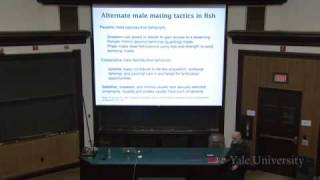
Alternative Breeding Strategies in Evolution and Ecology - Lecture 35
Explore diverse breeding strategies in nature, from bullfrogs to fig wasps. Learn about frequency-dependent strategies, evolutionary equilibrium, and unique reproductive behaviors across species and gametes.
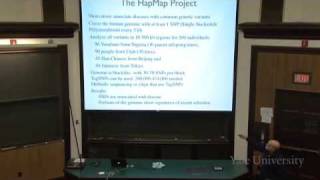
The Origin and Maintenance of Genetic Variation - Lecture 6
Explore genetic diversity's origins through mutations, selection, and recombination. Discover how population size impacts evolution and genetic variation maintenance in different scenarios.
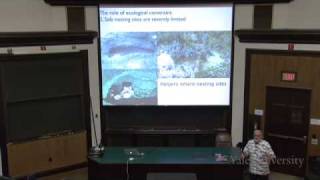
Selfishness and Altruism in Evolution, Ecology, and Behavior - Lecture 36
Explore evolutionary explanations for altruism, including kin selection and ecological constraints, challenging the idea that self-sacrifice contradicts natural selection.

Neutral Evolution - Genetic Drift and Molecular Clocks
Explore genetic drift and neutral evolution, understanding how random changes in genes can impact species over time without affecting reproductive success.
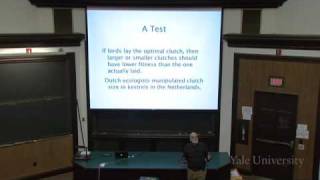
Life History Evolution - Principles of Evolution, Ecology and Behavior
Explore evolutionary tradeoffs in organism traits: maturity, offspring, and lifespan. Understand how genes and environment shape life history strategies for survival and reproduction.

Species and Speciation - Principles of Evolution, Ecology and Behavior
Explore the process of speciation, including definitions, mechanisms, and stages. Learn about reproductive isolation, ecological specialization, and genetic factors in species divergence.
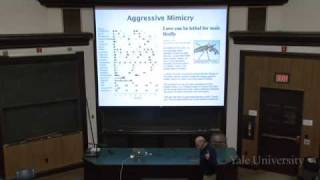
Economic Decisions for the Foraging Individual - Lecture 32
Explore foraging behaviors, from marginal value to group hunting, and how organisms make economic decisions when seeking food or mates. Learn about risk management and predator-prey dynamics in ecology.
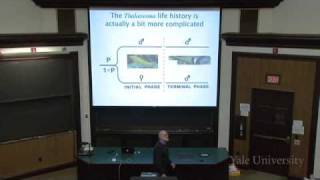
Sex Allocation in Evolutionary Biology - Principles of Evolution, Ecology and Behavior
Explore sex allocation in organisms, including optimal ratios, hermaphroditism, and offspring sex control. Learn how environmental factors influence reproductive strategies across species.

The Fossil Record and Life's History - Principles of Evolution, Ecology and Behavior
Explore the fossil record's insights into evolutionary history, including extinctions, speciation, and long-term trends in life's development on Earth.

Principles of Evolution, Ecology and Behavior: Coevolution - Lecture 20
Explore coevolution at various levels, from intracellular organelles to species interactions. Learn about symbiosis, parasitism, and factors influencing evolutionary relationships in nature.
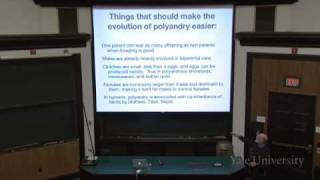
Mating Systems and Parental Care in Evolution and Ecology - Lecture 34
Explore diverse mating systems and parental care strategies across species, examining environmental and behavioral factors influencing reproduction and offspring protection in evolutionary biology.
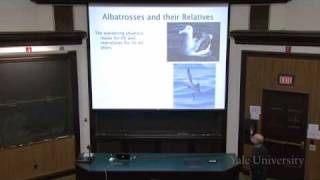
Comparative Methods: Trees, Maps, and Traits in Evolution, Ecology, and Behavior
Explore genetic analysis methods connecting phylogeny to geography, tracing human migration and evolution. Learn about ancestral traits and their impact on fundamental biological concepts.

The Nature of Evolution: Selection, Inheritance, and History - Lecture 1
Explore evolutionary biology's key concepts: natural selection, adaptation, genetic drift, and life's history, from its origins to major evolutionary milestones over 3.7 billion years.

Adaptive Evolution - Natural Selection in Evolutionary Biology
Explore natural selection's role in adaptive evolution, including selection types, evolutionary speeds, and outcomes like directional, stabilizing, and disruptive changes.

The Expression of Variation - Reaction Norms - Lecture 8
Explore reaction norms in evolution and ecology, examining how genotypes produce varied phenotypes across environments, population differences, and developmental constraints.
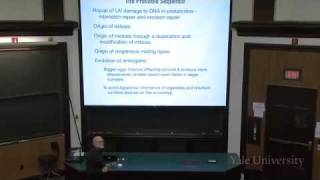
The Evolution of Sex - Principles of Evolution, Ecology and Behavior
Explore the evolutionary benefits and costs of sexual reproduction, including genetic diversity, pathogen resistance, and the prevalence of sex in nature's recent evolutionary branches.

Evolution of Sex and Reproductive Strategies
Explore reproductive strategies, competition, and evolution across species, focusing on gender differences, mating behaviors, and the role of violence in reproduction among great apes.
The Evolutionary Causes of Quantitative Genetic Variation
Explore the genetic architecture of quantitative traits, examining how mutation, selection, and drift shape heritable variation. Gain insights into missing heritability and interpret genome-wide association studies findings.
The Organism as Subject and Object of Evolution
Explore how organisms and environments co-evolve through a process of construction, challenging the traditional view of adaptation in evolutionary biology.
Nicole Creanza on Cultural Evolution in Humans and Songbirds
Exploring gene-culture co-evolution in humans and songbirds, examining how geography, genetics, behavior, and technology interact to shape evolutionary patterns and cultural innovations.
Albert Kao on Animal Sociality and Collective Computation
Explore animal sociality, collective decision-making, and evolutionary pressures shaping group behaviors. Discover insights into tackling complex problems through diverse social strategies in nature.