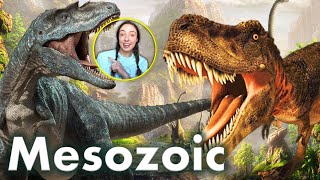
Mesozoic Era - Geologic & Biological Evolution and Extinction of Dinosaurs
Explore the Mesozoic era's geological and biological evolution, from Pangea's breakup to dinosaur extinction. Learn about ancient seas, diverse life forms, and major events shaping Earth's history.

Paleozoic Era - Geologic and Biological Evolution and Largest Mass Extinction Ever
Explore the Paleozoic Era's geological and biological evolution, from the formation of Pangea to the rise of early vertebrates, culminating in Earth's largest mass extinction event.
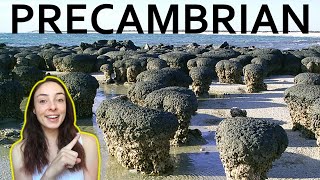
Precambrian Eon - Geologic and Biological Evolution 4 Billion Years Ago
Explore Earth's early history: formation, early life, atmospheric changes, and geological processes. Learn about key events like the Great Oxidation Event and Snowball Earth during the Precambrian era.
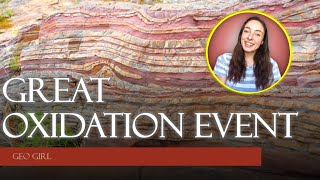
The Great Oxidation Event - GEO GIRL
Explore the Great Oxidation Event's timing, causes, and impacts on Earth's atmosphere, oceans, and life. Discover evidence from fossils, rocks, and isotopes, and learn about subsequent oxidation events in Earth's history.
Statistical Physics of Biological Evolution by Joachim Krug
Explore stochastic models of population dynamics, including Wright-Fisher and Moran models, fixation, and diffusion theory. Delve into natural selection, experimental evolution, and genetic drift in biological systems.
Earth's Co-evolving Geosphere and Biosphere - A Mineral Evolution Perspective
Explore Earth's geosphere and biosphere evolution through mineral perspectives with Robert M. Hazen, examining the interplay between geological and biological processes over time.
What's Really Going On in Machine Learning? Some Minimal Models - Stephen Wolfram Reading
Explore Stephen Wolfram's insights on machine learning through minimal models, covering neural nets, discrete rule arrays, and optimization processes. Gain a deeper understanding of ML fundamentals and their implications.

On the Road to Artificial General Intelligence
Explore the evolution of AI through game engines, simulations, and reinforcement learning. Discover how these technologies are advancing the quest for Artificial General Intelligence.
On the Road to Artificial General Intelligence
Exploring the potential of game engines as virtual biodomes for AI evolution, showcasing advancements in reinforcement learning and the path towards Artificial General Intelligence.

Nati umani o evoluti umani? | Martina Ardizzi | TEDxMilano
Dai pesci zebra ai coltellini svizzeri, passando per pellicce mancate e altre coincidenze fortunate. Una storia scientifica, ironica e sorprendente su come cervello, mente e ambiente evolvano insieme e su come, ancora oggi, questa spirale continui a riscrivere ciò che chiamiamo “umano”. Martina Ardi