
Phylogenetic Algebraic Geometry
Explore phylogenetic algebraic geometry, its applications in species history reconstruction, and the use of algebraic and geometric perspectives to solve phylogenetic problems.
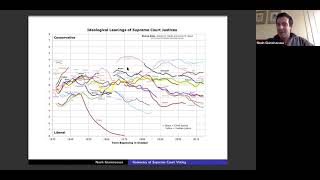
Looking for Geometry in the Supreme Court
Exploring geometric approaches to analyze U.S. Supreme Court voting behavior, discussing recent investigations using planar geometry and phylogenetic trees, and suggesting future directions in topology and geometry.
Optimal Shape of Tree Roots and Branches - Seminar in Analysis and Methods of PDE
Explore mathematical models for optimal shapes in nature, focusing on tree roots and branches. Examine functionals for sunlight capture and nutrient collection, combined with transportation costs.

Fitting High-dimensional Data and Model Selection - Lecture
Explore techniques for fitting high-dimensional data and selecting appropriate models in biological evolution, focusing on polygenic adaptation and phenotypic variation.
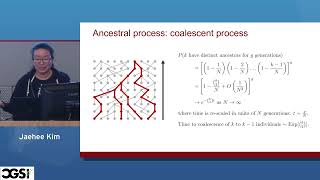
Bayesian Inference of Dependent Population Dynamics in Coalescent Models
Explore Bayesian inference techniques for analyzing dependent population dynamics in coalescent models, focusing on applications in genomics and evolutionary biology.

On the Spread of an Infection in a Host Population Distributed on Z - Lecture
Explore mathematical models of infection spread in host populations distributed on Z, focusing on stochastic processes in evolutionary biology.
Modelling Phenotypic Delay in the Evolution of Bacterial Antibiotic Resistance
Explore bacterial antibiotic resistance evolution through phenotypic delay modeling, uncovering insights into this critical health challenge.
Infer Global, Predict Local - Bias-Variance Theory for Protein Genotype-to-Phenotype Mapping
Explore bias-variance theory in protein genotype-to-phenotype mapping, focusing on global inference and local prediction techniques.
Complexity of Life History Adaptation in Marine Invertebrates
Explore the complexity of life history adaptation in marine invertebrates, examining environmental factors and evolutionary strategies through advanced research findings from the University of Tokyo.
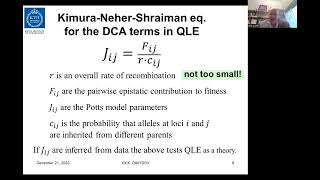
Statistical Genetics in and Out of Quasi-Linkage Equilibrium
Explore statistical genetics principles and quasi-linkage equilibrium concepts through advanced theoretical physics perspectives and mathematical modeling approaches.

How Movement Drives Evolution – with Matt Wilkinson
Explore the fascinating evolution of movement across species, from flying dinosaurs to human bipedalism. Discover how locomotion has shaped life's history and influenced our anatomy and abilities.

The Evolution of Males and Females - With Judith Mank
Explore genetic programming of sex, evolution of sex differences, and evolutionary forces shaping male-female distinctions in various species with Professor Judith Mank.
Why Is Life the Way It Is? With Nick Lane
Unravel the tangled history of life with Nick Lane as he explores Earth's biodiversity, the origin of complex cells, and the role of mitochondria in shaping evolution.
How to Clone a Mammoth - The Science of De-Extinction - With Beth Shapiro
Explore the science of de-extinction, its feasibility, and ethical implications. Learn about ancient DNA, genetic diversity, and the potential revival of extinct species like mammoths.
New Discoveries in Population Genetics - With Enrico Coen
Explore adaptive change and population transformation through snapdragon genetics. Discover how genes and environment interact to drive evolutionary paths in this insightful lecture by biologist Enrico Coen.

Life in the Cambrian and Ordovician - GEO GIRL
Explore the fascinating evolution of early Paleozoic life, from Cambrian burrowers to Ordovician predators, and discover key events shaping Earth's biodiversity 542-444 million years ago.
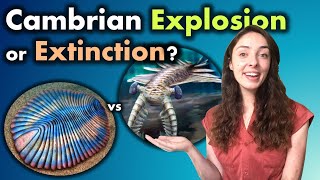
Cambrian Explosion - More Like Precambrian Explosion and Cambrian Skeletonization
Explores the Cambrian Explosion, challenging its name and timing. Discusses Ediacaran fauna, early animal evolution, mass extinctions, and factors contributing to increased diversity and complexity in Pre- and Early Cambrian life.
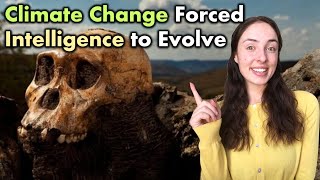
Neogene Life and Human Evolution from Early Apes to Australopithecus to Homo
Explore Neogene life and human evolution, from early apes to Australopithecus and Homo. Learn about key evolutionary events, environmental changes, and the development of human traits like bipedalism and tool use.

When Life Moved to Land and the Disastrous Consequences
Explore the evolutionary journey of life from sea to land, its climatic impacts, and the resulting mass extinctions. Learn about key transitions in Earth's history and their far-reaching consequences.
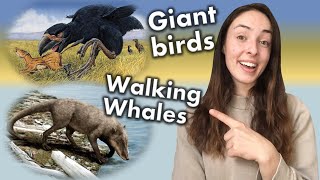
Early Cenozoic Life - Megalodon Roamed, Mammals Go Back to Sea, Huge Birds Hunt Horses
Explore the Early Cenozoic: megalodon sharks, walking whales, giant birds, and the rise of mammals. Discover how climate change and evolving grasslands shaped Earth's ecosystems and animal diversity.
Resurrecting Physiological Traits from Long-Extinct Species
Explore the resurrection of physiological traits from extinct species, focusing on hemoglobin in mammoths and Arctic manatees, with insights into DNA sequencing and evolutionary adaptations.