Palaeoanalytics - Using Data Science and Machine Learning to Answer Questions About Human Evolution
Explore how data science and machine learning revolutionize our understanding of human evolution through the Palaeoanalytics project, offering new insights into our ancient past.
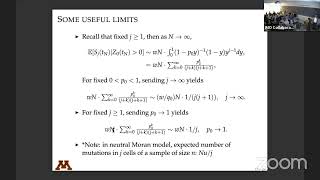
Computational Methods for Inferring Tumor Evolution and Heterogeneity
Explore computational techniques for analyzing tumor evolution and heterogeneity, enhancing understanding of cancer progression and treatment strategies.
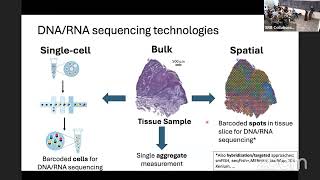
Quantifying Tumor Heterogeneity Across Space and Time
Explore advanced techniques for analyzing tumor heterogeneity spatially and temporally with Dr. Ben Raphael's in-depth presentation on cutting-edge mathematical oncology approaches.
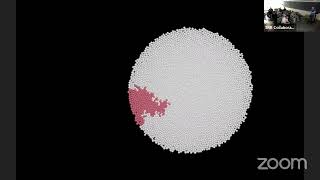
A Top-Down-Bottom-Up Approach to Evolution-Based Therapies in Compact Populations
Explore evolution-based therapies in compact populations through a top-down-bottom-up approach with Dr. Jona Kayser's seminar on mathematical oncology.
Basic Models of Animal Cognition - Part 2
Explore diverse cognitive strategies in animals for problem-solving, from navigation to social relationships. Learn scientific methods for measuring animal intelligence in various settings.
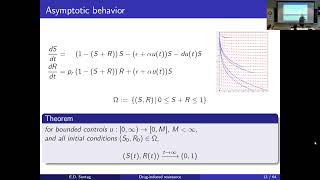
Drug-Induced Resistance in Cancer Chemotherapy: Darwinian Selection vs Generation of Variation
Explore mechanisms of drug resistance in cancer treatment, comparing Darwinian selection to variation generation and selection processes in chemotherapy outcomes.

That Time Our Ancestors Almost Went Extinct - The Near Extinction of Homo Erectus
Explores evidence suggesting Homo erectus population dropped to around 1,000 individuals nearly a million years ago, examining our ancestors' brush with extinction and its implications for human evolution.
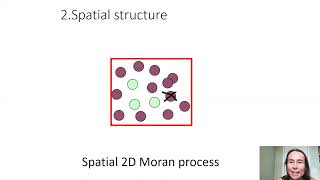
Evolutionary Modeling of Cancer
Explore mathematical methods for studying cancer evolution, including selection, mutation, and drift. Gain insights into loss-of-function and gain-of-function mutations in carcinogenesis.
How Games Secretly Shape Our World
Explore how games shape society, from military strategy to AI and human behavior. Uncover their impact on learning, decision-making, and predicting the future across various fields.
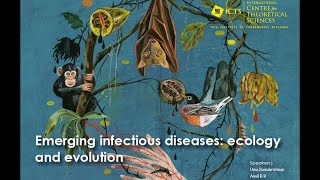
Pathogen Evolution in the Context of Host and Environmental Adaptation
Explore pathogen evolution, host adaptation, and environmental factors shaping disease dynamics. Gain insights into emerging infectious diseases and their ecological impacts.
Tree-Free Phylodynamic Inference for Emerging Viral Pathogens and Lineages
Explore tree-free phylodynamic methods for analyzing emerging viral pathogens and lineages, focusing on innovative approaches to study viral evolution and spread.

The Evolution of Consciousness - Understanding Awareness and Its Origins
Explore consciousness evolution with Princeton's Prof. Graziano. Delve into its definition, origins, study methods, and future research, gaining insights from a neuroscience expert.
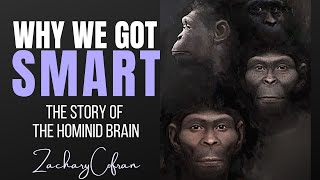
Why We Got Smart - The Story of the Hominid Brain
Explore the evolution of hominid brains with Dr. Zachary Cofran. Uncover why our brains grew, how humans became intelligent, and the mysteries surrounding Homo naledi in this anthropological journey.
Interpreting the Evolution of SARS-CoV-2 - Merigan Lecture
Explore the evolutionary journey of SARS-CoV-2 with expert insights from Prof. Jesse D. Bloom, delving into its mutations, adaptations, and implications for public health.
Of Swarms and Slimes: Intelligence Beyond and Without the Brain
Explore biological intelligence beyond the brain through swarms and slime molds. Discover alternative forms of cognition, problem-solving, and the evolutionary origins of intelligence in non-neural organisms.
In the Beginning Was the Familiar Voice - 2012
Explore the evolution and significance of voice in human communication, examining its multifaceted role in conveying emotions, identity, and social cues across species and disciplines.
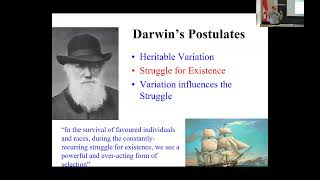
Evolutionary Therapies: Beating Cancer at Its Own Game
Explore revolutionary cancer therapies that outsmart tumor evolution, leveraging mathematical modeling to optimize treatment strategies and overcome resistance.
Are Privacy and Intellectual Property Still Relevant? Perspectives From History, Biology, Math, and AI
Explore privacy and intellectual property through historical, biological, mathematical, and AI lenses. Gain insights into their relevance in the era of big data and AI, and implications for open source and knowledge sharing.
The Descent of Man - Altering Evolution's Course: Ethical and Scientific Implications
Explore the ethical dilemmas of altering evolution, discussing gene drives, CRISPR, and our responsibility in shaping nature's future. Weigh the benefits and risks of intervention.
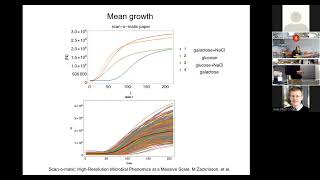
Quantifying Determinants of Microbial Growth
Explore computational approaches for quantifying microbial growth determinants, focusing on genotype-environment interactions and their implications for pathogen control and biotechnology.

Your Dreams May Come True with MTP2 by Caroline Uhler
Explore multivariate totally positive distributions, their properties, and applications in various fields. Learn about density estimation, ML estimation, and practical uses in portfolio selection and gene networks.