Green Building and LEED for Homes
Explore sustainable home design principles and LEED certification with experts Linda Yates and Ann Edminster, focusing on innovative approaches to address climate change through green building practices.

Nuclear Fission Lecture
Comprehensive exploration of nuclear fission, covering its significance, history, commercial applications, environmental impact, and future prospects in energy production.
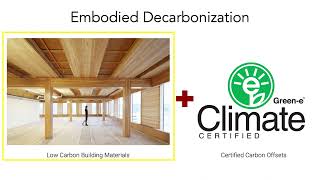
Buildings, Energy and Decarbonization
Explore energy usage in buildings, decarbonization strategies, and real-world case studies. Learn about efficiency, electrification, and renewable energy to address climate challenges in the built environment.
From the Surface of Mars to the Ocean of Enceladus - EELS Robot and Risk-Aware Adaptive Autonomy
Exploring extreme environments with EELS robot: From Mars rovers to searching for alien life in Enceladus' ocean using risk-aware adaptive autonomy and versatile robotic hardware.
Roles of Hydrogen in Achieving Net Zero - Understand Energy Lecture
Explore hydrogen's role in achieving net zero emissions, covering production, storage, transportation, and utilization methods to address climate change and energy challenges.
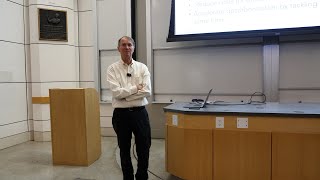
Carbon Capture and Storage: Principles, Processes, and Global Developments
Explore carbon capture technology, its importance, processes, risks, and global developments in this comprehensive lecture by Stanford professor Lynn Orr.
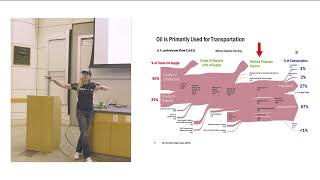
Oil: History, Significance, Markets, and Production Processes
Comprehensive exploration of oil industry: history, markets, extraction methods, transportation, and refining processes. Enhances energy literacy for informed decision-making on sustainability and climate issues.
Digital VLSI Testing
In this context, the course attempts to expose the students and practitioners to the most recent, yet fundamental, VLSI test principles and DFT architectures in an effort to help them design better quality products that can be reliably manufactured in la…
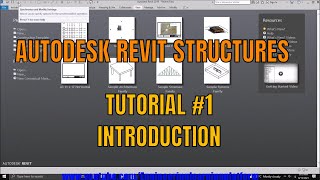
Autodesk Revit Structures
Comprehensive guide to Autodesk Revit Structures: from basics to advanced detailing. Learn to model, analyze, and create detailed structural designs using BIM technology.
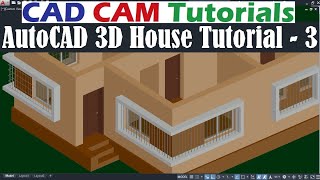
AutoCAD 3D House Modeling Tutorial
Learn to model 3D house elements in AutoCAD, including plinth, steps, doors, and ground. Master techniques for creating realistic architectural features and applying materials.

KiCAD Tutorial 2019 - Learn KiCAD Under 25 Minutes - Beginners Guide
Comprehensive beginner's guide to KiCAD: learn essential PCB design skills, from project setup to custom board creation, in under 25 minutes.
Welding Application Technology
Comprehensive exploration of advanced welding techniques, residual stress analysis, distortion control, and joint analysis for enhanced welding proficiency and structural integrity.
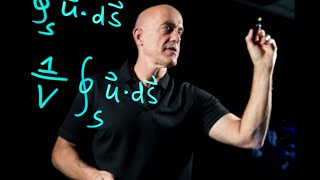
Vector Calculus for Engineers
Master vector calculus concepts and applications in engineering, covering vectors, coordinate systems, fields, integrals, and theorems with practical examples and electromagnetic applications.

Structural Dynamics
The objective of the course is to understand the behavior of structures especially building to various dynamic loads: such as wind, earthquake, machine vibration and ambient vibration.
Basic Electronics
The course is about basic electronic circuits, both analog and digital. In the analog part, diode circuits, BJT amplifiers, Op-Amp circuits will be covered. In the digital part, combinatorial and sequential circuits will be covered.

Turbomachinery Aerodynamics
This course covers various aspects of the aerodynamics associated with the different types of turbomachines like axial compressors, axial turbines, and centrifugal compressors, and radial turbines.
Embedded Systems
Comprehensive exploration of embedded systems, covering hardware, processors, memory, software, operating systems, networking, and design principles for building efficient and dependable systems.

Basic Electrical Technology
Comprehensive exploration of electrical technology fundamentals, covering circuits, components, analysis methods, transformers, DC machines, three-phase systems, and motors for a solid foundation in electrical engineering.
Creo Parametric 2.0 Introduction Tutorials
Learn how to do some basic modeling using Creo Parametrics and create a Portfolio in the end of this lecture series.

Catia V5 Tutorials for Beginners - Kinematics & Simulation Series
Learn Catia V5 kinematics and simulation for beginners, covering mechanisms, joints, and simulations used in automotive industries. Step-by-step tutorials on various mechanisms enhance practical skills.
ArcMap Scripting with Python and Arcpy
Master Python and Arcpy for ArcMap: Automate GIS tasks, manipulate data, create custom tools, and process geospatial information efficiently through hands-on scripting exercises.