
CATIA Exercises for Beginners with Solutions
CATIA Exercises for Beginners with Solutions. These are CATIA basics tutorial videos suitable for beginners. In these videos you will learn all CATIA commands step by step. You can practice the drawings from these videos.

Prospecting for Oil and Natural Gas Lecture
Explore the fundamentals of oil and gas exploration, including rock types, field anatomy, identification methods, U.S. regulations, and global resource locations in this comprehensive lecture.
Earth Sciences for Civil Engineering - Part 2
Explore geological hazards, environmental impacts, and civil engineering applications, focusing on active faults, tsunamis, landslides, floods, and groundwater in the Indian context.
Computational Fluid Dynamics
Explore advanced fluid dynamics simulation techniques, from governing equations to turbulence modeling and complex geometries, enhancing your computational skills for real-world applications.
Introduction to Intellectual Property for Engineers and Technologists
The course aims to provide the basics of various forms of intellectual property. Further, the course provides insight into the registration procedure of various forms of intellectual property.
Electronic Materials, Devices, and Fabrication
Comprehensive exploration of semiconductor physics, devices, and fabrication processes, covering materials, junctions, transistors, optoelectronics, and manufacturing techniques for integrated circuits.
Advanced Foundation Engineering
The advanced theories and design of various foundation components will be discussed in a logical way. The earth pressure theories for designing the retaining walls will be discussed. The codal provisions of the design of various types of foundation will…
Aerospace Propulsion
Comprehensive exploration of aerospace propulsion systems, covering air-breathing and non-air-breathing engines, cycle analysis, rocket nozzles, solid and liquid rockets, and hybrid propulsion technologies.
AI Drone Tutorials
Learn to build AI-controlled drones using computer vision, gesture control, and autonomous following capabilities with Raspberry Pi and Python.
Introduction to Environmental Engineering and Science
Explore sustainability, ecology, and environmental systems through engineering principles, covering water, waste, air pollution, and global challenges.
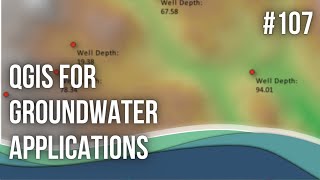
QGIS for Groundwater Applications
Learn to preprocess and visualize groundwater data using QGIS. Master importing borehole data, interpolating levels, and creating 2D/3D visualizations for hydrogeological studies.

How a Jet Airliner Works
Explore the intricate systems of modern jet airliners, from airframe and engines to hydraulics and emergency features. Gain in-depth knowledge of aircraft components and their functions.

How to Repair and Remove Dents from Your Car - DIY
Comprehensive DIY guide for repairing car dents, covering sanding, filling, painting, and polishing techniques. Learn professional-grade methods to achieve amazing results at home.
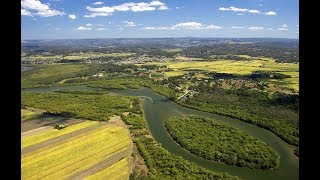
Next Generation Irrigation Management
Explore innovative irrigation techniques using technology and data for precise water management, ensuring optimal crop hydration while conserving resources.

Wankel vs Radial vs Rotary - Its Parts, Working & Applications - Explained
Comprehensive comparison of Wankel, radial, and rotary piston engines, exploring their unique designs, working principles, and applications. Includes detailed explanations and visual demonstrations.

LED Circuit Design - How to Design LED Circuits
Learn to design LED circuits: calculate resistor size, protect LEDs, determine battery life, select resistor power ratings, and connect LEDs effectively in various configurations.

ArcGIS Pro Quick-Start Tutorials
Get started in ArcGIS Pro and begin creating projects, exploring features, analyze spatial data, and edit your maps.
QGIS Tutorial
Learn to pre-process images for NDVI and LULC, create study area maps, and digitize features from Google Earth using QGIS, a powerful open-source GIS software.

Introduction to Geospatial Analysis with Python GeoPandas
Learn to visualize and process geospatial data using Python GeoPandas. Master coordinate conversion, elevation extraction, and geoprocessing techniques for beginners.
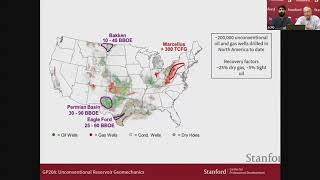
Unconventional Reservoir Geomechanics
Explore unconventional oil and gas reservoirs' properties, production technologies, and geomechanical optimization with Stanford experts in this informative webinar on reservoir geomechanics.

Artificial Intelligence and Robotics
Explore AI and robotics concepts including search algorithms, expert systems, natural language processing, neural networks, and robotic applications through Hindi-language explanations and examples.