The Future of Manufacturing Business - Role of Additive Manufacturing
The objective of the course is to understand future of modern manufacturing, in the context of advancements in metal additive manufacturing and delineate the consequential technology entablements and business models.
Introduction to Crystal Elasticity and Crystal Plasticity
Explore crystal elasticity and plasticity, covering fundamental concepts, theories, and applications in materials science and engineering over 21 hours of comprehensive lectures.
Electronics Equipment Integration and Prototype Building
Learn to design, simulate, and prototype electronics equipment enclosures, from concept to production. Covers 2D/3D modeling, user interfaces, assembly, and practical detailing for efficient and cost-effective manufacturing.
Impedance of the Esophagus - Jeffrey L. Conklin, MD - UCLA
Explore esophageal impedance measurement principles, applications in bolus movement and biomechanics, and its role in assessing motor function and various esophageal conditions.
Spinal Neuromodulation for Motor Control and Beyond - Daniel Lu, MD, PhD
Explore spinal neuromodulation's impact on motor control, focusing on upper limb and hand function. Discover potential mechanisms and latest research findings in neurotechnology.
Advanced Green Manufacturing Systems
This course provides an overview of realizing Green Manufacturing Systems. Compared to conventional manufacturing process that is purely productivity driven; various strategies and applicationsare necessary to improve the ecology first focus of green man…
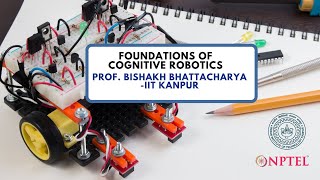
Foundations of Cognitive Robotics
Explore cognitive robotics, smart materials, brain architecture, and intelligence theories. Gain insights into synchronization models, EEG, and child-robot interaction.
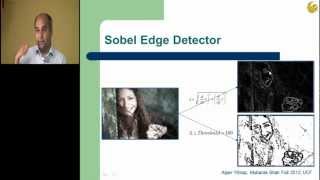
Filtering in Computer Vision - Lecture 2
Learn about image filtering techniques, including noise reduction, edge detection, and smoothing. Explore applications in computer vision and gain hands-on experience with MATLAB functions for image processing.
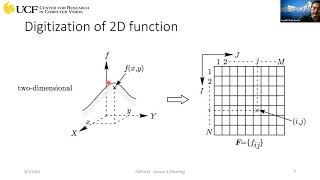
CAP5415 - Digital Image Processing: Filtering and Noise Reduction - Lecture 3
Explore image processing fundamentals, including digitization, histograms, noise types, and filtering techniques. Learn about derivatives, averages, and correlation in the context of digital image analysis.
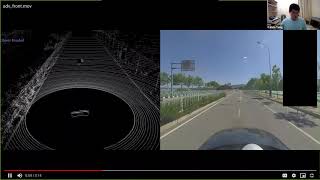
Trust Region Based Adversarial Attack on Neural Networks
Explore trust region optimization for adversarial attacks on neural networks, covering various attack methods and their applications in computer vision and object detection.
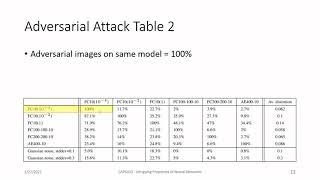
Intriguing Properties of Neural Networks - Spring 2021
Explore intriguing properties of neural networks, including adversarial attacks, transfer, training overlap, and semantic information in units. Analyze weaknesses and spectral instability.
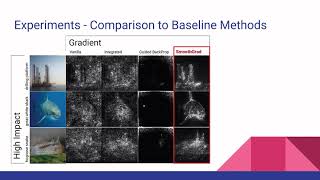
CAP6412 - SmoothGrad: Removing Noise by Adding Noise - Lecture
Explore SmoothGrad, a technique for enhancing neural network visualization by adding noise to input images and averaging resulting sensitivity maps.
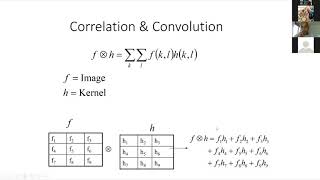
Image Filtering, Convolution, and Edge Detection
Explore image processing techniques including filtering, convolution, and edge detection. Learn about derivatives, noise reduction, and various edge detection algorithms for computer vision applications.
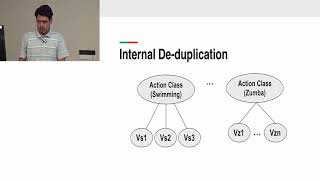
A Sparsely Labeled Dataset for Action Classification and Localization - SLAC
Explore a novel dataset for action classification and localization, covering data collection, training, validation, and evaluation methods for human action detection.
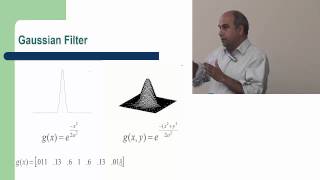
Filtering in Computer Vision - Lecture 2
Learn about image filtering techniques, including noise reduction, derivatives, convolution, and Gaussian filters. Explore practical applications in computer vision using MATLAB.
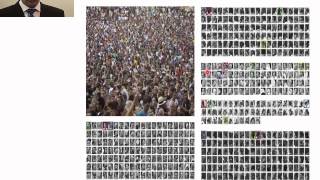
Visual Analysis of Extremely Dense Crowded Scenes
Analyzing dense crowd scenes using computer vision techniques for counting, detecting, and tracking individuals. Explores multiple data sources, context, and neighborhood motion to address challenges in extremely crowded environments.
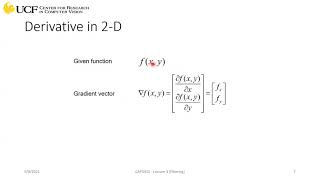
Image Filtering in Computer Vision - Part II - Lecture 5
Explore advanced image filtering techniques, including derivative operations, Gaussian smoothing, and various filter types. Learn their applications and properties in computer vision.
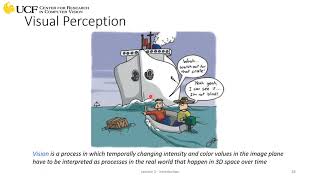
Introduction to Computer Vision - Part I - Lecture 1
Explore computer vision fundamentals, from image processing to deep learning applications. Covers perception, image types, and real-world uses in retail and autonomous vehicles.

Deep and Shallow Geothermal Energy and Its Potential in the UK
Explore geothermal energy's potential in the UK, covering deep and shallow systems, heat pumps, and global applications for sustainable energy solutions.

Exploring the Depths: An Introduction to Marine Geology
Dive into the fascinating world of marine geology, exploring oceanographic systems, geophysical methods, and sampling techniques to uncover Earth's underwater secrets.

The Energy Transition - Challenges for Geoscientists
Explore the energy transition's challenges for geoscientists, focusing on global energy resources, demand, and the role of geoscience in supporting sustainable development and clean energy solutions.