DC Microgrid and Control System
Explore DC microgrid systems, their architecture, dynamics, control strategies, and applications. Learn about power electronics, renewable energy integration, and stability analysis in microgrid environments.
Analog Electronic Circuits
Comprehensive exploration of analog electronic circuits, covering BJTs, MOSFETs, amplifiers, and feedback systems. Includes in-depth analysis, design guidelines, and practical applications.
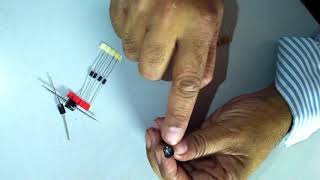
Fundamentals of Power Electronics
Explore power electronics fundamentals, covering diodes, BJTs, MOSFETs, and circuit simulation. Gain practical skills in component analysis, thermal management, and using industry-standard tools.
Computer Integrated Manufacturing
Explore the integration of computer systems in manufacturing processes, enhancing efficiency and automation in industrial production environments.
Introduction to Accounting and Finance for Civil Engineers
Learn essential accounting and finance principles for civil engineers, covering economic decision-making, risk analysis, bidding strategies, and financial management in construction projects.
Introduction to Robotics
This course is a bridge course for students from various disciplines to get the basic understanding of robotics. The mechanical, electrical, and computer science aspects of robotics is covered in this introductory course.
Geoenvironmental Engineering - Landfills, Slurry Ponds & Contaminated Sites
Comprehensive exploration of geoenvironmental engineering, covering landfill design, waste management, contamination control, and slurry disposal. Focuses on practical applications and environmental protection strategies.
Process Control - Analysis, Design and Assessment
Comprehensive exploration of process control fundamentals, advanced techniques, and practical applications using MATLAB, covering modeling, analysis, design, and assessment of control systems.
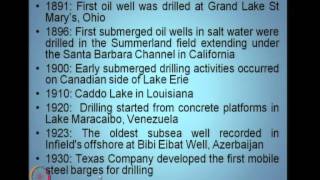
Ocean Structures and Materials
Comprehensive exploration of offshore and coastal structures, covering design, construction, materials, and environmental considerations for marine engineering applications.
Theory of Rectangular Plates - Part 1
Explore solid mechanics, energy principles, and plate theories. Learn governing equations, solution methods, and practical applications using MATLAB and ABAQUS.
Structural Dynamics for Civil Engineers
Comprehensive exploration of structural dynamics principles for civil engineering applications, covering essential concepts and practical analysis techniques.
Power Quality Improvement Technique
The power quality of modern power distribution systems is vulgarized due to the increased use of distributed sources, adjustable speed drive, nonlinear load and unbalanced load. These aspects are discussed in this course.
Introduction to Machining and Machining Fluids
This course gives a basic understanding of the various machining processes and their physics. This process comes under the subtractive manufacturing processes wherein the material is removed.
Linear System Theory
We will cover time invariant, time varying, continuous and discrete time systems. This course will cover concepts of stability, controllability, observability, and design and serve as a necessary foundation for further study in the area of systems and co…
Stochastic Structural Dynamics
Comprehensive exploration of probability, random variables, processes, and vibrations in structural dynamics, covering theory and applications in earthquake engineering and system failure analysis.
Rapid Manufacturing
Explore advanced manufacturing techniques, from design to production, including 3D printing, reverse engineering, and product development. Gain practical insights through lab demonstrations and case studies.
Semiconductor Device Modeling
At the end of this course, you should be able to explain the equations, approximations and techniques available for deriving a model with specified properties, for a general device characteristic with known qualitative theory
Manufacturing Systems Technology Part II
Explore quality engineering, design experiments, and statistical tools for manufacturing. Learn robust design, control charts, and probability distributions to enhance product quality and process efficiency.
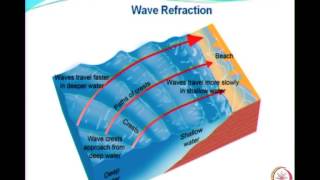
Coastal Engineering
Comprehensive study of wave dynamics, sediment transport, erosion protection, and coastal structures, focusing on engineering principles and practical applications in coastal environments.
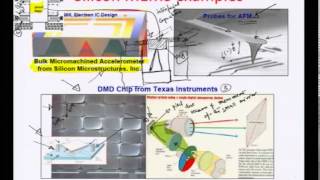
Advanced Manufacturing Process for Micro System Fabrication
In this course, you will learn about Microsystems fabrication, the history behind MEMS, MicroSystems in Biology, EDM micromachining and MicroDrilling; Laser machining and PCB Making.
Foundations of Wavelets and Multirate Digital Signal Processing
Explore wavelets and multirate digital signal processing, covering Haar wavelets, filter banks, and Fourier transforms. Gain practical skills through demonstrations on function approximation and image processing.