Manufacturing Systems Technology
Explore manufacturing systems technology, covering design, material handling, CAD/CAM, process planning, numerical control, and lean production concepts for comprehensive industry knowledge.
Gas Dynamics
This course discusses topics in gas dynamics. Review of fundamentals: concepts from fluid mechanics, basic thermodynamic relations. Compressible flow: the concept of waves in a fluid, mach waves, compression waves, expansion waves.
Fundamentals of Power Electronics
The course introduces the basics of power electronic devices and converters. Basic working principles, operating modes and analysis of DC-DC, DC-AC, AC-DC, and AC-AC converters would be covered. Control of power electronic converters is explained
An Introduction to Electronics System Packaging
Comprehensive exploration of electronics system packaging, covering semiconductor basics, chip packaging, electrical issues, CAD tools, PCB fabrication, soldering techniques, and emerging technologies.
Advanced Digital Signal Processing - Multirate and Wavelets
Explore advanced digital signal processing concepts, focusing on multirate systems and wavelets. Learn about filter banks, time-frequency analysis, and various wavelet transforms with practical applications.
Power Electronics and Distributed Generation
Comprehensive exploration of distributed generation technologies, power electronics, and distribution systems, covering protection, islanding, inverters, and economic evaluation for modern electrical grids.

CompTIA A+
Comprehensive IT fundamentals covering hardware, networking, operating systems, security, and troubleshooting. Prepares for CompTIA A+ certification and builds essential skills for IT professionals.
Computer Algorithms - 2
The course discusses efficient algorithms from a large number of domains. This course assumes the knowledge of data structures, the knowledge big-O notation and the concept of time and space complexity of an algorithm.
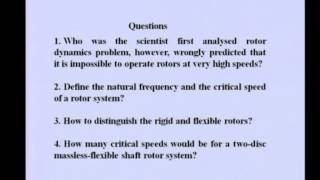
Theory & Practice of Rotor Dynamics
Comprehensive exploration of rotor dynamics theory and practice, covering models, effects, vibrations, and analysis methods for rotating machinery systems.
Special - Select Topics in Classical Mechanics
Explore advanced topics in classical mechanics, from equations of motion to chaotic systems. Gain deep insights into oscillators, relativity, fluid dynamics, and electrodynamics.
Special Topics in Classical Mechanics
Comprehensive exploration of advanced classical mechanics topics, including equations of motion, oscillations, relativity, electrodynamics, and chaotic systems.

Design for Internet of Things
Explore IoT applications, power management, protocols, and microcontroller selection. Learn about MQTT, RFID, BLE security, and LPWAN technologies. Includes practical case studies for hands-on experience.
Semiconductor Device Modeling
Comprehensive exploration of semiconductor device modeling, covering transport equations, drift-diffusion models, energy band diagrams, and MOSFET characteristics for advanced understanding of electronic components.
Probability Methods in Civil Engineering
Comprehensive exploration of probability concepts, distributions, and statistical methods applied to civil engineering problems, enhancing analytical skills for real-world applications.
Power System Dynamics and Control
This course introduces a student to power stability problems and the basic concepts of modeling and analysis of dynamical systems. Modeling of power system components - generators, transmission lines, excitation and prime mover controllers - is covered i…
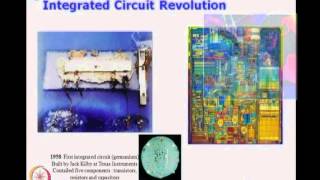
Digital Circuits and Systems
Comprehensive exploration of digital circuits and systems through 53 lectures, covering fundamental concepts to advanced applications in electronic design and analysis.
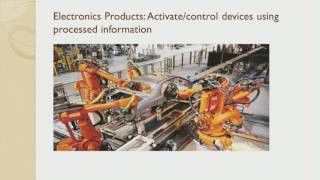
Analog Circuits and Systems 1
The main aim of the course ‘Analog Circuits and Systems 1’ is to design analog circuits and systems that perform signal conditioning, signal processing functions, and signal generation using devices including Op-Amps, amplifiers, and comparators.
Principles of Vibration Control
Learn strategies for vibration control, including damping models, material selection, viscoelastic materials, dynamic absorbers, and active control systems. Gain practical insights through laboratory demonstrations.
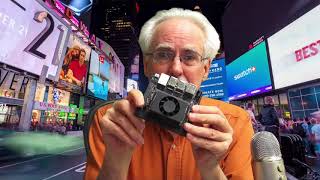
NVIDIA Jetson Xavier NX Machine Learning Tutorials
Comprehensive tutorials on NVIDIA Jetson Xavier NX, covering setup, camera integration, object tracking, and face recognition. Ideal for beginners and advanced users in machine learning and computer vision.

Analog Electronic Circuits
Comprehensive exploration of analog electronic circuits, covering amplifiers, oscillators, feedback systems, and power amplifiers. Includes problem-solving sessions and in-depth analysis of various circuit configurations.
Combustion
Comprehensive exploration of combustion principles, from chemical reactions and kinetics to flame dynamics, diffusion processes, and advanced topics like turbulent combustion and detonations.