Quantifying Resilience in Complex Systems - From Humans to Ecosystems
Explore quantitative methods for measuring resilience in diverse systems, from ecosystems to human psychology, using critical slowing down and probabilistic approaches to understand tipping points and recovery.

Component Systems: Understanding Complex Systems Through Building Blocks
Explore complex systems composed of defined building blocks, from Lego sets to genomes. Learn about common theoretical frameworks and data analysis tools for understanding these "component systems" across various fields.

The Effects of Personality, Networks, and Space on Collective Behavior
Explore how environment, interactions, group composition, and genetics shape collective outcomes in complex biological systems through field studies, simulations, and novel analytical methods.

Revealing Patterns in the Longue Durée - Native American Population Dynamics
Exploring long-term patterns in Native American history, focusing on population changes, agriculture, conflict, and cultural exchange in the American Southwest.
The Evolution of Behavior Within and Between Groups
Explore the dynamics of behavioral evolution within and between groups, examining how social interactions shape collective outcomes and adaptive strategies.
How Field Theory Can Help Solve Problems in Ecology - 2011
Explore how field theory concepts from physics can be applied to solve ecological problems, offering new insights into biodiversity and ecosystem dynamics.
Aging Across Scales - Evolutionary Theories and Population Thinking
Explore evolutionary theories of senescence, recent modeling insights, and the pace-shape framework to understand why some organisms age while others don't, across different lifespan scales.
Hybridizing Mechanism and MaxEnt - Ecological Theory for the Anthropocene
Explore a groundbreaking ecological theory combining maximum entropy and mechanism to predict ecosystem patterns and responses to anthropogenic stresses in the Anthropocene era.
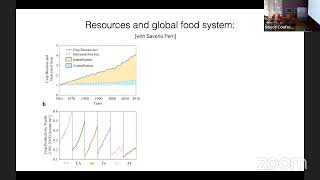
Resources and the Assembly of the Land Biosphere
Explore the intricate relationship between resources and the formation of Earth's land biosphere, uncovering key insights into ecological assembly and evolution.
Emergent Spatial and Temporal Patterns in the Biochemistry of Earth's Open Oceans
Explore emergent patterns in ocean biochemistry, examining spatial and temporal dynamics that shape Earth's marine ecosystems and their impact on global processes.
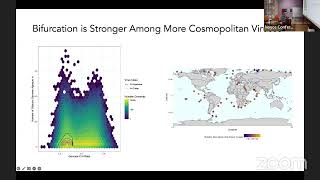
On the Shape of Epidemics
Explore the patterns and dynamics of epidemic spread, examining factors that influence their shape and progression through populations.
Canopy Biology and Human Societies - Lessons from Treetops to Urban Jungles
Explore canopy biology's insights into ecosystem diversity and human societies. Discover how structural ecology in treetops reveals lessons for urban life and the organization of super-organisms like ant colonies and human groups.
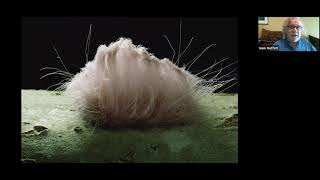
Comparative Canopy Biology and the Structure of Ecosystems
Explore the emerging field of comparative canopy biology, its challenges, and potential for understanding ecosystem structures across various biological communities, from forest canopies to periphyton.
Better Investing Through Biomimicry
Explore how biomimicry can revolutionize investing strategies, balancing innovation with sustainability and growth with resource distribution. Learn to apply nature's wisdom for better business outcomes and environmental healing.
A New Thermodynamics of Biochemistry - Part 1
Exploring the intersection of thermodynamics and biology to better understand cellular processes and their implications for sustainability and economics.
Evolutionary Conundrums - Cooperation and Traversing Fitness Landscapes
Explore evolutionary biology: cooperation via social norms, fitness landscapes in rapidly evolving populations, and optimal antibiotic use against pathogens using Markov Decision Processes.
Mutualistic Networks: Moving Towards a Predictive Theory
Explore predictive theories for plant-pollinator networks, including foraging preferences, invasion impacts, and drought responses. Brief insight into integrating human dynamics in ecological food-web models for fisheries.

Olivia Judson on Major Energy Transitions in Evolutionary History
Explore major energy transitions in evolutionary history with Olivia Judson, examining how life's processes shaped Earth's atmosphere, ecosystems, and geological features over billions of years.
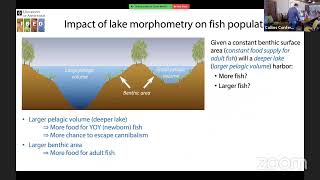
The Effects of Intergenerational Conflict on Ecological and Evolutionary Dynamics
Explore intergenerational conflict's impact on ecological and evolutionary dynamics, examining management strategies, adaptive dynamics, and conservation efforts in marine ecosystems.
Evolution of Multicellularity in the Ancestors of Animals - Hydrodynamic Performance and Selective Factors
Explore how choanoflagellates provide insights into the evolution of multicellularity in animal ancestors, examining hydrodynamic performance and selective factors affecting colony formation and survival.
Liquid and Solid Brains: Cognition, Criticality, and Terraforming the Biosphere
Exploring liquid and solid brains, cognitive scaling, criticality, and terraforming the biosphere through synthetic biology. Insights on collective intelligence and the future of technology in ecology and evolution.