Jennifer Dunne on Food Webs & ArchaeoEcology
Exploring human-nature interactions through food webs and archaeoecology, revealing our interconnectedness with ecosystems and challenging traditional ecological perspectives.
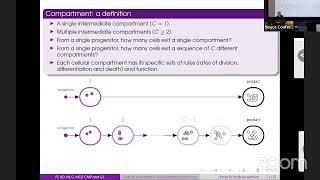
Why Are Cell Populations Maintained via Multiple Intermediate Compartments?
Explore the efficiency of multiple intermediate compartments in maintaining cell populations, minimizing clonality, and optimizing division rounds from progenitors to product cells.
A New Thermodynamics of Biochemistry - Part 2
Exploring thermodynamics in living systems, from cellular metabolism to ecosystems. Insights on climate change, agriculture, and the search for extraterrestrial life through a new lens of biochemistry and physics.
Ecological and Evolutionary Consequences of Ontogenetic Niche and Habitat Shifts
Explores ecological and evolutionary impacts of ontogenetic niche shifts, using structured population models to analyze complex life cycles, habitat changes, and their effects on population dynamics and community interactions.
Estimating Indirect Effects in a Wild and Anti-Social Mammal
Exploring indirect genetic effects in wild red squirrels, examining how spatial and temporal neighbors influence phenotypes and potential evolutionary impacts in varying population densities.
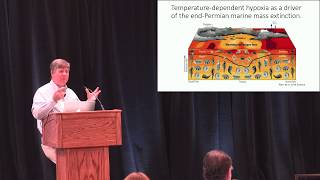
The Collapse of Ecosystems
Explore ecosystem collapse through the lens of mass extinctions, focusing on the End-Permian event and its aftermath. Gain insights into biodiversity patterns and ecological dynamics.
Transient Dynamics - The Key to Ecological Understanding - Alan Hastings, SFI + UC Davis
Explore transient dynamics in ecology, challenging classical theory focused on long-term behavior. Examine implications for modeling, management, and understanding complex ecological systems.

The Evolution of Root Systems & Biogeochemical Cycling
Exploring root system evolution and its impact on biogeochemical cycles. Insights into plant adaptation, nutrient acquisition, and ecological interactions, with implications for understanding complex systems and future technologies.
Ontogenetic Asymmetry in Ecology - Origins and Implications for Population Dynamics
Explores how demographic differences between juveniles and adults, combined with energy requirements, challenge established ecological theories and impact population dynamics.
Energy, Scaling, and The Future of Life on Earth
Explore the roles of energy and information in 21st century biology with Geoffrey West's lecture on scaling laws, energy dynamics, and their implications for life on Earth and our future.
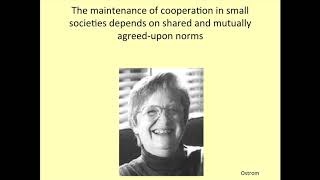
The Ecology of Society - Complex Adaptive Systems in Nature and Human Societies
Explore ecological and economic systems as complex adaptive systems, examining emergent behaviors, critical transitions, and evolutionary forces shaping resource allocation and cooperation.
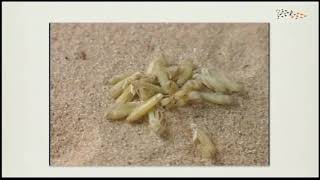
The Principles of Collective Behavior
Explore the fascinating world of collective animal behavior, from insect swarms to human crowds. Discover how individual actions create complex group dynamics and problem-solving abilities in nature.
The Post-Darwinian World - Expanding Darwin's Theories in Modern Science
Explore post-Darwinian complexities in biology, economics, and politics, examining ecosystems, food webs, origin of life, HIV/AIDS, and sociobiology to expand on Darwin's evolutionary theories.
The Club of Rome and Limits to Growth - Achieving the Best Possible Future
Explore future challenges and solutions related to climate change and resource depletion. Learn about growth limits, their impacts, and potential regional initiatives for a sustainable future.
Evolution in Action: A 50,000 Generation Experiment
Explore a groundbreaking 50,000-generation experiment revealing evolutionary processes in action, offering insights into adaptation, genetic changes, and long-term population dynamics.
The Ecological Human - Understanding Human Impacts on Ecosystems
Explore how humans impact ecosystems through interactions with other species, and how ecological network science can inform sustainable resource use and consumption.
The Hidden Order of Complex Ecosystems
Explore hidden ecological patterns in food webs, from ancient biodiversity to modern ecosystems. Learn how underlying forces shape nature and strategies to fortify ecosystems against threats.
Pathogen Diversity from an Ecological Perspective
Explore pathogen diversity through an ecological lens, examining the complex interactions between microorganisms and their environments in disease dynamics and evolution.
Better Forecasting Our Ecological Future - Taming Big Data with Big Theory
Explore how big data and theoretical frameworks can improve ecological forecasting and our understanding of complex ecosystems and their future.
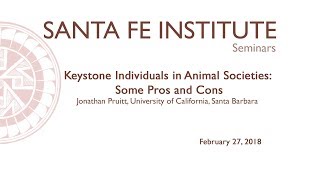
Keystone Individuals in Animal Societies - Pros and Cons
Explore the impact of influential individuals in animal societies, focusing on social spiders in African deserts. Learn about their effects on group dynamics and adaptability.
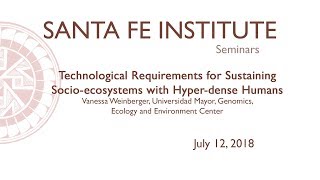
Technological Requirements for Sustaining Socio-ecosystems with Hyper-dense Humans
Exploring ecological theory to analyze human societies' energy use and density compared to other mammals, and modeling sustainable conditions for hyper-dense populations through green technologies.