Wildlife Ecology
Explore wildlife ecology from biodiversity to conservation, covering species interactions, population dynamics, community organization, and human impacts on ecosystems.

The Civilizational Roots of Indian Democracy
Explore the historical concept of "Indian civilization" and its impact on India's adoption of democracy, examining European influences and nationalist perspectives on universal citizenship rights.
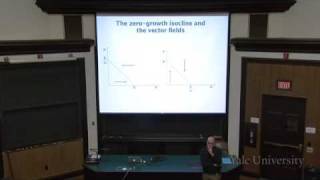
Interspecific Competition in Ecology and Evolution - Lecture 27
Explore interspecific competition's impact on evolution, including classical patterns, experimental evidence, conceptual frameworks, and real-world implications in ecology and biology.
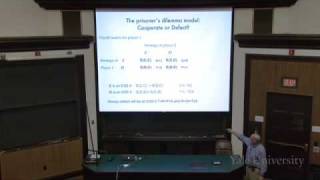
Evolutionary Game Theory: Fighting and Contests - Lecture 33
Explore how game theory applies to evolution and behavior, analyzing encounters between organisms as mathematical games to infer fitness payoffs and strategy proportions in populations.
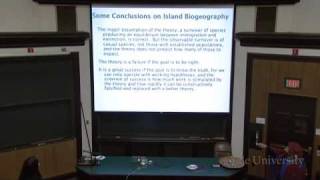
Island Biogeography and Invasive Species - Principles of Evolution, Ecology and Behavior
Explore island biogeography, metapopulations, and their ecological significance. Learn how these concepts apply to species distribution, extinction risks, and even epidemiology in this insightful lecture.

Introductory Sociology
Explore key sociological concepts, theories, and methods. Analyze society, institutions, and social issues through various perspectives. Develop critical thinking skills for understanding social phenomena.
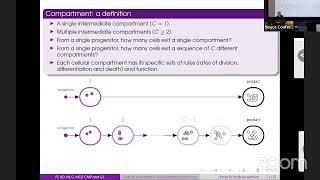
Why Are Cell Populations Maintained via Multiple Intermediate Compartments?
Explore the efficiency of multiple intermediate compartments in maintaining cell populations, minimizing clonality, and optimizing division rounds from progenitors to product cells.
Ecological and Evolutionary Consequences of Ontogenetic Niche and Habitat Shifts
Explores ecological and evolutionary impacts of ontogenetic niche shifts, using structured population models to analyze complex life cycles, habitat changes, and their effects on population dynamics and community interactions.
Ontogenetic Asymmetry in Ecology - Origins and Implications for Population Dynamics
Explores how demographic differences between juveniles and adults, combined with energy requirements, challenge established ecological theories and impact population dynamics.
The Club of Rome and Limits to Growth - Achieving the Best Possible Future
Explore future challenges and solutions related to climate change and resource depletion. Learn about growth limits, their impacts, and potential regional initiatives for a sustainable future.
Evolution in Action: A 50,000 Generation Experiment
Explore a groundbreaking 50,000-generation experiment revealing evolutionary processes in action, offering insights into adaptation, genetic changes, and long-term population dynamics.
Revealing Patterns in the Longue Durée - Native American Population Dynamics
Exploring long-term patterns in Native American history, focusing on population changes, agriculture, conflict, and cultural exchange in the American Southwest.
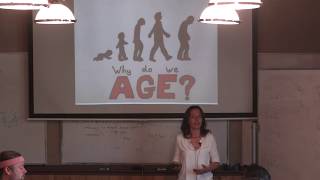
Aging Across Scales - Evolutionary Theories and Population Thinking
Explore evolutionary theories of senescence, recent modeling insights, and the pace-shape framework to understand why some organisms age while others don't, across different lifespan scales.
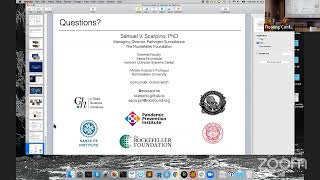
On the Shape of Epidemics
Explore the patterns and dynamics of epidemic spread, examining factors that influence their shape and progression through populations.
Evolutionary Conundrums - Cooperation and Traversing Fitness Landscapes
Explore evolutionary biology: cooperation via social norms, fitness landscapes in rapidly evolving populations, and optimal antibiotic use against pathogens using Markov Decision Processes.
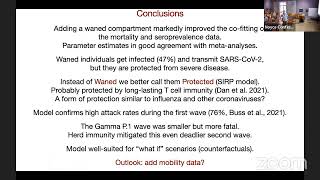
How Herd Immunity Mitigated a Deadly Second Wave of COVID-19 in Manaus
Explore how herd immunity impacted the COVID-19 second wave in Manaus, examining its effects and implications for public health strategies.
The Number Mysteries - Marcus du Sautoy
Explore the unexpected applications of mathematics in predicting the future, from prime numbers to football, in this engaging lecture by Marcus du Sautoy.
Scaling the Maths of Life
Explore mathematical links between biological scales, from developmental biology to ecology and neuroscience, through real-life examples, games, and elegant mathematical concepts.
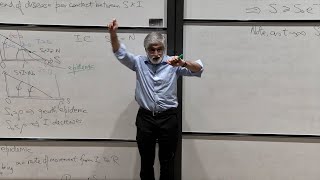
Mathematical Modelling in Biology - Infectious Disease Modelling - Lecture 3
Explore infectious disease spread using the Kermack McKendrick model, deriving the 'R' number and its significance in epidemiology. Gain insights into mathematical biology applications.
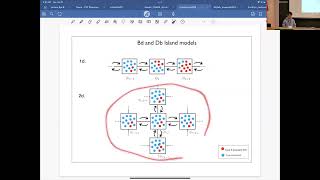
Continuum Limit of Moran Birth-Death and Death-Birth Process - Fisher-Waves Speeds
Explore the continuum limit of Moran birth-death and death-birth processes, focusing on Fisher-wave speeds in this 28-minute lecture by Kamran Kaveh from Harvard University. Delve into advanced concepts in mathematical oncology and computational medicine…
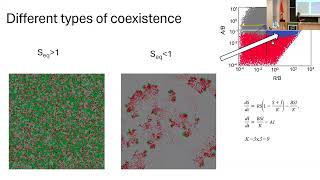
Mutant Fixation in the Presence of a Natural Enemy and Other Stories
Explore a 30-minute conference talk on mutant fixation in the presence of a natural enemy and related topics. Delve into cutting-edge research presented by Natalia Komarova from the University of California, San Diego, as part of the Frontiers in Computa…