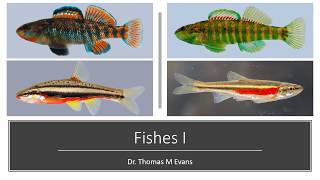
Fishes I
Explore fish biology and ecology in streams, covering basic features, Maryland fish families, and their ecological significance. Learn about fish adaptations and movement in aquatic environments.
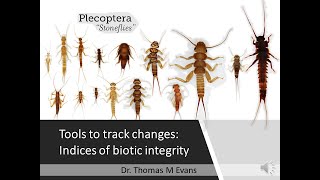
Indices of Biotic Integrity
Learn about Indices of Biotic Integrity (IBIs) in stream ecology, exploring their advantages, disadvantages, and role in assessing ecosystem health through diversity measurements.
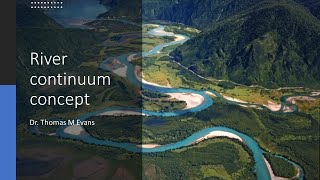
River Continuum Concept
Explore the River Continuum Concept and its impact on stream ecosystems, including nutrient cycling, leaf processing, and functional feeding groups in aquatic environments.
Human Pressures Other Than Climate Change
Explore human impacts on stream ecosystems, including pollution, dams, and stocking. Learn about lead, mercury, acid rain, and their effects on freshwater environments.
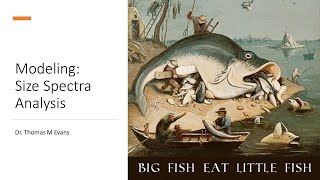
Modeling - Size Spectra Analysis
Overview of size spectra analysis in stream ecosystems, exploring functional modeling from bacteria to larger organisms and its applications in ecological research.
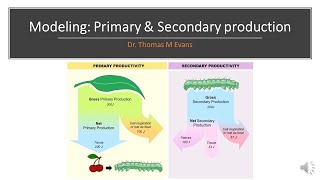
Modeling - Production
Overview of primary and secondary production in stream ecosystems, covering concepts like trophic levels, population growth, and estimation methods for ecological modeling and analysis.
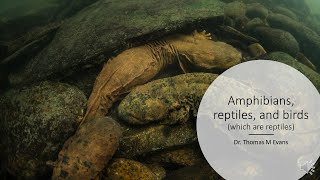
Amphibians, Reptiles, and Birds
Explore the impact of amphibians, reptiles, and birds on stream ecosystems, covering lifecycles, habitats, and ecological roles of various species.
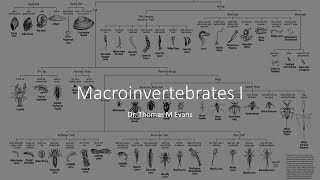
Macroinvertebrates I
Explore aquatic macroinvertebrates, their life cycles, and ecological roles in streams. Learn about the drift paradox and common non-insect species in this comprehensive overview.
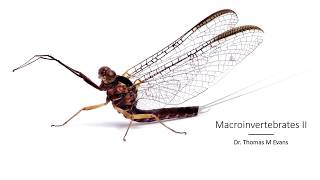
Macroinvertebrates II
Explore aquatic insect orders, their roles in stream food webs, and oxygen acquisition methods. Gain insights into diverse macroinvertebrate adaptations and ecological functions.
Hydrology and Geomorphology II
Explore stream ecology through hydrology and geomorphology, covering flow dynamics, fluid mechanics, and field sampling techniques for a comprehensive understanding of riverine systems.
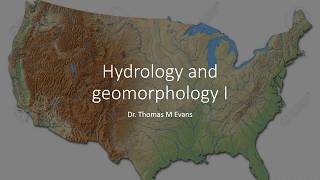
Hydrology and Geomorphology I
Explore hydrology and geomorphology fundamentals, focusing on Chesapeake region streams. Learn about riverscapes, discharge measurements, and key physical features of waterways.
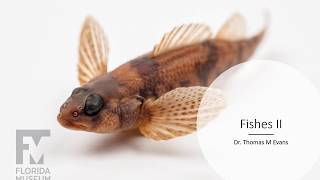
Stream Ecology: Fish Families in Maryland - Lecture 15
Overview of fish families found in Maryland, exploring stream fish community dynamics and their ecological significance.
Allochthonous Resources in Stream Ecology - Lecture 11
Explore how external organic matter fuels stream ecosystems, focusing on leaf litter breakdown and wood dynamics in aquatic food webs.
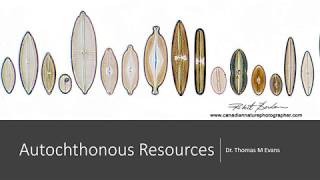
Autochthonous Resources in Stream Ecology - Lecture 10
Explore how native algae, macrophytes, and bryophytes contribute to stream food webs and ecosystem functioning in this comprehensive overview of autochthonous resources.
Stream Ecology - Light and Its Impact on Aquatic Ecosystems - Lecture 9
Explore the impact of light on stream ecosystems, including its effects on aquatic life and ecological processes. Brief discussion on the ozone hole's relevance.
Stream Ecology: Temperature Drivers in Aquatic Ecosystems - Lecture 8
Explore temperature drivers in streams, understanding their impact on aquatic ecosystems and ecological processes in flowing water environments.
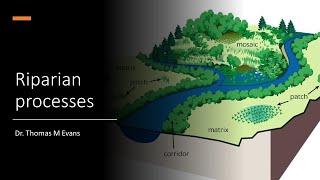
Riparian Processes in Stream Ecology - Lecture 7
Explore riparian ecosystems, their vital processes, and interactions with streams. Learn about fluvial geomorphology and the ecological importance of riverside habitats.
Stream Chemistry: Inorganic Carbon and pH - Lecture 6
Explore inorganic carbon's role in stream ecosystems and its impact on pH levels, crucial for understanding aquatic chemistry and ecology.
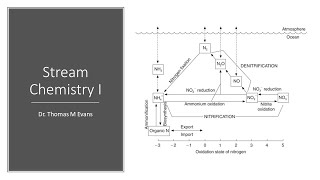
Stream Chemistry I: Introduction to P, N, and O - Lecture 4
Introduction to phosphorus, nitrogen, and oxygen in stream ecosystems, exploring nutrient limitations and transformations crucial for understanding aquatic ecology and biogeochemical cycles.
Stream Ecology: Introduction and Key Concepts - Lecture 1
Introduction to stream ecology, exploring its importance, key terms, and complexities. Covers fundamental concepts and lays groundwork for understanding running water ecosystems.