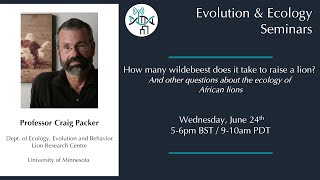
How Many Wildebeest Does It Take to Raise a Lion? And Other Questions About the Ecology of African Lions
Explore African lion ecology, including diet, behavior, and interactions with other species in this comprehensive seminar by renowned researcher Craig Packer.
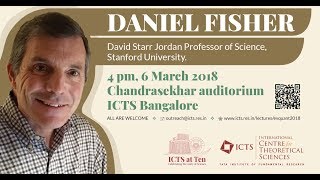
Can Evolution Be Understood Quantitatively? by Daniel Fisher
Explore quantitative approaches to understanding evolution, from basic laws to complex dynamics, using microbial experiments and theoretical models to unravel evolutionary processes and their implications.
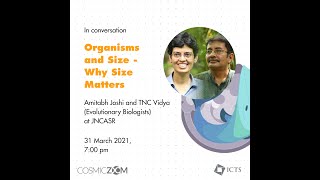
In Conversation - Organisms and Size - Why Size Matters by Amitabh Joshi and TNC Vidya
Explore how size impacts organisms' structures, behaviors, and evolution. Learn about gravity's effects, surface tension, and size-related adaptations across species with experts Joshi and Vidya.
Climate Tipping Points by Tim Lenton
Explore climate tipping points, their global impact, and early warning systems. Gain insights into critical transitions in complex systems like monsoons, ocean circulation, and rainforests.
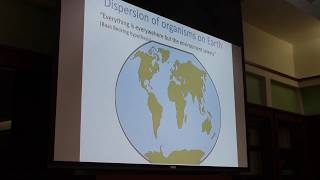
Microbial Communities - From Modelling to Understanding Ecological Organization
Explore microbial communities' complexity, diversity, and ecological significance. Discover insights into early life, species coexistence, and community assembly through interdisciplinary research and advanced modeling techniques.
Sylvie Méléard- Multiscale Eco-Evolutionary Models- From Individuals to Populations
Exploring eco-evolutionary models from individual to population scales, focusing on small population effects, mutation dynamics, and long-term behaviors using stochastic processes and mathematical approximations.
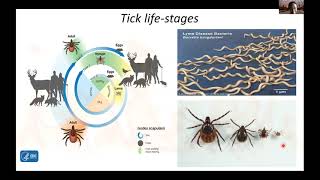
Ticks and Fire - Exploring the Effects of Prescribed Fire on Tick-Borne Disease
Explore the impact of prescribed fire on tick-borne diseases through mathematical modeling, data analysis, and spatial considerations in this seminar on ecological disease management.
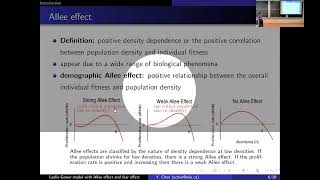
Dynamic Behaviors of a Leslie-Gower Model With Strong Allee Effect and Fear Effect in Prey
Explore dynamic behaviors in a Leslie-Gower model, examining strong Allee effect and fear effect in prey populations. Gain insights into ecological modeling and population dynamics.
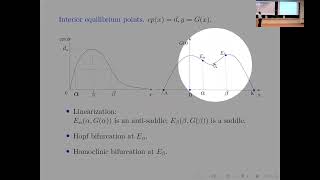
A Predator-Prey System with Generalized Holling Type Functional Responses and Allee Effects in Prey
Explore predator-prey dynamics with generalized Holling responses and Allee effects, examining mathematical models and ecological implications in population interactions.
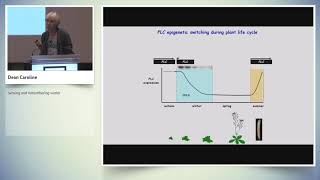
Sensing and Remembering Winter
Explore how plants sense and remember winter, adapting to seasonal changes through complex molecular mechanisms and epigenetic memory.
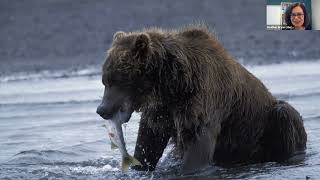
The Conservation Physiology of Predators, Prey, and People in Changing Ecosystems
Explore the intricate relationships between predators, prey, and humans in evolving ecosystems through the lens of conservation physiology, uncovering insights for wildlife management and ecological balance.

Cicada Serenades - Music, Mating, and Meaning
Explore cicada mating rituals, communication, and ecosystem impact through expert discussions and musical performances blending insect and human sounds.
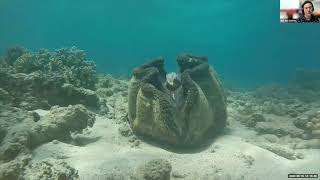
Conserving Threatened Species During Rapid Environmental Change - Giant Clams Case Study
Explore strategies for conserving giant clams amid environmental changes, using biological responses to inform effective management and protection of these threatened species.
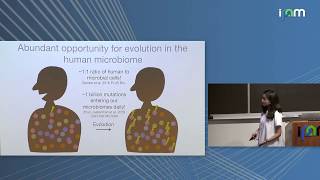
Population Genetics in the Human Microbiome
Explore microbiome evolution, ecological processes, and rapid adaptation in human-associated bacteria. Gain insights into population genetics and emerging research opportunities in this field.
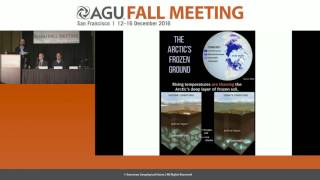
Arctic Report Card 2016 - Key Findings and Environmental Changes
Scientists present findings on rapid Arctic warming, discussing impacts on environment, wildlife, and global climate. Key measures include temperature, sea ice, snow cover, and Greenland ice sheet changes.
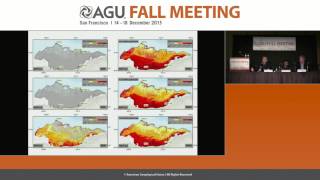
Alaska's Thawing Permafrost: Impacts and Future Projections
Experts discuss Alaska's thawing permafrost, unveiling new findings and projections. They explore impacts on ecology, infrastructure, and carbon release, introducing a permafrost forecast system.
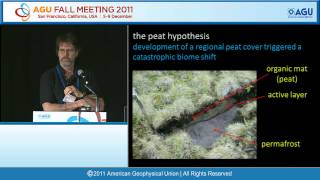
Ecosystem Regime Shifts - Drivers and Responses - Part 1
Explore ecosystem regime shifts, their drivers, and responses in this comprehensive session from the AGU Fall Meeting 2011, featuring expert insights and research findings.
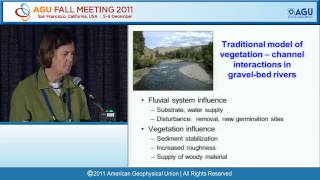
Predictive Understanding of Coupled Interactions Among Water, Life, and Landforms
Explore coupled interactions among water, life, and landforms in this AGU Fall Meeting session, focusing on predictive understanding and cutting-edge research in Earth sciences.
The Serengeti Rules of Life
Evolutionary biologist Sean B Carroll explores simple rules governing all life on Earth, from cellular to ecosystem levels, revealing insights into nature's fundamental principles and their applications.
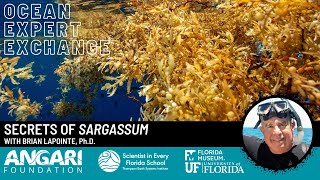
Secrets of Sargassum
Explore the mysteries of Sargassum seaweed, its ecological importance, and its impact on coastal communities in this informative presentation.
Climate Change Effects on Population Dynamics
Exploring the impact of climate change on fertility, mortality, and migration, and the need for inclusive policies to address these demographic shifts.