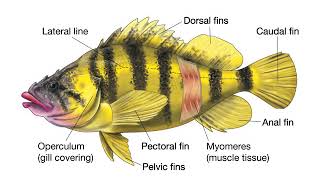
Pelagic Communities
Explore diverse pelagic organisms, from microscopic zooplankton to massive whales. Learn about adaptations, behaviors, and ecological relationships in open ocean ecosystems.
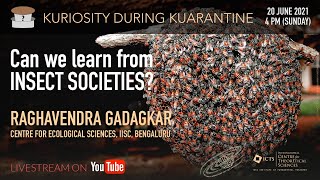
Can We Learn From Insect Societies? by Raghavendra Gadagkar
Explore insect societies' efficient organization, sustainable practices, and potential lessons for human society, from communication to collective decision-making and democracy.
Statistical Physics of Biological Evolution by Joachim Krug
Explore stochastic models of population dynamics, including Wright-Fisher and Moran models, fixation, and diffusion theory. Delve into natural selection, experimental evolution, and genetic drift in biological systems.
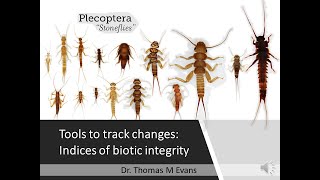
Indices of Biotic Integrity
Learn about Indices of Biotic Integrity (IBIs) in stream ecology, exploring their advantages, disadvantages, and role in assessing ecosystem health through diversity measurements.
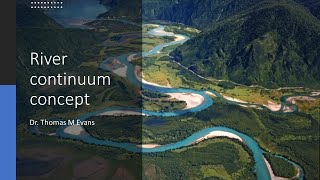
River Continuum Concept
Explore the River Continuum Concept and its impact on stream ecosystems, including nutrient cycling, leaf processing, and functional feeding groups in aquatic environments.
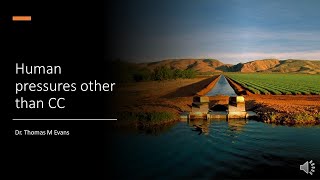
Human Pressures Other Than Climate Change
Explore human impacts on stream ecosystems, including pollution, dams, and stocking. Learn about lead, mercury, acid rain, and their effects on freshwater environments.
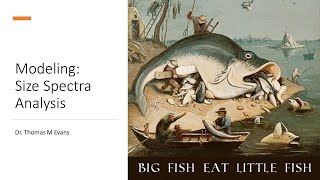
Modeling - Size Spectra Analysis
Overview of size spectra analysis in stream ecosystems, exploring functional modeling from bacteria to larger organisms and its applications in ecological research.
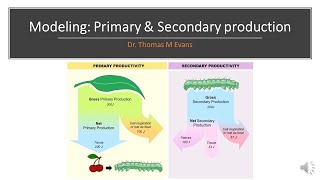
Modeling - Production
Overview of primary and secondary production in stream ecosystems, covering concepts like trophic levels, population growth, and estimation methods for ecological modeling and analysis.
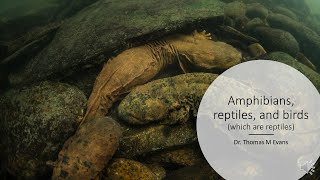
Amphibians, Reptiles, and Birds
Explore the impact of amphibians, reptiles, and birds on stream ecosystems, covering lifecycles, habitats, and ecological roles of various species.
Macroinvertebrates I
Explore aquatic macroinvertebrates, their life cycles, and ecological roles in streams. Learn about the drift paradox and common non-insect species in this comprehensive overview.
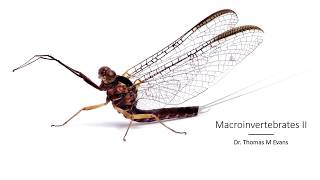
Macroinvertebrates II
Explore aquatic insect orders, their roles in stream food webs, and oxygen acquisition methods. Gain insights into diverse macroinvertebrate adaptations and ecological functions.
Stream Chemistry II With Sound
Explore carbon cycling in streams, focusing on organic material transport, storage, and processing. Learn about particulate matter, dissolved organics, and their ecological impacts.
Hydrology and Geomorphology II
Explore stream ecology through hydrology and geomorphology, covering flow dynamics, fluid mechanics, and field sampling techniques for a comprehensive understanding of riverine systems.
Hydrology and Geomorphology I
Explore hydrology and geomorphology fundamentals, focusing on Chesapeake region streams. Learn about riverscapes, discharge measurements, and key physical features of waterways.
Ornithopoda
Explore the fascinating world of Ornithopoda dinosaurs, their evolution, ecology, and unique features like dental batteries and cranial ornaments. Learn about their lifestyles, feeding habits, and growth patterns.
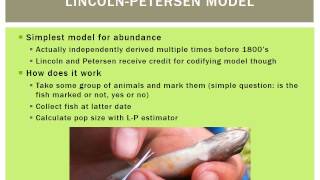
Introduction to Mark-Recapture Studies and Closed Population Models
Learn about mark-recapture models and closed population studies, including Lincoln-Petersen and Schnabel estimators, to understand wildlife population dynamics and estimation techniques.
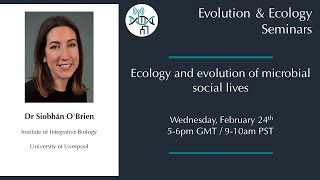
Ecology and Evolution of Microbial Social Lives
Explore microbial social dynamics, cooperation, and adaptation in diverse environments. Discover evolutionary strategies and ecological impacts of microbial interactions.
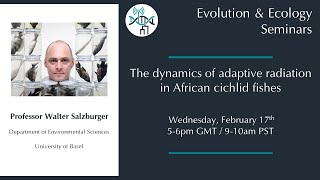
The Dynamics of Adaptive Radiation in African Cichlid Fishes
Explore the fascinating world of African cichlid fishes, their adaptive radiation, and the dynamics of their evolution in Lake Tanganyika. Discover genetic timelines, phenotype-environment correlations, and key morphological differences.
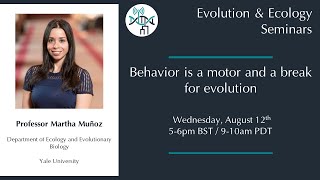
Behavior Is a Motor and a Brake for Evolution
Explore how behavior influences evolutionary pace, focusing on anole lizards. Discover thermoregulation's role in shaping adaptations and its impact on species distribution and survival in changing environments.
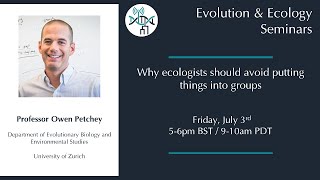
Why Ecologists Should Avoid Putting Things Into Groups
Explore ecological diversity's complexity, challenging traditional grouping methods and proposing innovative approaches for more accurate ecosystem understanding and analysis.
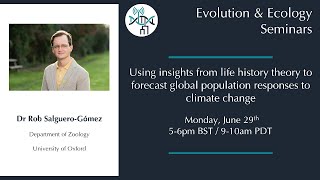
Using Insights From Life History Theory to Forecast Global Population Responses to Climate Change
Explore how life history theory predicts population responses to climate change, focusing on trait diversity, environmental factors, and demographic impacts across species and regions.