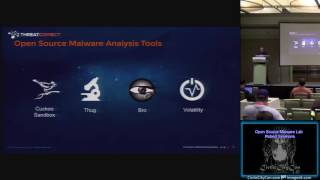
Open Source Malware Lab
Learn to build and use an open-source malware analysis lab with tools like Cuckoo Sandbox, Thug, Bro, and Volatility Framework for effective threat detection and analysis.
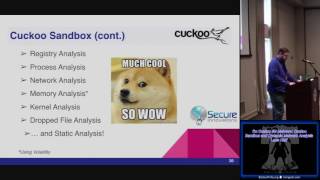
Cuckoo for Malware - Cuckoo Sandbox and Dynamic Malware Analysis
Explore dynamic malware analysis using Cuckoo Sandbox, covering setup, features, and practical applications for effective threat detection and analysis.
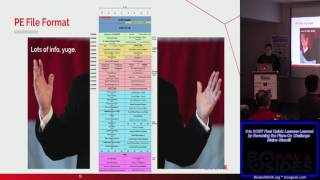
0 to 31337 Real Quick - Lessons Learned by Reversing the Flare On Challenge
Explore reverse engineering strategies and anti-analysis techniques through lessons learned from the Flare-On Challenge, covering file types, encryption methods, and obfuscation tactics.
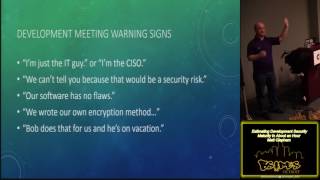
Estimating Development Security Maturity in About an Hour
Discover techniques for assessing development security maturity quickly. Learn to identify key behaviors, conduct effective meetings, and evaluate training, threat modeling, and analysis practices.
Hacking Mobile Applications with Frida
Learn to hack mobile apps using Frida, a dynamic instrumentation toolkit. Explore techniques for analyzing and modifying app behavior in real-time on iOS and Android platforms.

Navigating the Development and Evolution of a Library
Comprehensive guide on library development, covering code quality, testing, documentation, release management, and user engagement. Insights from Boost and libc++ experiences.
Status Quo - Clang-Tidy & AddressSanitizer on Windows
Explore clang-tidy for code improvement and AddressSanitizer for runtime analysis on Windows. Learn to write custom checks and leverage these powerful tools in Visual Studio C++ projects.

Async - Scaling Structured Concurrency with Static and Dynamic Analysis
Exploring structured concurrency in async Python: advantages, error handling, timeouts, and tools for reliable code. Learn static and dynamic analysis techniques to write efficient async programs.
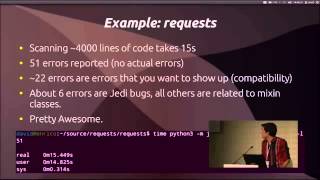
Identifying Bugs Before Runtime With Jedi
Explore advanced Python bug detection using Jedi, an autocompletion library that understands dynamic features. Learn to identify errors before runtime for improved code quality.

Performing Dynamic Analysis of JS Apps
Explore dynamic JavaScript analysis techniques for enhanced web security and performance, including DOM manipulation, proxies, and IIFEs, with practical demonstrations and open-source tools.
Malware Classification With Machine Learning Enhanced by Windows Kernel Emulation
Explore hybrid machine learning for malware classification using static and dynamic analysis, Windows kernel emulation, and neural networks. Learn about adversarial ML and future developments.

Optimization-Aware Compiler-Level Event Profiling
Explore a novel technique for quantifying compiler-internal events in optimized code, reducing profiling perturbation and enhancing dynamic analysis accuracy.

Reducing Static Analysis Unsoundness with Approximate Interpretation
Explore a novel dynamic analysis technique for JavaScript that improves static analysis accuracy, particularly for dynamic property accesses, enhancing call graph construction and analysis recall.

Crosys: Cross Architectural Dynamic Analysis for IoT Malware
Explore Crosys, a novel method for dynamic analysis of multi-architectural binaries through intermediate language interpretation and binary rewriting, addressing IoT malware analysis challenges.
Lineage Quality Measurement for Privacy Engineering
Exploring a framework for measuring lineage performance in data systems, aiding product teams and privacy engineers in selecting effective approaches for privacy protection.
Scaling Structured Concurrency with Async Python
Discover how to leverage async Python for structured concurrency, exploring error handling, timeouts, and cancellation while learning to write elegant concurrent code using tools like flake8-trio and dynamic analysis.

How Not to Choke on a Big Old Project
Discover effective strategies for managing large legacy C++ projects, exploring DevSecOps, static and dynamic analysis, and quality control platforms to enhance code quality and security.

New Isn't Always Novel - Finding Basic Vulnerabilities in Enterprise Software
Discover how basic vulnerabilities in enterprise software led to a successful Pwn2Own contest entry, featuring a command injection exploit in Lexmark printers and practical security insights.

Malware Design: Abusing Legacy Microsoft Transports and Session Architecture
Explore advanced malware design techniques and covert communication frameworks, focusing on Windows architecture exploitation and maintaining persistent access while evading detection systems.

Code Analysis at WhatsApp - Keynote
Explore WhatsApp's code analysis tools, dynamic and static analysis techniques, and their integration into software development lifecycles.

Totally Live Programming with Hazel - Progress Report
Explore Hazel, a groundbreaking live programming environment with error localization and recovery mechanisms, ensuring well-structured and meaningful code at every stage.