Hyperparameter Tuning on the Cloud - Optimizing Machine Learning Models with SEER and Rubberband
Master hyperparameter tuning optimization in cloud environments through SEER algorithm and Rubberband system, focusing on maximizing model accuracy while minimizing costs and time constraints.
Recently Engineered Variants of Split Learning - Seminar 87
Explore advanced variants of split learning techniques in federated systems, focusing on recent engineering developments and applications in distributed machine learning architectures.
The Future of Consumer Edge-AI Computing - Seminar 111
Explore the evolving landscape of consumer edge-AI computing with insights on emerging technologies, challenges, and future directions in mobile and distributed computing systems.
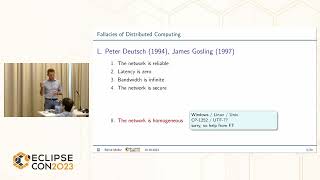
Distributed Applications May Fail - Building Resilience with MicroProfile Fault Tolerance
Master MicroProfile Fault Tolerance techniques to build resilient distributed applications and effectively handle system failures through practical examples and demonstrations.
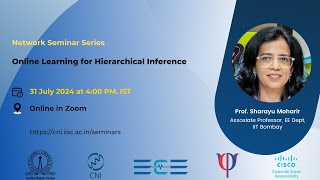
Online Learning for Hierarchical Inference
Explore hierarchical inference optimization through online learning algorithms, focusing on efficient distributed inference between edge devices and cloud servers using confidence metric thresholds.
Airflow Distributed Workloads - ETL Architecture with AWS Lambda and Multi-Threaded Python Scripts
Master distributed workload processing with Airflow, AWS Lambda, and multithreaded Python scripts while exploring ETL architecture for third-party API integration at scale.

YATA Collaborative Documents and How to Make Them Fast
Explore core concepts of Conflict-free Replicated Data Types (CRDTs) and their application in building distributed apps with offline-first capabilities. Learn performance metrics and improvement strategies.
RPC in WhatsApp - Scaling Erlang Infrastructure
Explore WhatsApp's Erlang infrastructure, covering scaled clusters, RPC workflow, service discovery, request dispatching, and load balancing for high-scale systems.
C++ Standard Parallelism - Portable Parallel Programming Across Platforms
Explore C++ Standard Parallelism: write portable parallel code for diverse hardware platforms. Learn about common algorithms, custom algorithm creation, and task graph composition.

Why Should Anyone Care About Edge Computing?
Explore practical applications and benefits of edge computing with working code examples. Discover how it simplifies tasks and unlocks new possibilities in web development.
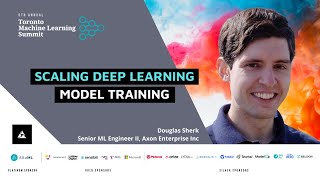
Scaling Deep Learning Model Training
Learn techniques for scaling deep learning model training across distributed systems, reducing training time from days to hours while maintaining cost efficiency.
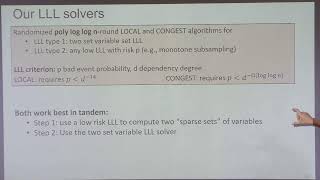
Sparsification for Communication-Efficient Distributed Symmetry-Breaking
Explore sparsification techniques for efficient distributed algorithms, focusing on local symmetry-breaking problems in graph theory and the CONGEST model.
Parallel Algorithms for Local Problems in Sparse Graphs
Explore efficient parallel algorithms for locally checkable problems in sparse graphs, focusing on techniques beyond graph sparsification for improved performance in sublinear regimes.
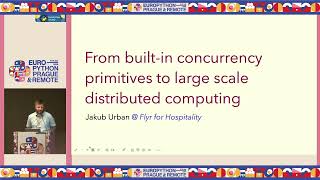
From Built-in Concurrency Primitives to Large Scale Distributed Computing
Explore asynchronous execution in Python, from basic concurrency to distributed systems. Master Future and Executor interfaces, asyncio, and frameworks like Dask for efficient large-scale data processing.
Pandas and Dask DataFrame 2.0 - Comparison to Spark, DuckDB and Polars
Explore Dask DataFrame 2.0's improvements and performance compared to Spark, DuckDB, and Polars. Learn about new features, benchmarks, and future developments in distributed computing with Python.
Data Warehouses are Gilded Cages - What Comes Next
Explore DuckDB's potential to revolutionize data analytics, shifting from centralized warehouses to powerful local processing. Learn how this approach can enhance efficiency and user control in data management.
Building a Unified Feature Platform with DuckDB and Arrow
Explore ML feature platform development using DuckDB and Arrow. Learn scaling strategies, DuckDB extension implementation, DeltaLake interoperability, and performance comparison with Spark.

Getting Started with Apache Spark
Learn Apache Spark's architecture, data lineage, and DAG concepts. Explore this multi-language engine for data engineering, data science, and machine learning on single-node machines or clusters.

Introduction to PySpark
Learn the fundamentals of PySpark for efficient big data processing and analytics using Python in Apache Spark's distributed computing environment.
Dataframes Are All You Need: MLOps on Easy Mode
Explore the power of dataframes in MLOps with Jay Chia. Learn how this flexible abstraction simplifies complex data processing, analytics, and machine learning pipelines using Daft as an example.

Scalable Evaluation and Serving of Open Source LLMs
Explore challenges and solutions for serving open-source LLMs in production, focusing on scalable evaluation and deployment strategies.