Fun With Lists, Ordered Sets, Multisets - Data Structures in Mathematics Math Foundations
Explore patterns and structures in k-lists, examining natural questions, operations, and relationships within this concrete data structure built using natural numbers.
Sets and Other Data Structures - Data Structures in Mathematics
Explore four fundamental data structures in mathematics: lists, ordered sets, multisets, and sets. Learn their characteristics, applications, and a new notation system for easier recognition and distinction.
Combinatorics - Math History - NJ Wildberger
Explore combinatorics through historical examples, counting problems, graph theory, and generating functions. Delve into partitions, Fibonacci numbers, Catalan sequence, and famous theorems in this engaging mathematical journey.
Sets, Logic and Computability - Math History - NJ Wildberger
Overview of set theory, logic, and computability in late 19th/early 20th century math, covering Cantor's work, Dedekind's constructions, paradoxes, and philosophical schools addressing foundational issues.

The Hindu Arabic Number System Revisited - Data Structures in Mathematics Math Foundations
Explores three approaches to Hindu Arabic numerals, examining their mathematical foundations and practical applications in arithmetic and number representation.
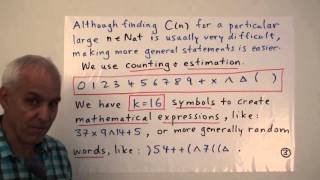
The Sporadic Nature of Big Numbers - Data Structures in Mathematics
Explores how arithmetic breaks down with large numbers, revealing most "numbers" are invisible to us. Challenges conventional number theory and questions the nature of natural numbers.
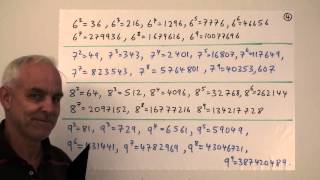
The Chaotic Complexity of Natural Numbers - Data Structures in Mathematics
Exploring the complex nature of arithmetic with large numbers, focusing on exponential and triangular complexity, and examining the role of powers in mathematical computations.
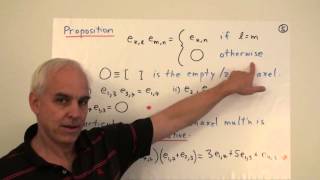
Maxel Theory - New Thinking About Matrices II - Data Structures Math Foundations
Exploring maxel theory as an extension of matrix theory, focusing on multiset views, distributive and associative laws, 1-maxels, and frames. Introduces new terminology and notation for a data structure-oriented approach.
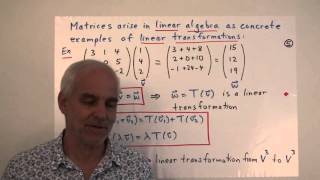
Arrays and Matrices II - Data Structures in Mathematics Math Foundations
Explore matrices from traditional linear algebra to a novel data structure approach. Learn matrix multiplication, algebra, and a new perspective using pixels and maxels.
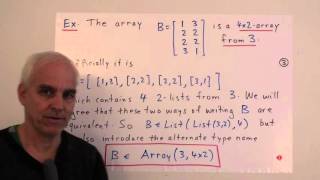
Arrays and Matrices - Data Structures in Mathematics Math Foundations | NJ Wildberger
Introduction to arrays and matrices as 2D data structures, exploring definitions, examples, and extending to 3D arrays. Distinguishes between arrays and matrices, offering a novel approach to linear algebra.
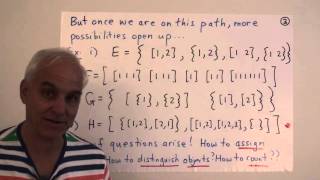
Higher Data Structures - Data Structures in Mathematics Math Foundations
Explore advanced mathematical data structures, including nested combinations of lists, ordered sets, multisets, and sets. Learn their applications in combinatorics, graph theory, and other mathematical fields.
Goemans-Williamson: Rounding the Max-Cut SDP - Lecture 20a of CS Theory Toolkit
Efficient algorithm for approximating maximum graph cuts using semidefinite programming and randomized rounding, with guaranteed performance ratio of 0.878.
The SDP Relaxation for Max-Cut - Lecture 19b of CS Theory Toolkit
Explore SDP relaxation for Max-Cut, transforming a quadratic program into a semidefinite program solvable by the Ellipsoid Algorithm. Part of CMU's graduate-level CS Theory Toolkit course.
Linear Programming - Bit Complexity - Lecture 17c of CS Theory Toolkit
Explore bit complexity in Linear Programming, feasible solutions, and the implications for NP ∩ coNP. Delve into fundamental concepts for theoretical computer science research.
Expander Graph Application 2: Derandomization - Lecture 16c of CS Theory Toolkit
Explore derandomization techniques using expander graphs to reduce error in randomized algorithms without significantly increasing random bits used.
Expander Graph Constructions - Lecture of CS Theory Toolkit
Explore explicit expander graph constructions, including Gabber-Galil, Ramanujan, and Zig-Zag product expanders. Learn about their properties, applications, and mathematical foundations in theoretical computer science.
Spectral Graph Theory - Eigenvalues at CMU - Lecture 15a of CS Theory Toolkit
Explore eigenvalues of the Laplacian and Markov operator in spectral graph theory, including associated formulas and their applications in theoretical computer science research.
Spectral Graph Theory - Minimizing/Maximizing the Quadratic Form
Explore spectral graph theory, focusing on minimizing and maximizing quadratic forms, with connections to graph components and bipartiteness in this graduate-level lecture.
Spectral Graph Theory - The Quadratic Form
Explores spectral graph theory, focusing on the quadratic form associated with undirected graphs. Covers basic setup and provides examples for graduate-level computer science research.
Factorial Asymptotics, Stirling's Formula - Lecture 3b of CS Theory Toolkit
Explore factorial asymptotics and Stirling's Formula in this graduate-level lecture, covering mathematical techniques for theoretical computer science research.
Big O and Friends - Lecture 2a of CS Theory Toolkit
Explore asymptotic notation in theoretical computer science, covering Big O, Omega, and related concepts. Essential for understanding algorithm efficiency and complexity analysis.