Machine Learning: A Route to High Accuracy Simulation of Complex Reacting Systems
Explore machine learning for high-accuracy simulation of complex reacting systems, focusing on chemistry-driven evolution and multiscale challenges in computational modeling.
Computer Simulation of Water/Solid Interactions
Explore computer simulations of water-solid interactions, focusing on dynamic processes, structural features, and reactive applications in materials science.
Learning How to Build Molecules That Fold Like Proteins
Explore protein-like molecule folding with Prof. Michael Shirts, uncovering insights into building and understanding complex molecular structures.
Multi-fidelity Bayesian Optimization of Nanoporous Materials for Xe/Kr Separations
Explore multi-fidelity Bayesian optimization for nanoporous materials in Xe/Kr separations with Prof. Cory Simon's virtual seminar.
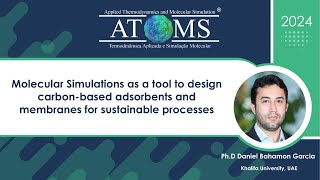
Designing Carbon-Based Adsorbents and Membranes via Molecular Simulations
Explore molecular simulations for designing carbon-based adsorbents and membranes in sustainable processes with Ph.D Daniel Bahamon Garcia.
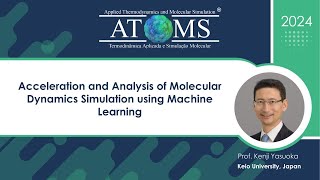
Acceleration and Analysis of Molecular Dynamics Simulation Using Machine Learning
Explore machine learning techniques to enhance molecular dynamics simulations, focusing on acceleration and analysis methods for improved efficiency and insights.
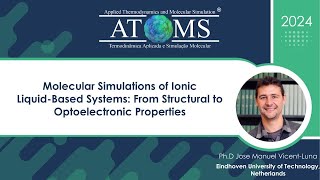
Molecular Simulations of Ionic Liquid-Based Systems: From Structural to Optoelectronic Properties
Explore molecular simulations of ionic liquid systems, examining structural and optoelectronic properties for advanced applications.
A Large Deviation Perspective on Nanoscale Transport Phenomena
Explore nanoscale transport phenomena through large deviation theory, examining current fluctuations in nonequilibrium states and their relation to nonlinear responses in complex systems.
MaZe: A New Approach for Simulating Adiabatic Systems - Lecture
Explore MaZe, a novel approach for simulating adiabatic systems in physics. Learn about its applications in first principles simulations, polarizable systems, and ionic transport studies.
Force Spectroscopy Sheds Light on the Structure and Dynamics of Nucleosomes
Explore force spectroscopy's insights into nucleosome structure and dynamics, revealing chromatin's complex behavior at the molecular level.
From Thermal to Athermal Systems: Self-Assembly and Absorbing Phase Transitions
Explore self-assembly and absorbing phase transitions in thermal and athermal systems, bridging physics and biology in non-equilibrium processes.
Plastic Deformation of Superionic Water Ices
Explore plastic deformation in superionic water ices, examining unique properties and implications for planetary interiors and materials science.
Solving Complex Quantum Chemistry Problems with Amazon Braket
Explore quantum chemistry problem-solving using Amazon Braket with insights from an applied scientist at QHack 2023.
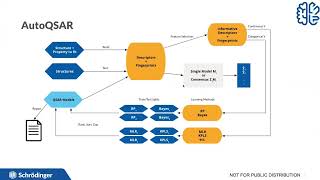
Machine Learning Models for Ionic Conductivity with Schrödinger's AutoQSAR - Hands-On Workshop
Explore machine learning for ionic conductivity prediction using Schrödinger's AutoQSAR tool. Gain hands-on experience with MS Maestro interface to create and implement models for materials science applications.
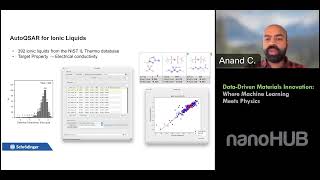
Data-Driven Materials Innovation: Where Machine Learning Meets Physics
Explore how machine learning and physics-based methods synergize to revolutionize materials science, addressing challenges in data-driven design across various technology fields with Schrödinger's innovative tools.
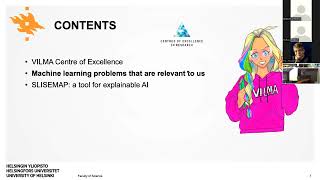
Explainable and Robust AI for VILMA Virtual Laboratory
Explore explainable AI and uncertainty quantification in atmospheric research. Learn about SLISEMAP, a supervised manifold visualization method for local explanations and dimensionality reduction.
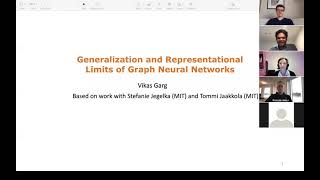
New Frontiers for AI-assisted Design and Discovery in Molecular Generation
Explore AI-assisted design and discovery for generating molecules with desirable properties. Learn about overcoming challenges in combinatorial space, modeling interactions, and segregating representations for improved drug and material development.
Probabilistic Machine Learning in Bioinformatics
Explore probabilistic machine learning applications in bioinformatics, focusing on cutting-edge techniques and their impact on biological data analysis.
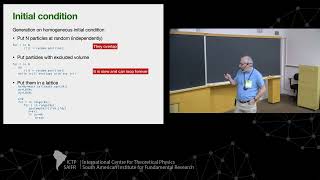
Computational Modeling of Active Systems - Class 2
Explore computational modeling techniques for active systems, focusing on advanced concepts and practical applications in the field of active matter.
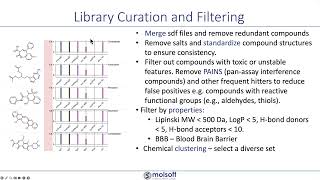
Preparing Chemical Libraries for Virtual Ligand Screening and Ligand Docking
Master essential techniques for preparing chemical libraries and conducting virtual ligand screening using ICM-Pro, focusing on efficient ligand docking methodologies and computational analysis.
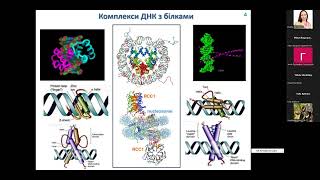
Computational Methods of Structural Bioinformatics in Studies of Protein-Nucleic Recognition
Explore computational methods in structural bioinformatics, focusing on protein-nucleic recognition mechanisms and their applications in DNA physics through advanced analytical approaches.