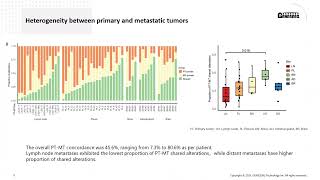
Whole Exome Sequencing Reveals Timing and Origins of Metastasis in Lung Cancer
Explore whole exome sequencing's role in revealing metastasis timing and origins in lung cancer using IDT's xGen Exome Panel.

ctDNA for Minimal Disease Research by Hybridization Capture in Resected Cancer Samples
Explore ctDNA hybridization capture for minimal residual disease research in cancer, overcoming challenges and discovering new biomarkers.
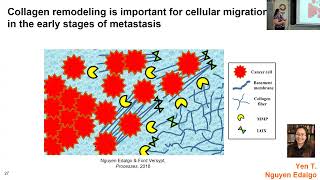
Agent-Based Modeling of Cancer Cell Migration in Response to Tumor Microenvironmental Signals
Explore computational modeling techniques for simulating cancer cell migration and interactions within tumor microenvironments, enhancing understanding of disease progression.
Computational Modelling of Growth and Response of Multicellular EMT6/Ro Spheroids to Multi-Fraction Irradiation
Explore computational modeling of EMT6/Ro spheroid growth and response to multi-fraction irradiation, enhancing understanding of cancer dynamics and potential therapeutic improvements.
Constraints on Tumor Development
Explore genetic intra-tumor heterogeneity and evolutionary patterns across thousands of cancer genomes, examining key constraints in tumor development and progression.
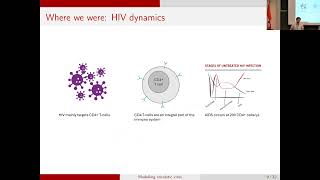
What Can Viral Dynamics Teach Us About Modeling Immunotherapies?
Explore mathematical modeling approaches from viral dynamics and their applications in understanding immunotherapy responses and tumor-immune system interactions.
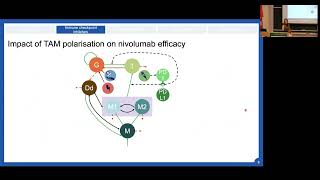
Overcoming Immune Evasion in Glioblastoma by Targeting Tumour-Associated Macrophages
Explore groundbreaking research on targeting macrophages to combat immune evasion mechanisms in glioblastoma treatment, featuring mathematical oncology approaches and therapeutic strategies.
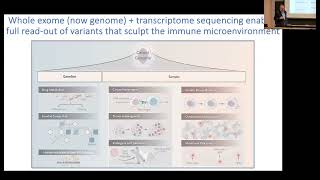
Measuring Cancer and Immune Systems Using Cell-free DNA Sequencing
Discover groundbreaking techniques in cancer detection through cell-free DNA sequencing, exploring how immunotherapy measurements can revolutionize cancer treatment and immune system monitoring.
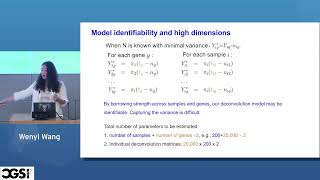
Computational Deconvolution of Cancer Genomes and Transcriptomes - CGSI 2022
Explore computational methods for deconvoluting cancer genomes and transcriptomes. Learn advanced techniques to analyze tumor heterogeneity and uncover molecular phenotypes shaping clinical outcomes in cancer research.
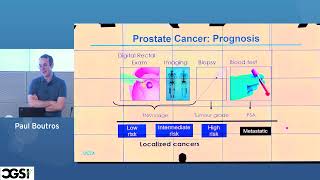
Computational Methods to Quantify Lethal Cancer Evolution
Explore computational methods for quantifying lethal cancer evolution. Gain insights into driver mutations, evolutionary history, and genomic correlates of prostate cancer's epigenetic landscape.
Computational Insights into Cancer Immunology
Explore computational approaches in cancer immunology, focusing on RNA sequencing, tumor microenvironment analysis, and immunotherapy response prediction in non-small cell lung cancer.
Inferring Parsimonious Migration Histories for Metastatic Cancers
Explore computational methods for inferring cancer metastasis patterns, focusing on parsimonious migration histories and multi-strain infections in tumor evolution.
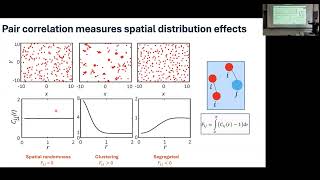
Targeting Macrophages to Improve Glioblastoma Treatment Outcomes
Explore innovative strategies for enhancing glioblastoma treatment by focusing on macrophage targeting, presented by Morgan Craig from Sainte-Justine Hospital and Université de Montréal.
Everything We've Learned About Cancer - A Comprehensive Overview
Comprehensive exploration of cancer, covering testing, treatment, causes, and prevention, inspired by personal experience and presented through multiple scientific angles.
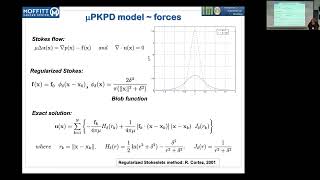
Computational Modeling of Tumor Microenvironment: A Cancer Hallmarks Perspective
Explore computational modeling of tumor microenvironments through cancer hallmarks, gaining insights into advanced oncology research techniques and their applications.
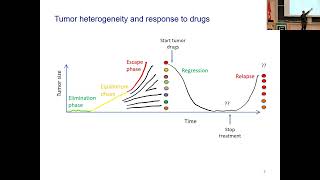
Statistical Dynamics of Tumor Initiation and Progression
Explore the mathematical modeling of cancer development through statistical dynamics, focusing on tumor initiation patterns and progression mechanisms in oncological research.
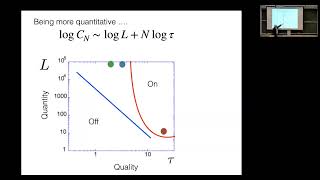
T Cell Recognition: From Theory to CAR-T Immunotherapy
Explore the mathematical foundations of T cell recognition and its crucial role in CAR-T immunotherapy, from theoretical principles to practical applications in cancer treatment.
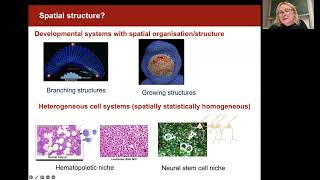
Introduction to Mathematical Modeling of Leukemia - Part 1
Explore the mathematical foundations of leukemia research through expert analysis of oncological models and their applications in understanding disease progression and treatment strategies.
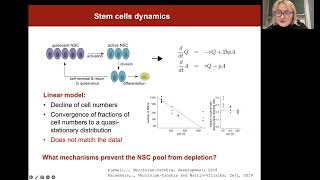
Mathematical Models of Leukemia - Part 2
Delve into advanced mathematical modeling of leukemia dynamics, exploring theoretical frameworks and analytical approaches for understanding cancer progression and treatment strategies.
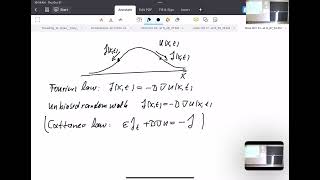
Stochastic Processes and Tumor Control Probability
Explore mathematical modeling of cancer treatment through stochastic processes and probability theory, focusing on tumor control analysis and therapeutic outcomes.
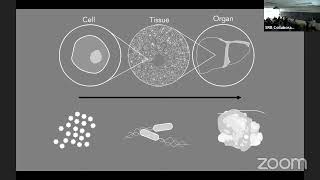
Bi-directional Lessons Between Traditional Evolutionary Biology and Cancer
Explore evolutionary biology's impact on cancer research and vice versa, uncovering insights that bridge these interconnected fields.