Unity Catalog Lakeguard - Data Governance for Multi-User Apache Spark Clusters
Explore Databricks' innovations in data governance for lakehouses, enabling efficient multi-user workloads with Shared Clusters and Unity Catalog while reducing costs and operational complexity.
Introduction to Retrieval Augmented Generation (RAG) and Implementation with Databricks
Discover RAG's potential to enhance AI applications with external knowledge sources. Learn implementation steps using Databricks for more intelligent, context-aware AI solutions.
Seamless Flow: Evolving From Batch to Streaming Data Flows Using DLT
Explore how 84.51° leverages Delta Live Tables to evolve data flows from batch to streaming, combining real-time and historical data for enhanced retail insights and customer-centric strategies.
Data Productivity at Scale - Improving Data Pipeline Development with SQLMesh
Explore SQLMesh, an open-source project revolutionizing data pipeline development with virtual environments, automatic contracts, and accurate change previews for improved efficiency and reliability.
Revolutionizing Data Analysis - The Shift to Databricks and AtScale
Discover how Corning transformed data analysis using Databricks and AtScale, enhancing scalability, OLAP capabilities, and Excel integration for improved insights and decision-making.
Implementing the Lakehouse - From BI to AI in Banking
Discover how ABN AMRO built a unified data and AI platform using Databricks, enabling scalable data engineering and AI while ensuring regulatory compliance in banking.
Project Alexandria: DOE's Digital Library for Data Management
Centralized data management platform for DOE and NNSA projects, enabling researchers to focus on science while efficiently handling data storage, computation, and curation using Databricks and AI.
Driving Better Decisions: The Case for Precision Data to Power AI
Explore the symbiosis of data and AI, focusing on high-quality data streams. Learn about AI fundamentals, data's role in model training, and overcoming data management challenges for enhanced decision-making and innovation.
Delivering Portability to Open Data Lakes with Delta Lake UniForm
Explore Delta Lake UniForm's solution for enhancing data lake reliability, performance, and governance across multiple environments. Learn best practices for scaling and optimizing cloud-based data lakes.
Sciphi Triplex: A Cost-Effective Alternative to Microsoft GraphRAG
Explore Sciphi Triplex: a cost-effective, high-performance alternative to Microsoft's Graph RAG for creating knowledge graphs from unstructured data. Learn setup, implementation, and visualization techniques.
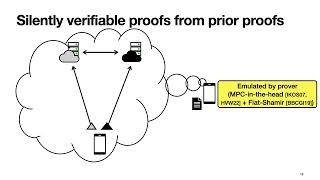
Private Analytics via Streaming, Sketching, and Silently Verifiable Proofs - 2024
Explore innovative techniques for private data analytics using streaming algorithms, sketching methods, and silently verifiable proofs in this cutting-edge IEEE presentation.
Building High Performance Real-time Stream Processing Microservices - GeeCON 2023
Discover best practices for real-time stream processing, addressing challenges and optimizing projects for scalability, performance, failover, reliability, and data recovery using the Hazelcast platform.
Streaming Three Ways with Blazor - REST, gRPC, and SignalR
Explore server-to-client data streaming in Blazor using REST, gRPC, and SignalR to enhance performance and scalability. Learn implementation techniques for each transport method.
Practical Pipelines - A Houseplant Soil Alerting System with ksqlDB
Learn to build a houseplant monitoring system using Raspberry Pi, Apache Kafka, and ksqlDB. Create real-time alerts and gain hands-on experience with event-driven pipelines and stream processing.
Elasticsearch Under the Hood
Explore Elasticsearch's inner workings: shards, Lucene, node balancing, instance sizing, node types, scaling, and tuning options for optimal performance and efficiency.

Tales of Data Architecture Evolution
Explore data architecture evolution, from RDBMS to Data Lakes and Meshes. Learn to architect modern analytical data infrastructure and glimpse the future of data platforms.
Understanding Big Data for Software Engineers
Comprehensive overview of big data technologies and paradigms for software developers, exploring data warehouses, lakes, streams, SQL, NoSQL, and their roles in modern distributed systems.
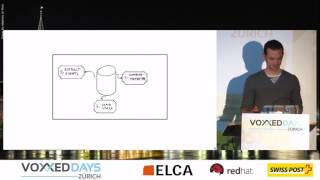
Billing the Cloud - Real World Stream Processing
Explore real-time stream processing for big data, focusing on implementing real-time billing from resource events in distributed systems. Learn key concepts and a reference architecture.
Databricks Workflows: Practical How-Tos and Demos
Explore Databricks Workflows for efficient data pipeline orchestration. Learn best practices, serverless jobs, job repair, notifications, event-driven integrations, and effective triggers for optimized data intelligence.
Inside The Hybrid Data Strategy Powering Atlassian's Soaring Growth
Atlassian's hybrid data strategy combines Databricks and ActionIQ, enabling faster marketing execution, higher-converting audiences, and complex use cases like omnichannel journeys and personalization without sacrificing governance.
Rapid Flash Flood Inundation Mapping for Planning and Emergencies
ML-based Flood Predictor provides real-time insight into flash flood dangers, enabling better emergency planning and potentially saving lives. Uses U-net model trained on FEMA data paired with terrain information to generate water depth maps.