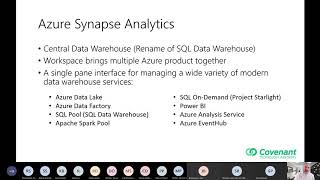
Microsoft's Modern Data Warehouse Architecture
Explore Azure Synapse Analytics: Microsoft's comprehensive solution for traditional, big data, and real-time analytics, revolutionizing the approach to modern data warehousing.
Big Data Analytics in SQL Server 2019 Big Data Cluster Using Spark
Learn to leverage Apache Spark for big data analysis in SQL Server 2019 Big Data Cluster, exploring techniques for processing and analyzing large-scale datasets efficiently.
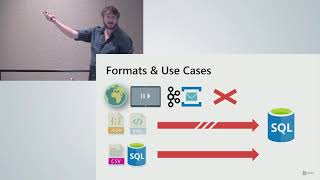
An Azure Data Engineer's ETL Toolkit
Explore Azure's data movement and transformation options, comparing SSIS with Data Factory, Databricks, and Logic Apps. Learn ETL patterns and Data Flow features for scalable cloud migration.
Presenting Big Data Clusters for SQL Server 2019
Explore SQL Server 2019's Big Data Clusters, combining open-source technologies with SQL Server for advanced analytics. Learn how containers and Kubernetes integrate Apache Spark, Hadoop, and SQL Server into a unified analytics solution.
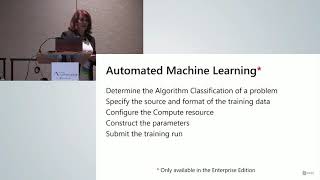
Hidden Differences Between Azure ML Products Revealed
Explore Azure ML products, their differences, and use cases. Learn to create end-to-end ML workflows, integrate with SQL Server, and manage models in production using various Azure tools.
Data Warehousing - Which of the Many Cloud Products is the Right One for You
Explore cloud-based data warehousing options, comparing Snowflake, Databricks, and Azure solutions. Learn to choose the best fit for your environment based on size, architecture, and unique features.
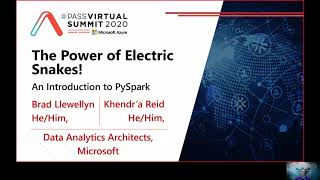
Power of Electric Snakes! PySpark for Big Data and Data Science
Learn to harness PySpark for big data analytics, covering RDDs, DataFrames, transformations, and machine learning. Gain practical skills for efficient data processing and analysis using Python and Spark.
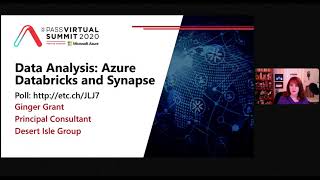
Data Analysis with Spark and Databricks in Azure Synapse
Comparing Spark and Databricks in Azure Synapse: use cases, costs, data types, processing volumes, and implementation demos. Learn when to choose Spark-based tools vs. alternatives like SQL on-demand or ELT.
The ABCs of BDCs - Big Data Clusters for Beginners
Explore SQL Server 2019's Big Data Clusters: architecture, deployment, and capabilities for combining relational and non-relational data, enhancing your big data skills and career prospects.
Data Virtualization - Data Lake Power Using SQL Big Data Cluster
Explore data virtualization with SQL Server 2019 Big Data Cluster, enabling seamless integration of diverse data sources for efficient processing and analysis of structured and unstructured data across cloud and on-premises environments.
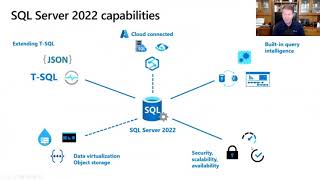
SQL Server 2022 - The Hybrid Data Platform
Explore SQL Server 2022's advanced hybrid capabilities, including cloud-connected disaster recovery, real-time analytics, and enhanced security features for seamless integration with Azure services.
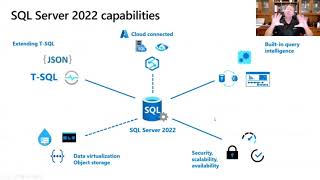
Introducing SQL Server 2022
Explore SQL Server 2022's new features: cloud connectivity, disaster recovery, analytics, security enhancements, and T-SQL extensions. Learn about Intelligent Query Processing and SQL Server Ledger with live demos and expert Q&A.
Utilizing Tools Made for "Big Data" to Analyse Ftrace Data - Making It Fast and Easy
Explore techniques for analyzing large Ftrace datasets using Big Data tools, enabling fast and easy scripting for sophisticated problem-solving in low-level tracing.
Getting Started with Combine
Comprehensive introduction to Apple's Combine framework, covering reactive programming concepts, key components, and practical applications in iOS development.
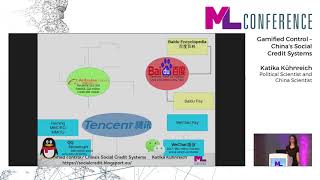
Gamified Control - China's Social Credit Systems
Explore China's Social Credit Systems: gamification, big data, and AI for behavior rating. Examine societal impacts and global implications of tech-driven social control.
Apache Beam - Making Big Data Portable With gRPC
Explore Apache Beam's unified programming model for efficient, portable data processing pipelines. Learn about its architecture, runners, and gRPC-based portability framework for cross-language execution.
How to Use Kubernetes to Build a Data Lake for AI Workloads
Learn to build a cloud-agnostic data lake using Kubernetes, Rook, and Ceph for AI workloads. Discover how to provide unified data access across multiple data centers for data scientists and developers.
Elephant on Wheels - Petabyte-scale AI @ LinkedIn
Explore LinkedIn's journey in integrating Kubernetes for AI workloads, focusing on secure HDFS access and innovative scheduling solutions for petabyte-scale operations.
Stateful Serverless and the Elephant in the Room
Explore Stateful Functions: a new pattern for stateful serverless applications using containerized, event-driven functions with Apache Flink for state management and inter-function messaging.
Advanced Logging with Fluent Bit
Explore advanced logging with Fluent Bit, covering architecture, data workflows, and stream processing. Learn SQL engine usage, data snapshots, aggregation windows, and basic machine learning for cloud-native environments.
Lesson Learned on Running Hadoop on Kubernetes
Explore LinkedIn's journey in deploying Hadoop on Kubernetes, reducing infrastructure setup time and enabling rapid feature testing for their massive data environment.