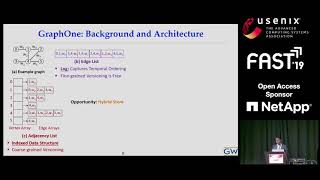
GraphOne - A Data Store for Real-time Analytics on Evolving Graphs
GraphOne: A data store for real-time analytics on evolving graphs, combining edge and adjacency lists with dual versioning for efficient updates and computations. Outperforms graph databases in ingestion and static graph systems in analytics.
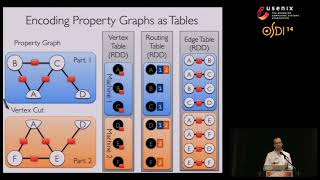
GraphX - Graph Processing in a Distributed Dataflow Framework
Explore GraphX, a graph processing framework built on Apache Spark, offering performance comparable to specialized systems while enabling broader computational capabilities and fault tolerance.
Is Big Data Performance Reproducible in Modern Cloud Networks?
Explores network variability in cloud computing, its impact on big data workloads, and provides guidelines for more repeatable and predictable performance experiments in cloud environments.
Operating Elasticsearch with Ease at Scale
Discover strategies for operating Elasticsearch at scale, covering common issues, optimization techniques, and best practices for handling massive deployments with billions of ingests and millions of searches daily.

Big Data - Power, Potential, and Perils
Explore the power, potential, and perils of Big Data in this panel discussion. Experts examine its impact on society, scientific inquiry, and human decision-making, addressing benefits and ethical concerns.

Predicting the World with Math
Explore how mathematical algorithms and big data are revolutionizing predictions in various fields, from medicine to social behavior, with insights from leading scientists on the future of data-driven decision-making.
Hadoop Safari - Hunting for Vulnerabilities
Explore Hadoop security vulnerabilities and attack vectors in Big Data environments. Learn practical techniques to access data lakes and exploit weaknesses in cluster infrastructures.

Got Popcorn? What's on the Vuln Channel Tonight?
Explore a platform for automated code scanning and vulnerability data streaming, designed to provide developers with fast, timely information on potential security issues.
Serverless Osquery Backend and Big Data Exploration
Explore serverless osquery backend deployment, scalability challenges, and large-scale data processing for enhanced intrusion detection and endpoint management.
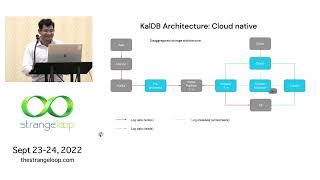
KalDB - A Cloud Native Log Search Platform
Explore KalDB, a cloud-native log search platform addressing Elasticsearch limitations. Learn about its architecture, real-time visibility, automatic field conflict handling, and cost-saving techniques.
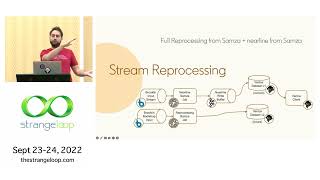
Open-Sourcing Venice
Explore LinkedIn's Venice: a high-throughput, low-latency derived data storage system powering AI workloads. Learn about its architecture, scalability, and real-world applications in online deep learning.
An Offensive Approach to Analyzing Huge and Complex Big Data Infrastructures
Explore attack vectors in Big Data stack layers: ingestion, storage, processing, and access. Learn methodologies to identify vulnerabilities in complex infrastructures handling massive data volumes.
Information Technology Systems in a Post-Silicon World
Explore post-silicon IT systems, emerging architectures, and AI's impact on InfoSec. Discover how innovation addresses Moore's Law limitations and shapes the future of technology and security.

What Got Us Here Won't Get Us There
Explore InfoSec challenges, industry distractions, and harmful practices. Learn to tackle real problems, avoid security antipatterns, and embrace simplicity for effective cybersecurity strategies.
Getting Started with Combine
Explore Apple's Combine framework for declarative processing of values over time. Learn reactive programming basics, key components, and practical applications in iOS development.
Data in Motion - Streaming Static Data Efficiently in Akka Persistence
Explore efficient streaming of static data using Akka Persistence, focusing on architecture, implementation, and performance tuning for distributed systems and enterprise applications.
Large Scale Graph Analysis Using Scala and Akka
Explore large-scale graph analysis using Scala and Akka. Learn architecture, implementation, and optimization techniques for processing big data with graph structures and stream outputs.
Connecting Reactive Applications with Fast Data Using Reactive Streams
Explore integrating Spark Streaming with reactive applications using Reactive Streams, focusing on back pressure support and creating a fully reactive system for efficient data processing.
Spark 2.0
Explore Apache Spark 2.0's evolution, new APIs, and optimizations for big data processing. Learn about DataFrames, Datasets, and Structured Streaming for efficient distributed programming.
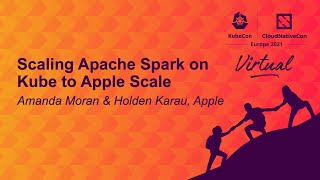
Scaling Apache Spark on Kube to Apple Scale
Explore scaling Apache Spark on Kubernetes at Apple's scale. Learn about workload portability, best practices, migration tips, and new enhancements for effective deployment in large-scale environments.
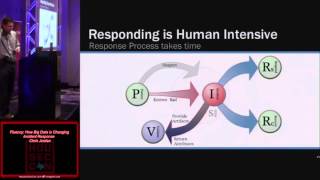
Fluency - How Big Data is Changing Incident Response
Explore how big data transforms incident response, comparing traditional methods with modern data analysis techniques for enhanced cybersecurity and threat detection.