Building ML-Enhanced Event Streaming Apps with Java Microservices
Explore building ML-enhanced event streaming applications using Java microservices and Apache Pulsar. Learn about Pulsar's architecture, functions, and programming model through a practical coding demo.
Build Open Format Data Lakehouse
Explore open format data lakehouse architecture, benefits, and implementation strategies for efficient cloud-native data management and analytics.
Event-Driven Change Data Capture Pattern
Explore event-driven Change Data Capture patterns and their implementation using Apache Pulsar for efficient, real-time data synchronization in cloud-native environments.
AMQP Ten Years After - Evolution and Interoperability in Cloud Messaging
Explore AMQP's evolution, its adoption by major players, and its role in cloud interoperability. Learn how RabbitMQ and Azure Messaging leverage AMQP for scalable, vendor-agnostic solutions in real-time analytics.

Choosing the Right Platform for Your Event-Driven App - Apache Pulsar Overview
Explore Apache Pulsar's features for event-driven apps: scalability, elasticity, durability, geo-replication, multi-tenancy, and ecosystem compatibility. Learn about its architecture and benefits for data streaming.
AlexNet and ImageNet Explained
Explore the revolutionary AlexNet CNN and ImageNet dataset, their impact on deep learning, and practical implementation using PyTorch for image classification tasks.
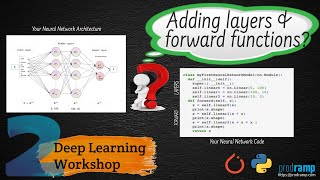
Adding Layers and Forward Functions to Your Neural Network in PyTorch
Learn to create neural networks in PyTorch: design layers, implement forward functions, and adapt models for various data types. Hands-on examples cover basic to complex architectures for structured and unstructured data.
Randomized Composable Core-Sets for Submodular Maximization
Explores randomized composable core-sets for distributed submodular and diversity maximization, presenting improved algorithms and analysis techniques for big data optimization problems.
Estimating Oxygen in the Southern Ocean Using Argo Temperature and Salinity - Donata Giglio
Explore innovative techniques for estimating oxygen levels in the Southern Ocean using Argo float data. Learn how temperature and salinity measurements contribute to understanding ocean biogeochemistry and climate change impacts.
Using AI to Facilitate Environmental Justice - The Need for Ethical & Responsible AI
Explores the application of AI in environmental justice, emphasizing ethical considerations and responsible practices for weather and climate research. Discusses potential impacts and challenges in this emerging field.
Deep Learning and Energy Models for Fine Dead Wood Segmentation - Jacquelyn Shelton
Explore deep learning and energy models for fine dead wood segmentation in climate research, focusing on carbon cycle implications and advanced image analysis techniques.
Deep Learning for Subseasonal Global Precipitation Prediction - Maria Molina
Explore deep learning techniques for predicting global precipitation patterns on a subseasonal timescale, advancing climate science through innovative machine learning approaches.
Representation Learning and Custom Loss Functions for Atmospheric Data - Christian Lessig
Explores representation learning and custom loss functions for atmospheric data analysis, advancing climate science through machine learning techniques to extract insights from complex Earth system observations.
Gaussianizing the Earth - Gus Camps-Valls
Exploring Earth system dynamics through machine learning and big data analysis, focusing on multi-scale processes and causal inference to advance climate science and inform future predictions.
Unsupervised Learning for Stellar Spectra with Deep Normalizing Flows - Jo Ciuca
Explore unsupervised machine learning techniques for analyzing stellar spectra using deep normalizing flows, with applications in galaxy evolution and big data astronomy.
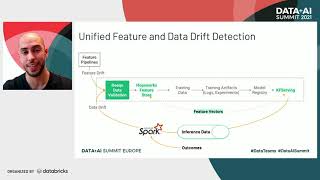
KFServing - Model Monitoring with Apache Spark and Feature Store
Explore an open-source platform for scalable model serving and monitoring using KFServing, Hopsworks Feature Store, and Spark Streaming. Learn continuous data drift detection and see a live demonstration.
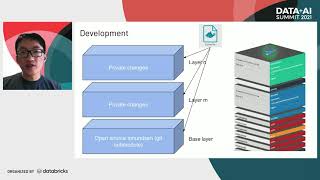
Data Discovery at Databricks with Amundsen - Improving Productivity and Trust
Explore how Databricks leverages Amundsen for efficient data discovery, improving productivity by surfacing relevant datasets, SQL dashboards, and metadata programmatically.
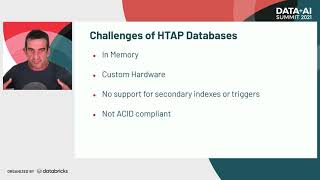
Unified MLOps: Feature Stores and Model Deployment
Explore a new MLOps approach merging databases, feature stores, and ML for scalable model production. Learn about Splice Machine's hybrid database and its applications in feature engineering and model deployment.
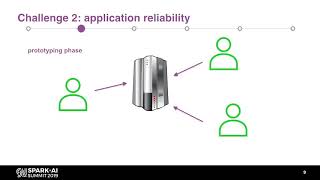
Machine Learning at Scale with MLflow and Apache Spark
Explore Société Générale's journey in scaling machine learning, focusing on MLflow and Apache Spark for production deployment, CI/CD pipelines, and overcoming challenges in large-scale ML implementation.
Scalable AI for Environmental and Social Impact
Explore Microsoft's AI contributions to Apache Spark and Machine Learning, focusing on environmental and social impact projects like art exploration and endangered species protection.
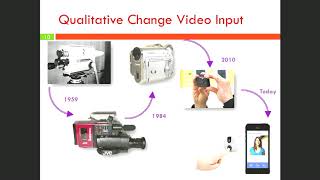
IoT- Safety and Security of Human Digital Memories
Explore the safety and security challenges of human digital memories in the Internet of Things era, including data analytics, identity protection, and ethical considerations.